
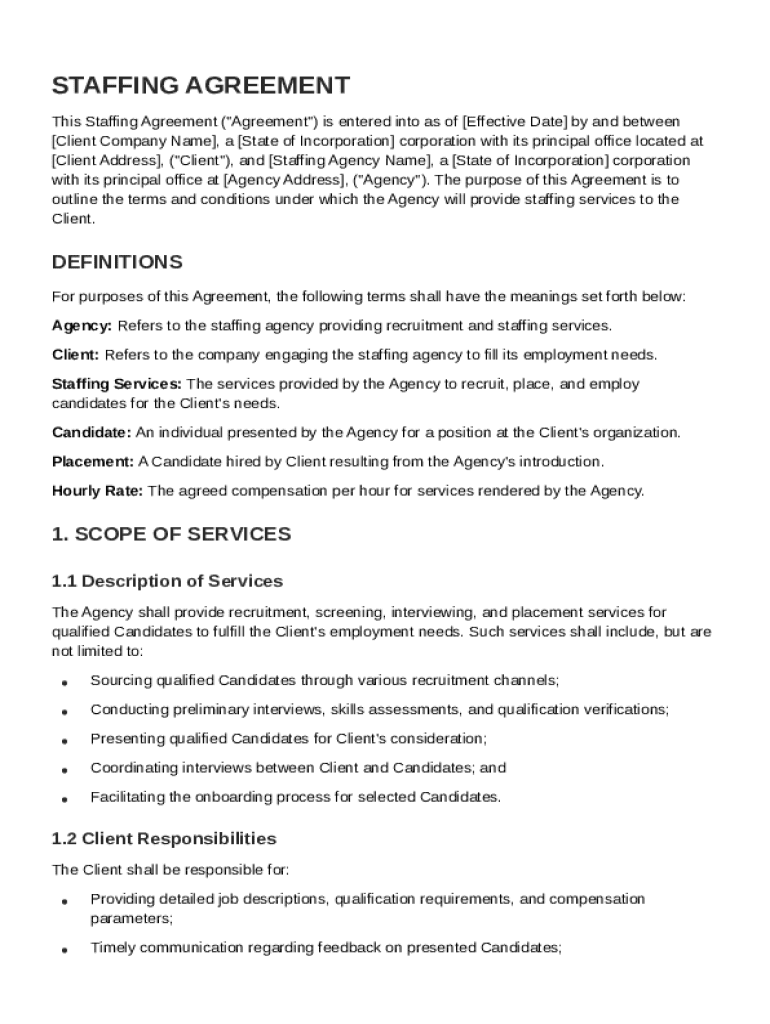







Definition and Meaning
A Staffing Agreement Template serves as a legal framework outlining terms between a client company and a staffing agency. This document is integral in establishing expectations, roles, and responsibilities related to the provision of staffing services. It covers several important aspects such as the scope of provided services, payment conditions, candidate selection protocols, confidentiality agreements, liability boundaries, and governing laws. By defining these terms clearly, both the client company and the staffing agency can work together effectively while minimizing potential disputes and misunderstandings.
Components of the Agreement
- Scope of Services: Identifies the specific staffing needs and positions the agency is required to fill.
- Payment Terms: Details the compensation structure, including fees, payment schedules, and any bonus structures.
- Candidate Selection: Outlines the process for selecting and presenting candidates to ensure they meet the client's criteria.
- Confidentiality Obligations: Specifies the requirements for maintaining confidentiality about proprietary information from both parties.
- Liability Limitations: Establishes liability boundaries, protecting both parties from undue risk or responsibility.
- Governing Law: Indicates which jurisdiction’s laws will apply in case of disputes.
Key Elements of the Staffing Agreement Template
A well-crafted Staffing Agreement Template includes several crucial elements that ensure comprehensive coverage of the agreement between the involved parties. These elements are designed to provide clarity and prevent future disputes.
Essential Provisions
- Recruitment and Evaluation: Describes responsibilities related to recruiting, screening, and evaluating potential candidates.
- Term and Termination: Defines the effective duration of the agreement and conditions under which it may be terminated by either party.
- Modification Clause: Details the process for making amendments to the agreement, ensuring both parties consent to changes.
- Non-Solicitation: Prevents the client company from hiring the staffing agency’s candidates directly without the agency's involvement.
How to Use the Staffing Agreement Template
Using a Staffing Agreement Template effectively requires familiarity with its sections and purposes. This allows you to customize the document to reflect the specific needs of your organization and the staffing agency.
Steps for Customization
- Review Each Section: Carefully examine each section to understand its purpose and how it applies to your agreement.
- Amend with Specific Details: Modify the template with relevant information, such as names, dates, terms, and job descriptions.
- Consult Legal Experts: Seek advice from legal professionals to ensure compliance with applicable laws and regulations.
- Finalize and Execute: Once all sections are tailored to your needs, both parties should review and sign the document to make it legally binding.
Who Typically Uses the Staffing Agreement Template
The Staffing Agreement Template is commonly utilized by entities engaged in hiring and managing temporary or contract employees. Identifying who uses this template helps to understand its practical applications and relevance.


Frequent Users
- Corporate Organizations: Large businesses requiring temporary staff for short-term projects.
- Small Businesses: Enterprises that lack a human resources department and rely on staffing agencies for recruitment.
- Staffing Agencies: Agencies that specialize in providing a workforce to fill temporary or specialized roles.
- Human Resources Departments: HR teams responsible for managing employment contracts and staffing needs.
Important Terms Related to the Staffing Agreement Template
Understanding the terminology often found in a Staffing Agreement Template can aid in comprehending the document’s intentions and stipulations.
Commonly Used Terms
- Temporary Employee: A worker hired for a limited period based on client needs.
- Placement Fee: A charge imposed by the staffing agency for placing a candidate with the client.
- Onboarding: The process of integrating a new employee into the organization and its culture.
- Bill Rate: The hourly or salary rate billed to the client, including agency fees and the worker’s wages.
Legal Use of the Staffing Agreement Template
Legal comprehension of the Staffing Agreement Template is crucial to ensure that the terms comply with federal, state, and local regulations, especially in the U.S.
Regulatory Considerations
- Compliance with Labor Laws: Ensure alignment with the Fair Labor Standards Act and other relevant labor laws.
- Non-Discriminatory Practices: Adhere to Equal Employment Opportunity guidelines to prevent discrimination.
- Tax Obligations: Recognize the requirements for reporting taxes associated with temporary and contracted staff.
Examples of Using the Staffing Agreement Template
Practical examples provide insight into how organizations successfully implement a Staffing Agreement Template to address staffing needs effectively.
Practical Scenarios
- Project-Based Assignments: A tech company hiring additional IT support during peak project months.
- Seasonal Employment: A retail chain staffing up for the holiday shopping season.
- Specialized Roles: A medical facility contracting nurses and technicians for short-term assignments during health emergencies.
State-Specific Rules for the Staffing Agreement Template
State regulations can influence how staffing agreements are structured, particularly in terms of employment laws and contractual obligations.
Regional Considerations
- California: Requires compliance with Wage Orders, impacting how employee work hours and compensation are managed.
- New York: Emphasizes worker protections against unfair labor practices, possibly affecting agreement terms.
- Texas: Known for its "at-will" employment policies, affecting termination clauses within the agreement.




