
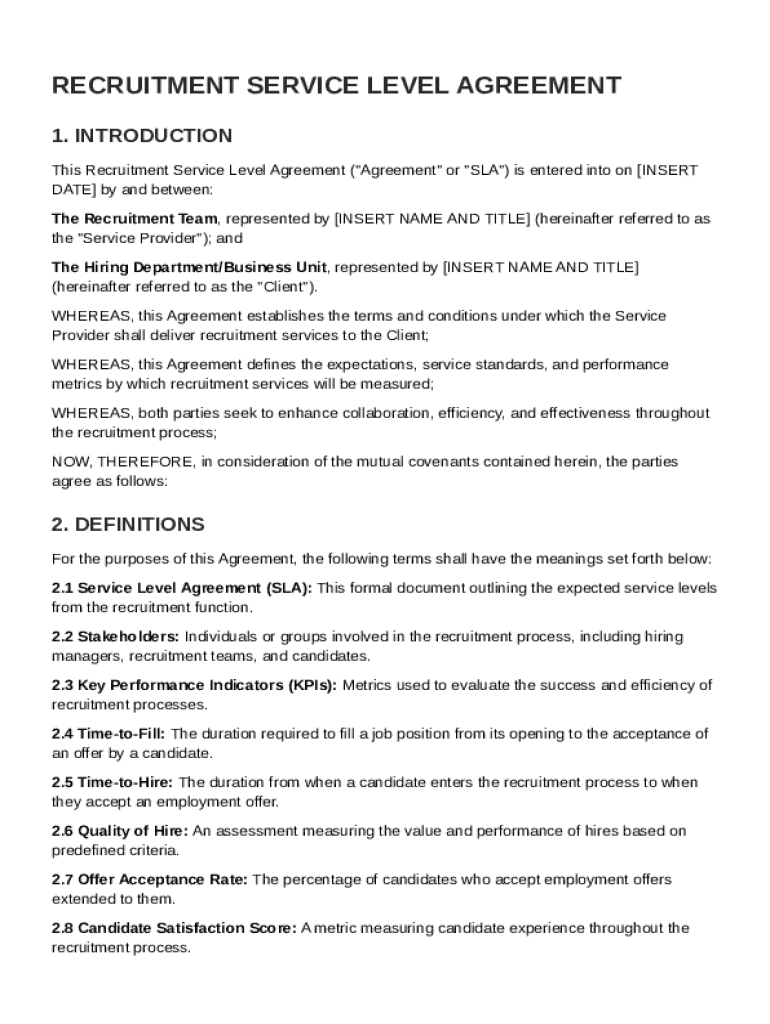







Definition and Meaning
The Recruitment Service Level Agreement (SLA) is a formal contract that establishes the expectations, obligations, and performance metrics for recruitment services between service providers and their clients. It serves as a foundational document that outlines how both parties will collaborate throughout the recruitment process. By delineating roles, responsibilities, and service objectives, the SLA ensures that recruitment activities are carried out efficiently and effectively. Typically, an SLA includes key terms and conditions related to the scope of services, performance indicators, and communication protocols.
Key Elements of the Recruitment Service Level Agreement Template
The Recruitment SLA is comprised of several critical components that define its effectiveness and utility. Key elements include:
- Service Scope: This section details the specific recruitment services that the provider is obligated to deliver, such as candidate sourcing, screening, and interview scheduling.
- Performance Metrics: Clearly defined Key Performance Indicators (KPIs) are outlined to measure the service provider’s success, such as time-to-hire and candidate satisfaction rates.
- Roles and Responsibilities: It specifies the duties of each party involved, ensuring a clear understanding of who is accountable for what aspects of the recruitment process.
- Communication Protocols: This section establishes how information will be exchanged between the parties, including regular updates and meeting schedules.
- Confidentiality: Measures and agreements to protect sensitive information shared between parties during the recruitment process.
- Termination Conditions: Provisions that allow either party to terminate the agreement under specified circumstances, protecting both parties from potential disputes.
How to Use the Recruitment Service Level Agreement Template
The Recruitment SLA template provides a structured format for drafting the agreement. Users should consider the following steps for effective utilization:
- Customization: Tailor the document to reflect the specific terms agreed upon by the service provider and client, adjusting clauses as necessary.
- Review: Both parties should meticulously review the SLA to ensure all expectations and obligations are clear and mutually agreeable.
- Signing: Once finalized, both parties should sign the agreement to solidify their commitment to the outlined terms.
- Regular Updates: The SLA should be reviewed periodically and updated as necessary to ensure its continued relevance and effectiveness.
Important Terms Related to Recruitment Service Level Agreement Template
Understanding the terminology within the Recruitment SLA is crucial for both parties. Important terms might include:
- Service Provider: The entity responsible for delivering recruitment services.
- Client: The organization that receives recruitment services.
- KPI (Key Performance Indicator): Metrics used to assess the efficiency and effectiveness of recruitment services.
- Compliance: Adherence to agreed-upon standards and practices during the recruitment process.
- Remediation: Steps agreed upon to address any performance deviations from the SLA terms.
Steps to Complete the Recruitment Service Level Agreement Template
Completing the SLA template involves several important steps to ensure accuracy and effectiveness:
- Gather Information: Collect all necessary details about the recruitment services, including those related to performance expectations and deliverables.
- Draft the Agreement: Use the template to compile all relevant sections such as service scope, KPIs, and roles.
- Consult with Legal Advisors: Ensure the SLA is compliant with relevant laws and adequately protects both parties’ interests.
- Finalize and Sign: Once both parties are satisfied with the contents, proceed to finalization and sign the document.
- Implement and Monitor: After signing, actively monitor adherence to the SLA terms and conduct regular performance evaluations.
Why You Should Use a Recruitment Service Level Agreement Template
Utilizing a Recruitment SLA template is advantageous for several reasons:
- Clarity and Transparency: Clearly defined expectations and responsibilities enhance mutual understanding and reduce potential conflicts.
- Structured Approach: Facilitates a systematic approach to managing recruitment services.
- Efficiency: Establishes streamlined processes and clear communication channels, optimizing the recruitment workflow.
- Risk Mitigation: Provisions for managing non-performance and other risks protect both parties’ interests.
Legal Use of the Recruitment Service Level Agreement Template
The Recruitment SLA serves as a legally binding document that enforces compliance and accountability for agreed-upon recruitment services. It outlines legal obligations, including:
- Compliance with HR Laws: Ensures that recruitment services adhere to labor laws and regulations.
- Data Protection: Implements measures to protect personal information in accordance with data privacy laws.
- Dispute Resolution: Provides a framework for resolving conflicts through mediation or arbitration rather than litigation.
Examples of Using the Recruitment Service Level Agreement Template
Numerous scenarios illustrate the practical use of the Recruitment SLA, such as:
- Corporate Recruitment: Large organizations may employ an SLA to manage relationships with multiple recruiting agencies simultaneously.
- Project-Based Hiring: Temporary recruitment for specific projects requiring specialized skill sets can be managed effectively through an SLA.
- Compliance Audits: Companies can use SLAs to ensure recruiters meet compliance standards during audits by human resources departments.




