
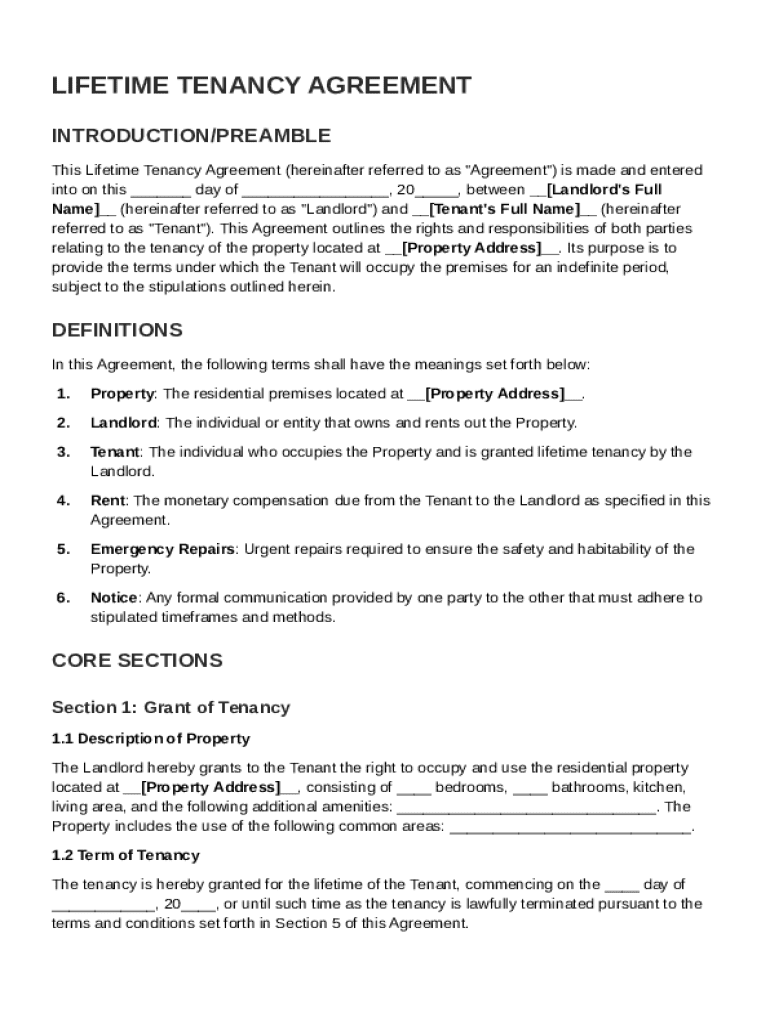







Definition and Meaning
A Lifetime Tenancy Agreement is a legal contract that defines the terms and conditions under which a tenant is granted the right to occupy a residential property for the duration of their lifetime. It is a specialized form of lease agreement tailored to provide long-term security and stability to the tenant. This agreement includes detailed provisions concerning the obligations and responsibilities of both the landlord and the tenant. Key elements usually addressed in the agreement are the terms of rent payment, the scope of maintenance responsibilities, and the grounds on which the tenancy can be terminated. It also encompasses clauses detailing the need for written consent for any property alterations, while outlining usage restrictions to protect the interests of both parties.
Importance of Written Consent and Usage Restrictions
- Alterations and Modifications: The agreement specifies that any alterations to the property by the tenant require prior written consent from the landlord. This provision helps maintain the integrity of the property.
- Usage Guidelines: Restrictions on how the property can be used ensure that it is not employed for purposes beyond residential, preserving the intended occupancy context.
How to Use the Lifetime Tenancy Agreement Template
Using a Lifetime Tenancy Agreement Template involves several key steps to ensure both parties understand and adhere to their duties and rights. The template offers a structured framework that simplifies the drafting process. Here’s a step-by-step approach:
- Review and Customize: Begin by thoroughly reviewing the template, making necessary customizations to fit the specific landlord-tenant scenario. Modify terms, clauses, and sections to reflect the agreed conditions.
- Include Detailed Clauses: Add any additional clauses relevant to the specific property context. This might include special arrangements or conditions agreed upon by both parties.
- Consult Legal Counsel: It’s advisable to have a legal professional review the customized agreement for compliance with state and federal laws.
Common Customizations
- Rent Details: Specifics like amount, due dates, and accepted payment methods are tailored to individual agreements.
- Maintenance Responsibilities: Clearly define the scope of maintenance duties for both parties, avoiding potential future disputes.
Key Elements of the Lifetime Tenancy Agreement Template
Certain components are critical to a comprehensive Lifetime Tenancy Agreement Template, ensuring clarity and legal robustness. These elements are essential to prevent misunderstandings and legal complications:
- Rent Payment: Clearly stated terms regarding the amount, frequency, and accepted payment methods for rent.
- Termination Conditions: Outlines circumstances under which the tenancy can be legally terminated by either party.
- Maintenance Obligations: Responsibilities regarding property maintenance and upkeep assigned to both landlord and tenant.
- Dispute Resolution: Procedures and preferred methods for resolving any disputes that arise during the tenancy.
Maintenance Obligations
- Landlord Responsibilities: Typically include structural repairs, property improvements, and major system (e.g., HVAC) maintenance.
- Tenant Responsibilities: Generally cover day-to-day upkeep, such as cleanliness and minor repairs.
Legal Use of the Lifetime Tenancy Agreement Template
The legal enforceability of a Lifetime Tenancy Agreement hinges on several factors, including compliance with regional property laws and incorporation of essential legal terms. Here’s what to consider:
Compliance and Validity
- State Laws: The agreement should comply with state-specific tenancy laws to avoid challenges to its validity.
- Legal Terms: Must contain legally recognized boilerplate provisions, such as severability and governing law clauses.
State-Specific Rules for the Lifetime Tenancy Agreement Template
Different states have specific rules and requirements regarding lifetime tenancies. To ensure compliance, landlords and tenants should be aware of these variations:
- Eviction Laws: Each state has distinct statutes concerning the eviction process and tenant protection laws.
- Rent Control and Stabilization: Regulations vary regarding permissible rent increases and tenant rights under local jurisdiction.
Examples of State Variations
- California: Known for strict rent control measures that could impact the terms of a lifetime tenancy agreement.
- Texas: Offers different levels of tenant protection and might have unique requirements for agreement termination.
Examples of Using the Lifetime Tenancy Agreement Template
Real-world scenarios demonstrate the practical application of a Lifetime Tenancy Agreement. Consider the following examples:
Scenario: Aging in Place
- Tenant Profile: An elderly individual seeking long-term residential security.
- Agreement Benefit: Provides peace of mind with stability in living conditions without the threat of periodic lease renewals.
Scenario: Family Home
- Tenant Profile: A family opting for generational residence in a family-owned home.
- Agreement Benefit: Ensures continuity and familiarity for heirs while preventing arbitrary tenancy termination by future property owners.
Steps to Complete the Lifetime Tenancy Agreement Template
Completing the template correctly ensures both parties are fully informed and agree to the outlined terms:
- Input Vital Information: Enter details such as tenant and landlord names, property address, and contact information.
- Set Terms & Conditions: Clearly define the tenancy duration, financial obligations, and rights of each party.
- Review & Sign: Both tenant and landlord should review and sign the document. Utilize platforms like DocHub for a straightforward digital signature process.
Who Typically Uses the Lifetime Tenancy Agreement Template
A variety of individuals and demographic groups find value in the Lifetime Tenancy Agreement:
- Elderly Tenants: Prefer stable, long-term arrangements without the hassle of frequent lease renewals.
- Family Homeowners: Use the agreement when allowing relatives to reside in family properties indefinitely.
- Long-term Landlords: Benefit from secured tenant relationships, reducing turnover and vacancy risks.


Benefits for Different Users
- For Tenants: Security in tenure and the ability to plan long-term residence.
- For Landlords: Predictable revenue stream and reduced administrative tasks associated with tenant turnover.




