






Definition and Meaning
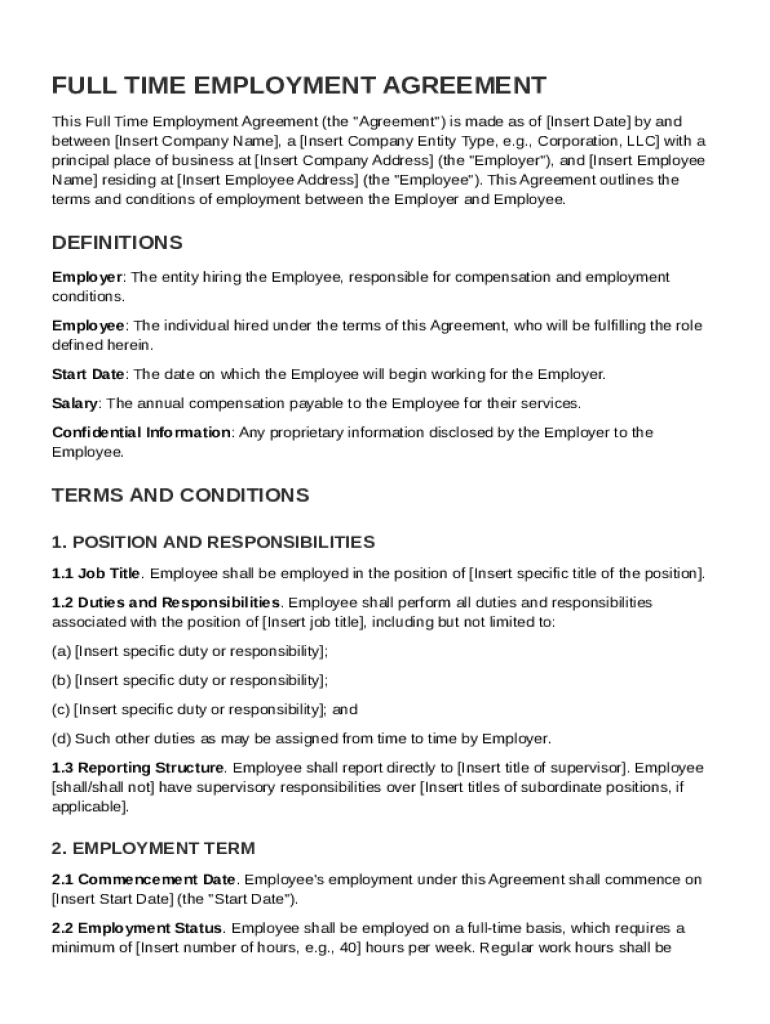
A Full Time Employment Agreement Template is a standardized document used to formalize an employment relationship between an employer and a full-time employee. This template serves as a legal contract outlining essential aspects of the employment, including the job title, responsibilities, compensation package, benefits, and confidentiality clauses. It ensures clarity and mutual understanding of expectations, thereby reducing the potential for disputes.
Examples of Usage
- New Hires: When onboarding a new employee, a company may use the template to clearly define their role and responsibilities.
- Promotions: This document can be used when an employee transitions from part-time to full-time status, outlining the updated terms.
- Compliance: Businesses utilize this template to comply with labor laws and ensure all terms are clearly documented.
Key Elements of the Full Time Employment Agreement Template
The Full Time Employment Agreement Template typically includes several crucial components that define the employment relationship.
Job Responsibilities
- Definition: Details the duties and tasks the employee is expected to perform.
- Example: For a marketing manager, responsibilities may include developing marketing strategies and overseeing campaigns.
Compensation and Benefits
- Salary: Specifies the base salary and payment frequency.
- Benefits: Lists health insurance, retirement plans, and any fringe benefits.
Confidentiality and Non-Disclosure
- Purpose: Protects sensitive company information.
- Scope: Outlines what information is considered confidential and the penalties for breach.
Legal Use of the Full Time Employment Agreement Template
This template must comply with federal and state labor laws to be legally enforceable.
Governing Law
- Selection: The agreement specifies which state's laws will govern the contract.
- Consideration: Employers should choose a state where the business operates to ensure legal compliance.
Legal Compliance
- Update Requirements: Regular updates to the template may be necessary to reflect changes in labor laws.
Important Terms Related to the Full Time Employment Agreement Template
Understanding the key terms used in a Full Time Employment Agreement Template is vital for both employers and employees.
Terms to Know
- Probation Period: A specified time during which the employee's performance is evaluated for suitability.
- Termination Clause: Conditions under which the employment may be ended by either party.
How to Use the Full Time Employment Agreement Template
Using the Full Time Employment Agreement Template can simplify the process of creating an employment contract.
Steps to Follow
- Download the Template: Obtain a copy of the template from your preferred document management platform.
- Customize the Details: Fill in the specific job roles, compensation, and other personalized elements.
- Review with Legal Counsel: Have a legal professional review the document to ensure compliance.
- Obtain Signatures: Ensure both employer and employee sign the agreement to legalize it.
State-Specific Rules for the Full Time Employment Agreement Template
Employment laws vary by state, which can impact how the Full Time Employment Agreement Template is structured.
Examples of Variations
- Minimum Wage: Some states have a higher minimum wage than the federal requirement.
- Non-Compete Clauses: The enforceability of non-compete clauses differs significantly from state to state.
Steps to Complete the Full Time Employment Agreement Template
Filling out the agreement template requires attention to detail and an understanding of the required information.
Detailed Steps
- Begin with Employee Details: Enter the employee’s full name, address, and contact information.
- Specify Job Title and Department: Clearly state the position being offered.
- Outline Salary and Benefits: Include all relevant financial information.
- Review Legal Sections: Ensure that all legal obligations, like confidentiality clauses, are complete.
Who Typically Uses the Full Time Employment Agreement Template
This template is widely used across different sectors and job functions.


Common Users
- Human Resources Departments: Use it to streamline hiring processes.
- Legal Teams: Ensure compliance and mitigate risks.
- Small Business Owners: Formalize employment relationships without extensive legal resources.