






Definition and Meaning
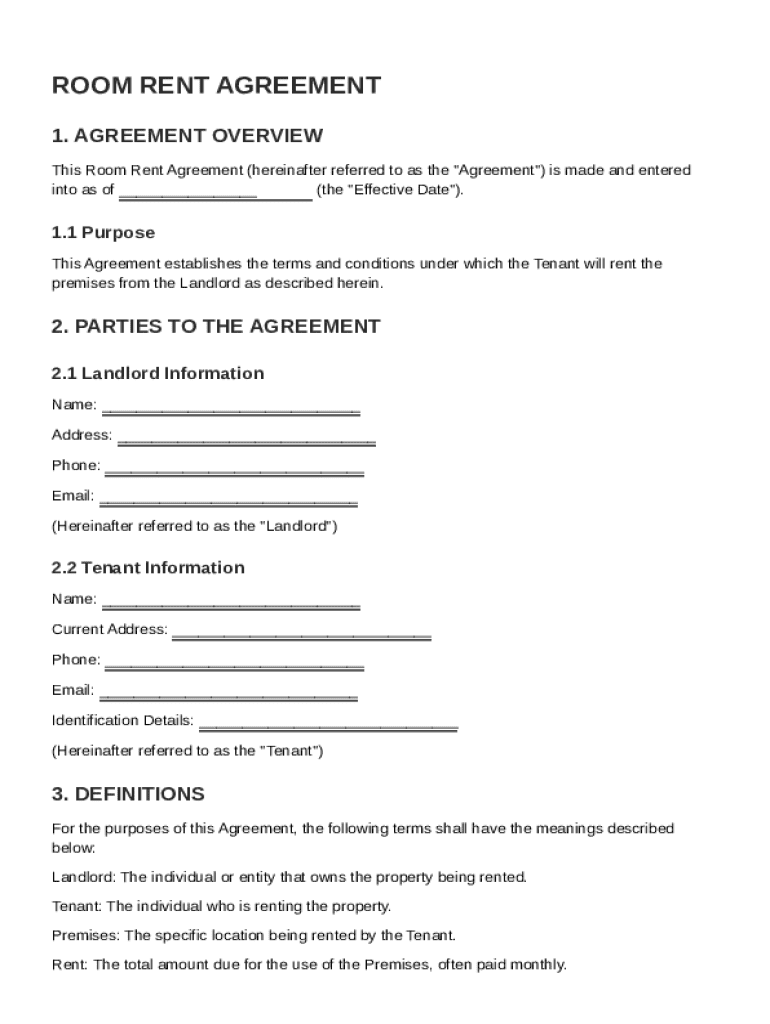
The Room Rent Agreement Template is a structured document that outlines the contractual obligations between a landlord and a tenant regarding the rental of a room. It serves as a legal framework that delineates the rights and responsibilities of both parties, ensuring clarity and reducing the potential for disputes. Key components of the agreement typically include personal details of the landlord and tenant, a detailed description of the property being rented, and the terms associated with the rental period.
-
Landlord and Tenant Information: Includes full names, contact information, and any identification details necessary to establish the identity of the involved parties.
-
Property Description: Provides a clear definition of the room being rented, including its location, size, and any furnishings included.
Key Elements of the Room Rent Agreement Template
Creating a comprehensive Room Rent Agreement Template involves several crucial elements that legally bind the tenant to the agreed terms. Here are the primary components:
-
Rental Terms: Specifies the duration of the rental agreement, including start and end dates, renewal options, and any notice periods required for termination or changes to the agreement.
-
Security Deposit: Outlines the amount of deposit required, the conditions for its return, and any deductions that may be applied for damages or breaches of agreement terms.
-
Payment Details: Provides clear information on the rental amount, due dates, preferred payment methods, and any late fees incurred for delayed payments.
Steps to Complete the Room Rent Agreement Template
Completing a Room Rent Agreement Template is a step-by-step process that requires attention to detail to ensure legal enforceability:
-
Review the Template: Carefully read through the entire document to understand all terms and conditions. This helps identify areas that require customization or clarification.
-
Fill in Personal Information: Enter the landlord and tenant's personal details accurately to avoid future legal disputes.
-
Customize Property Details: Specify the exact room being rented, including details about access and shared facilities if applicable.
-
Define Rental Terms and Payment Details: Clearly outline the financial and duration aspects of the agreement to provide transparency.
-
Include Additional Clauses: If necessary, add specific rules or agreements regarding the use of property, guest policy, or maintenance responsibilities.
How to Use the Room Rent Agreement Template
Understanding how to effectively use the Room Rent Agreement Template is critical for both landlords and tenants to ensure a smooth rental process:
-
Adapt for Specific Agreements: Customize the template to match the specific context of the rental situation, considering unique property features or legal requirements.
-
Digital Signing: Utilize platforms like DocHub to add legally binding electronic signatures to the document, ensuring efficiency and compliance with legal standards.
-
Sharing and Collaboration: Use online tools to share the template with involved parties for collective review and collaboration, allowing for any necessary amendments before finalization.
Legal Use of the Room Rent Agreement Template
The Room Rent Agreement Template acts as a legal contract, making it vital to understand its enforceability and compliance:
-
Governance by State Laws: While the template provides a general framework, it's essential to adapt it according to state-specific rental laws and regulations to ensure legality.
-
Signed Agreement: The template must be signed by all parties involved to be legally binding, with signatures preferably obtained through a platform supporting electronic signature legality, such as DocHub.
-
Rental Law Compliance: Ensure that all clauses within the agreement are in accordance with the Fair Housing Act and any local tenancy laws to prevent any disputes or legal challenges.
State-Specific Rules for the Room Rent Agreement Template
Regulations for room rental agreements can vary significantly from state to state. It's crucial to be aware of these differences to maintain legal compliance:
-
Deposit Regulations: Some states cap the maximum security deposit amount and outline specific timelines for its return after tenancy ends.
-
Notice Requirements: The required notice period for lease termination can vary, so it's important to adhere to state-mandated timeframes.
-
Optional Clauses: Depending on the state, there may be optional clauses that need to be included, such as pest control responsibilities or amenities usage.
Important Terms Related to Room Rent Agreement Template
A clear understanding of the terminology associated with a Room Rent Agreement Template is important for all parties involved:
-
Lease Term: Refers to the duration of time a tenant agrees to rent a room as specified in the contract.
-
Breach of Contract: Any violation of the agreed terms, which could result in penalties or the termination of the agreement.
-
Premises: The specific area or property defined in the agreement that is subject to the rental terms.
Examples of Using the Room Rent Agreement Template
Real-world scenarios illustrate how the Room Rent Agreement Template can be effectively utilized:
-
Shared Housing: In a situation with multiple tenants sharing a house, each room can have a separate agreement outlining individual responsibilities and shared space rules.
-
Temporary Accommodation: Ideal for short-term accommodations where terms differ significantly from standard long-term leases, such as seasonal rentals for students or interns.
-
Family Rentals: When renting out an accessory dwelling unit (ADU) to family members, having a formal agreement helps maintain transparency and manage expectations.
Who Typically Uses the Room Rent Agreement Template
Identifying who will most benefit from using the Room Rent Agreement Template helps tailor the document to applicable scenarios:
-
Property Owners: Individuals renting out rooms within their property or secondary units, seeking to formalize terms and conditions with clear documentation.
-
Tenants: Individuals renting a room in shared accommodations, seeking to protect their rights and clearly understand their obligations.
-
Property Managers: Professionals managing rental businesses who need to maintain consistent and legally compliant agreements across various properties.