




01. Edit your fitness for duty certification pdf online
Type text, add images, blackout confidential details, add comments, highlights and more.

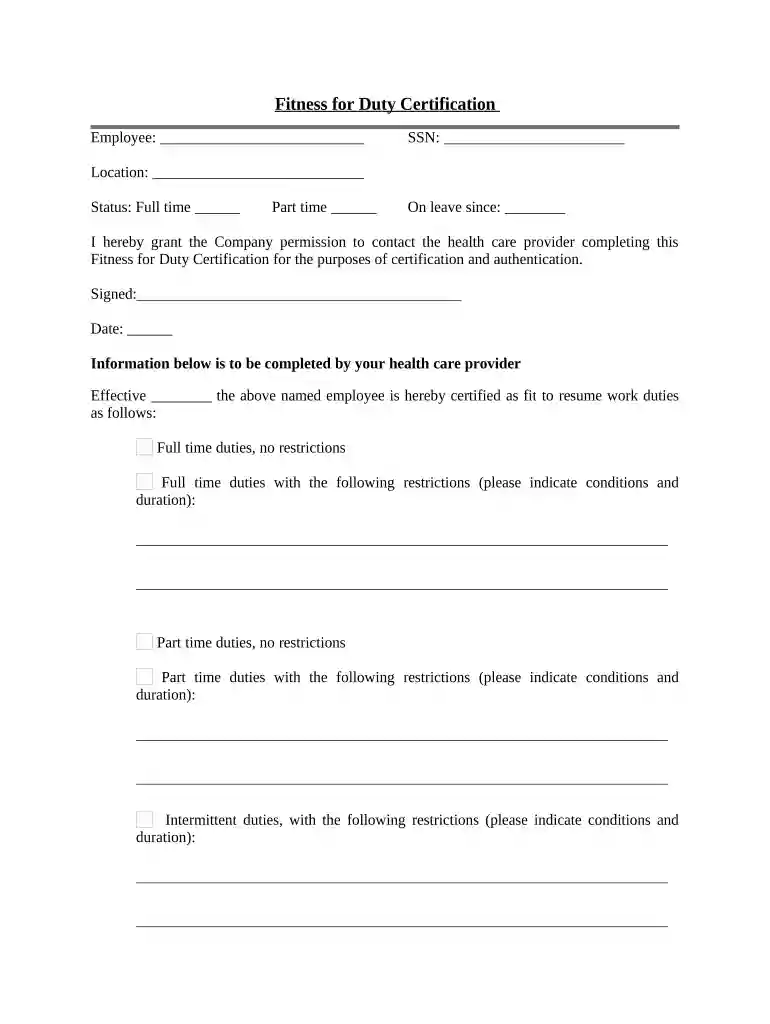
Type text, add images, blackout confidential details, add comments, highlights and more.

Draw your signature, type it, upload its image, or use your mobile device as a signature pad.

Send fitness for duty form via email, link, or fax. You can also download it, export it or print it out.
A fitness of duty certification is a formal document that verifies an individual's capability to perform their job duties safely and effectively, particularly after a health condition or medical issue. This certification acts as an assurance to employers that an employee is medically fit to return to work or continue their role without posing a risk to themselves or others. The certification is typically provided by a healthcare professional and outlines the specific abilities of the employee regarding their job functions.
Understanding this document is essential for both employees and employers, as it directly impacts workplace safety and productivity.
The fitness of duty certification is employed primarily in workplace scenarios where health and safety are critical. Employees may require this certification when returning from medical leave or after experiencing health issues that could affect their work performance. Employers utilize the certification to make informed decisions about job assignments and ensure compliance with occupational safety regulations.
Utilizing this certification helps minimize risks associated with health-related work absences and supports a safe work environment.
Completing the fitness of duty certification involves several systematic steps. Understanding these steps ensures accuracy and compliance with employer policies.
Following these steps ensures that employees fulfill their obligations and facilitates a smooth transition back into the workplace.
Familiarity with relevant terminology enhances understanding and effective communication regarding the fitness of duty certification. Key terms include:
Understanding these terms is crucial for navigating the procedures and legal requirements associated with the fitness of duty certification.
Several practical examples illustrate the application of fitness of duty certification in various workplace contexts.
These examples underscore the importance of this certification across different fields and its role in maintaining workplace safety and compliance.
At DocHub, your data security is our priority. We follow HIPAA, SOC2, GDPR, and other standards, so you can work on your documents with confidence.



However, an employer is entitled to a certification of fitness to return to duty for such absences up to once every 30 days if reasonable safety concerns existRead more
In general, a fitness-for-duty certification may not be required for each absence taken on an intermittent or reduced leave schedule. However, the employee mayRead more
May 16, 1988 CERTifiCATION means the act of submitting the required number of available names on an appropriate list to an Appointing Authority for theRead more


