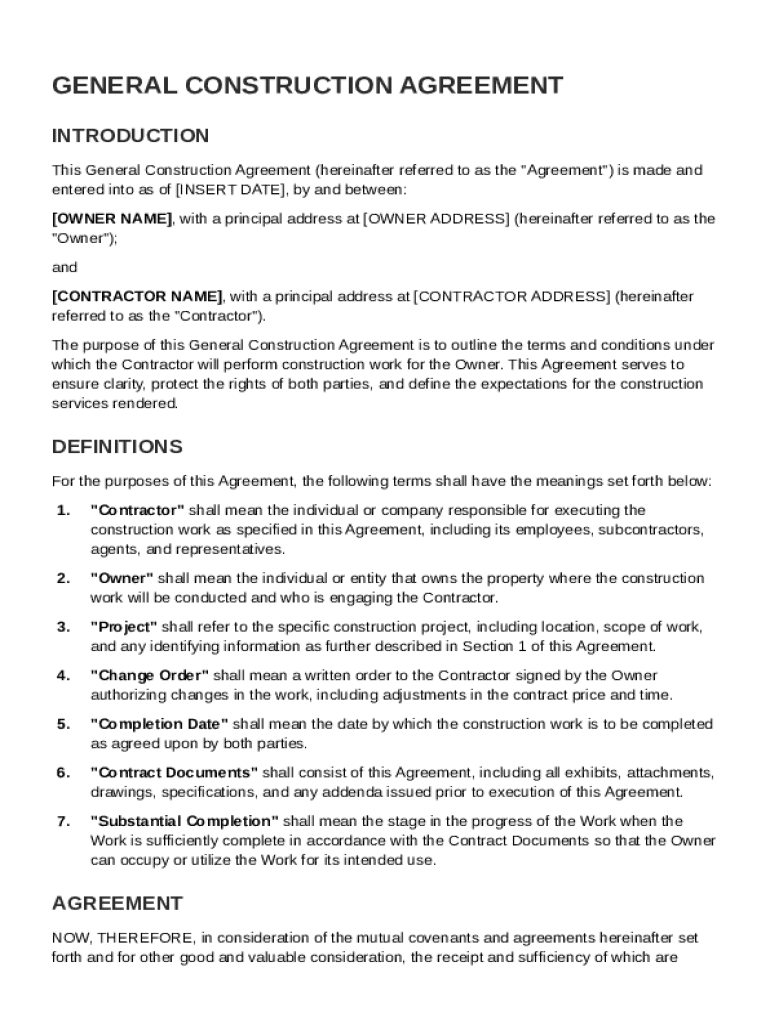







Definition and Meaning of the Construction Work General Construction Agreement Template
The Construction Work General Construction Agreement Template is a formal document that details the contractual arrangement between the owner of a construction project and the contractor responsible for its execution. It outlines the terms, conditions, and legal obligations of both parties involved. This template serves as a binding agreement that addresses key aspects such as project scope, responsibilities, timelines, payment methods, and dispute resolution mechanisms. By clearly defining these elements, the template aims to protect the interests of both parties and ensure a mutual understanding throughout the project lifecycle.
How to Use the Construction Work General Construction Agreement Template
To effectively utilize the Construction Work General Construction Agreement Template, parties should follow a structured approach:
- Customization: Tailor the template to fit the specific needs of the project. This involves entering the correct project details, such as names, addresses, and project descriptions.
- Review and Understand: Both the owner and contractor should thoroughly review the template to understand their roles and responsibilities.
- Legal Consultation: It is advisable to consult with a legal professional to ensure the agreement complies with regional laws and that all clauses adequately protect the parties' interests.
- Negotiate Terms: Open discussions to negotiate any necessary adjustments to terms and include those in the agreement.
- Sign and Store: Once finalized, the document should be signed by both parties, and stored securely, serving as a reference throughout the project.
Key Elements of the Construction Work General Construction Agreement Template
The Construction Work General Construction Agreement Template typically includes several critical components:
- Scope of Work: Defines the tasks and activities the contractor is expected to complete.
- Responsibilities: Details the duties of both the owner and contractor to prevent misunderstandings.
- Payment Details: Specifies the compensation structure, including billing rates, payment schedules, and methods.
- Project Timeline: Outlines start and end dates, along with any significant project milestones or deadlines.
- Change Order Process: Provides procedures for handling amendments to the original agreement, including cost implications.
- Dispute Resolution: Describes methods for resolving conflicts, potentially including mediation or arbitration.
- Warranty and Insurances: States warranties provided by the contractor and any insurance coverage requirements.
Who Typically Uses the Construction Work General Construction Agreement Template
This template is primarily used by:
- Construction Companies: To formalize engagements with clients.
- Property Developers: To ensure projects are completed according to the agreed terms.
- Independent Contractors: To protect their rights and clarify deliverables.
- Consultants and Architects: Who are contributing to project management or design elements.
- Real Estate Professionals: Who oversee construction projects on behalf of their clients.


Steps to Complete the Construction Work General Construction Agreement Template
Completing the Construction Work General Construction Agreement Template involves several steps:
- Gather Information: Collect details of all parties involved, the scope of work, project timelines, and budgets.
- Personalize: Insert specific project details into the template.
- Verification: Double-check all entries for accuracy, especially financial and timeline components.
- Review Clauses: Examine all legal and technical clauses for compliance and suitability.
- Documentation: Attach any referenced documents, like plans or specifications.
- Finalize Agreement: Ensure any changes are mutually agreed upon, and the document is ready for signing.
Legal Use of the Construction Work General Construction Agreement Template
Legal compliance is crucial when using the Construction Work General Construction Agreement Template:
- Adherence to Local Laws: The document must conform to federal, state, and local construction laws.
- Legal Terminology: Ensure the language used is precise and leaves no room for ambiguity.
- Binding Nature: Once signed, the agreement becomes legally enforceable, holding parties accountable.
- Amendments: Any modifications should be documented and agreed upon in writing to remain legally valid.
Important Terms Related to the Construction Work General Construction Agreement Template
Key terms frequently found within the template include:
- Owner: The entity commissioning the construction work.
- Contractor: The firm or individual hired to execute the work.
- Subcontractor: Any third-party contractors working under the main contractor.
- Lien: A legal claim on property as security against payment default.
- Indemnification: A contractual obligation of one party to compensate for the loss incurred by another.
State-Specific Rules for the Construction Work General Construction Agreement Template
Construction regulations and requirements can vary significantly between states:
- Licensing: States may have differing requirements for contractor licensing.
- Environmental Regulations: These might affect project approval and processes.
- Building Codes: Compliance with local building codes is mandatory and might influence project design and construction methods.
- Payment Laws: Variations exist in terms related to payment timelines and mechanics’ lien laws.
State-by-State Differences in the Construction Work General Construction Agreement Template
State-by-state variations in the Construction Work General Construction Agreement Template may include:
- Licensing Requirements: Some states require specific licenses for different types of construction work, affecting who can legally operate as a contractor.
- Tax Implications: Sales tax applications on construction materials or services can vary by state.
- Contract Terms: States might impose mandatory contract clauses regarding project timelines and payment schedules.
- Insurance Requirements: Minimum insurance coverage levels for liability and workers’ compensation can differ.
- Compliance with State Law: The agreement should specify that it adheres to the relevant state laws governing construction work.