






Definition and Meaning of the Operational Agreement Template
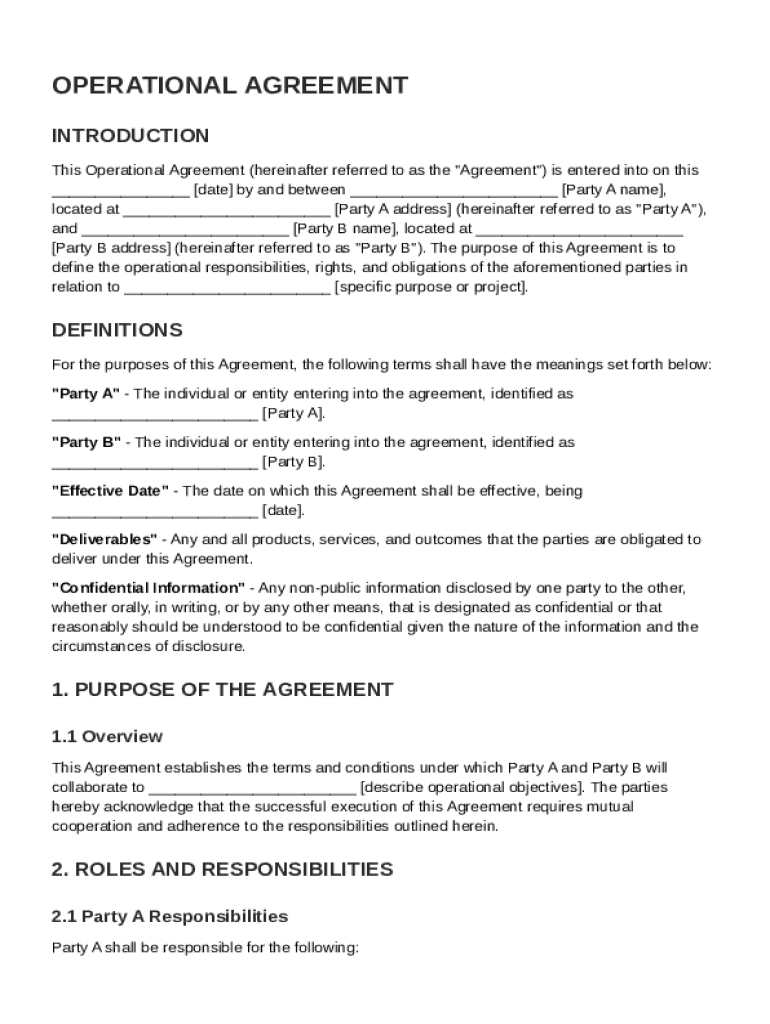
An Operational Agreement Template is a standardized document used to formalize the terms and conditions of working relationships between parties, typically within a business context. This template outlines each party's roles, responsibilities, compensation structures, confidentiality stipulations, and dispute resolution protocols. Its structured format provides a comprehensive framework for collaboration, ensuring that all participants have a clear understanding of their contributions towards achieving shared objectives. By utilizing this template, businesses can streamline the process of drafting operational contracts, thereby saving time and reducing potential legal ambiguities.
Steps to Complete the Operational Agreement Template
Completing an Operational Agreement involves several key steps to ensure that all necessary details are captured accurately. The following sequence outlines the typical process:
-
Identify the Parties Involved: Begin by clearly specifying all parties engaged in the agreement, including legal names and contact information.
-
Define Objectives and Scope: Clearly outline the operational objectives both parties agree to work towards. Specify the scope to avoid future misunderstandings.
-
Detail Responsibilities and Compensation: Enumerate the duties of each party along with any compensation or payment arrangements to ensure transparency and fairness.
-
Establish Confidentiality Terms: Articulate any confidentiality obligations that parties are to adhere to, safeguarding sensitive information.
-
Outline Dispute Resolution Processes: Specify mechanisms for resolving potential disputes, such as mediation or arbitration, to handle disagreements constructively.
-
Set Governing Law: Indicate the jurisdiction whose laws will govern the agreement, ensuring legal alignment with the location's requirements.
-
Review and Finalize: Both parties should thoroughly review the completed document. A legal professional may be consulted for final scrutiny to ensure accuracy and compliance.
Key Elements of the Operational Agreement Template
Operational Agreement Templates typically contain several critical elements that must be present for the document to be comprehensive and effective:
- Parties to the Agreement: Identifies all involved entities, providing clarity and legal accountability.
- Terms of Engagement: Specifies the duration and conditions under which the agreement is valid, including start and end dates.
- Responsibilities and Duties: Details the specific roles and expectations for each party, minimizing potential conflicts.
- Compensation and Payment Terms: Outlines financial arrangements, including payment schedules, amounts, and methods.
- Confidentiality and Non-disclosure: Protects sensitive information shared during the collaboration, maintaining business integrity.
- Amendment and Termination Clauses: Explains the processes and conditions under which the agreement can be changed or terminated.
- Dispute Resolution and Governing Law: Provides methods for amicable dispute resolution and establishes the legal framework governing the agreement.
Legal Use of the Operational Agreement Template
The Operational Agreement Template serves as a legally binding document intended to formalize business arrangements. It provides a clear framework that can be enforced in a court of law if disputes arise. To ensure its legal enforceability:
- Complete with Accuracy: Ensure all sections of the template are filled out thoroughly and accurately.
- Obtain Signatures: Have all parties sign the agreement to signify mutual consent and understanding.
- Comply with Local Laws: Verify that the agreement complies with relevant local, state, and federal laws.
- Enlist Legal Review: Engage legal counsel to review the document for additional safeguards against potential legal misinterpretations or violations.
State-Specific Rules for the Operational Agreement Template
Different states may impose varying requirements for operational agreements. It's essential to consider the following when tailoring an Operational Agreement Template for specific states:
- Jurisdictional Laws: Understand and incorporate any state-specific laws that might impact the enforceability or structuring of the agreement.
- Filing and Registration Requirements: Some states might require registration or filing of such agreements with a governmental body.
- Regional Dispute Resolution Practices: Apply appropriate dispute resolution methods preferred or legally recognized in the jurisdiction.
- State-specific Governing Laws Clauses: Tailor these sections to reflect the legislative preferences or mandatory clauses of the applicable state.
Examples of Using the Operational Agreement Template
The Operational Agreement Template is versatile and widely used in various business scenarios, including:
- Joint Ventures: Detailing responsibilities and profit-sharing arrangements between two companies collaborating on a project.
- Partnerships: Structuring roles, contributions, and revenue distribution between partners in a business start-up.
- Service Agreements: Formalizing agreements between service providers and clients, laying out deliverables, timelines, and payments.
- Supplier Agreements: Creating a clear framework for engagements with suppliers, detailing delivery expectations and payment terms.
Who Typically Uses the Operational Agreement Template
A broad range of entities find the Operational Agreement Template beneficial, including:
- Businesses and Corporations: For formalizing partnerships, joint ventures, and subcontractor relationships.
- Entrepreneurs and Start-ups: To outline collaborative efforts and distribution of responsibilities with other small business entities.
- Service Providers: For establishing clear terms and expectations with clients or contractors.
- Non-profits and Charitable Organizations: When engaging in cooperative initiatives or partnerships with other entities.


Important Terms Related to the Operational Agreement Template
Understanding specific terms within the Operational Agreement Template is vital for effective use:
- Governing Law: Refers to the legal jurisdiction whose laws will apply to the agreement.
- Confidentiality Obligations: Clauses designed to prevent the disclosure of proprietary or sensitive information.
- Dispute Resolution Mechanism: Processes such as arbitration or mediation used to resolve any conflicts that may arise.
- Amendment Clause: Stipulates how changes to the agreement can be made and the conditions for such amendments.
Versions or Alternatives to the Operational Agreement Template
Various versions of the Operational Agreement Template exist to suit different contexts and industries:
- Simple vs. Comprehensive: Some templates offer basic structure for simple agreements, while others provide extensive sections for more complex collaborations.
- Industry-specific Templates: Tailored templates for sectors such as technology, healthcare, or construction, incorporating industry-relevant terms.
- Digital vs. Traditional Formats: Modern templates available in digital formats with features like electronic signatures for streamlined processing.
An Operational Agreement Template serves as a fundamental document facilitating clear, transparent, and legally binding collaborations—vital for successful business partnerships.