
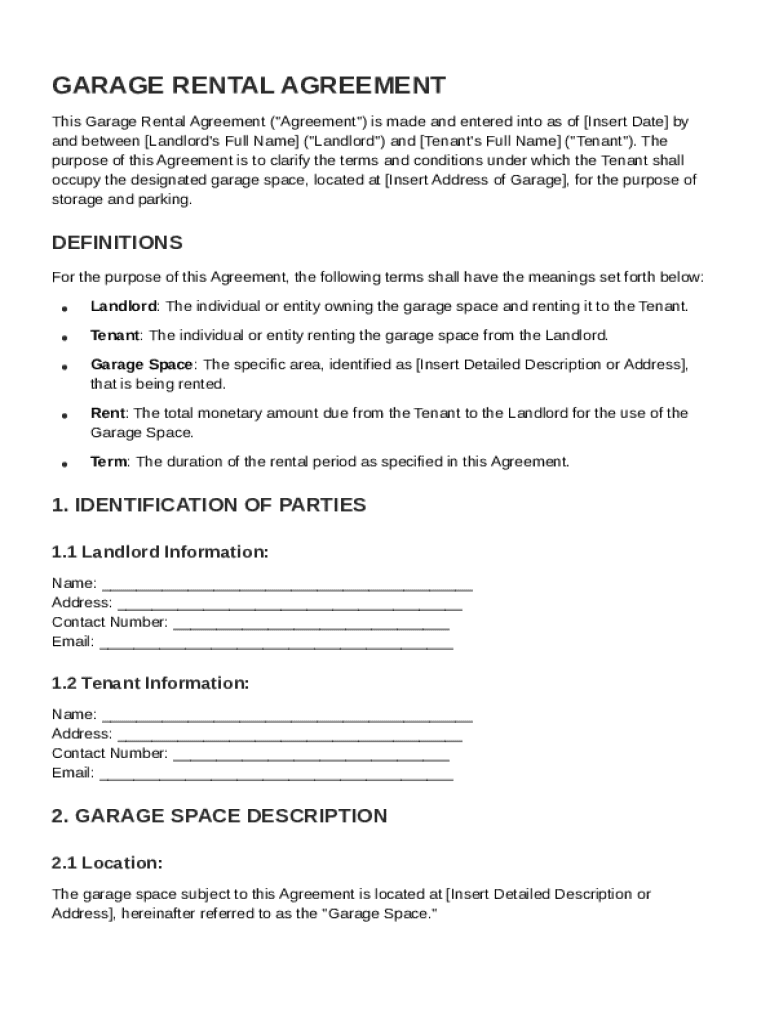







Definition and Importance of Garage Rental Agreement Template
A Garage Rental Agreement Template outlines the legally binding terms between a landlord and tenant for renting garage space. It defines essential aspects like rental period, payment obligations, and responsibilities regarding maintenance and utilities. This template ensures clarity and prevents misunderstandings, offering a clear framework for both parties to follow. The presence of such an agreement is critical as it serves as a legal document which can be referred to in case of disputes.
How to Use the Garage Rental Agreement Template
Using a Garage Rental Agreement Template involves several systematic steps to ensure that the document is correctly completed and legally binding. Start by filling out the personal information of both the landlord and tenant. Ensure the rental terms, such as duration and payment details, are clearly stated. Include additional clauses such as maintenance responsibilities, liability, and termination procedures. This template is designed to be comprehensive, adaptable, and easy to implement, facilitating a smooth rental process.
How to Obtain the Garage Rental Agreement Template
Acquiring a Garage Rental Agreement Template is straightforward and can be done from various online platforms specializing in legal documents. Users can download a standard agreement format, modify it to suit their needs, or utilize platforms like DocHub, which allow for direct editing and customization. Some legal service providers offer ready-made templates that can be tailored to specific requirements, streamlining the preparation process.
Steps to Complete the Garage Rental Agreement Template
- Identify Parties: Begin with the landlord’s and tenant’s names and contact information.
- Describe the Garage Space: Clearly outline the location and physical characteristics of the garage.
- Specify Rental Terms: Define the duration of the rental and detailed payment terms, including rent amount and due dates.
- Define Responsibilities: Allocate responsibilities for utilities and maintenance, ensuring both parties know their obligations.
- Include Legal Clauses: Add liability clauses, insurance requirements, and procedures for modifications.
- Finalize the Agreement: Review all sections for accuracy, then both parties should sign the agreement to make it legally binding.
Key Elements of the Garage Rental Agreement Template
A well-structured Garage Rental Agreement Template should contain several key elements, such as:
- Identification of Parties: Provides clear names and contact details of involved parties.
- Rental Duration and Payment Details: Specifies the lease term, rental amount, and payment deadlines.
- Utilities and Maintenance Responsibilities: Clarifies who is responsible for various utilities and upkeep.
- Termination Procedures: Explains the process for ending the agreement, including notice periods.
- Liability and Insurance: Outlines liability limitations and mandates insurance requirements to protect both parties.
State-Specific Rules for Garage Rental Agreements
Garage rental agreements can vary significantly based on state laws, which dictate specific elements like security deposit regulations, notice periods for termination, and landlord-tenant obligations. Understanding these state-specific nuances is crucial. For example, some states may have stringent rules on how security deposits must be handled, while others might offer more flexibility.
Legal Use of the Garage Rental Agreement Template
The legal utility of a Garage Rental Agreement Template rests in its ability to serve as a preventive measure against possible disputes. It acts as an official document that can be presented in court if needed and establishes duties and rights legally recognized by the state. The agreement must comply with local property laws to be enforceable.
Digital vs. Paper Versions of the Agreement
Both digital and paper versions of the Garage Rental Agreement Template have their specific advantages. Digital versions offer quick editing and sharing capabilities, making them easy to store and distribute. Platforms like DocHub facilitate the easy signing and modification of documents online. Conversely, paper versions provide a tangible document that some parties may feel more comfortable with due to its traditional nature. Both serve their purpose effectively depending on the preferences of the parties involved.




