






Definition & Meaning
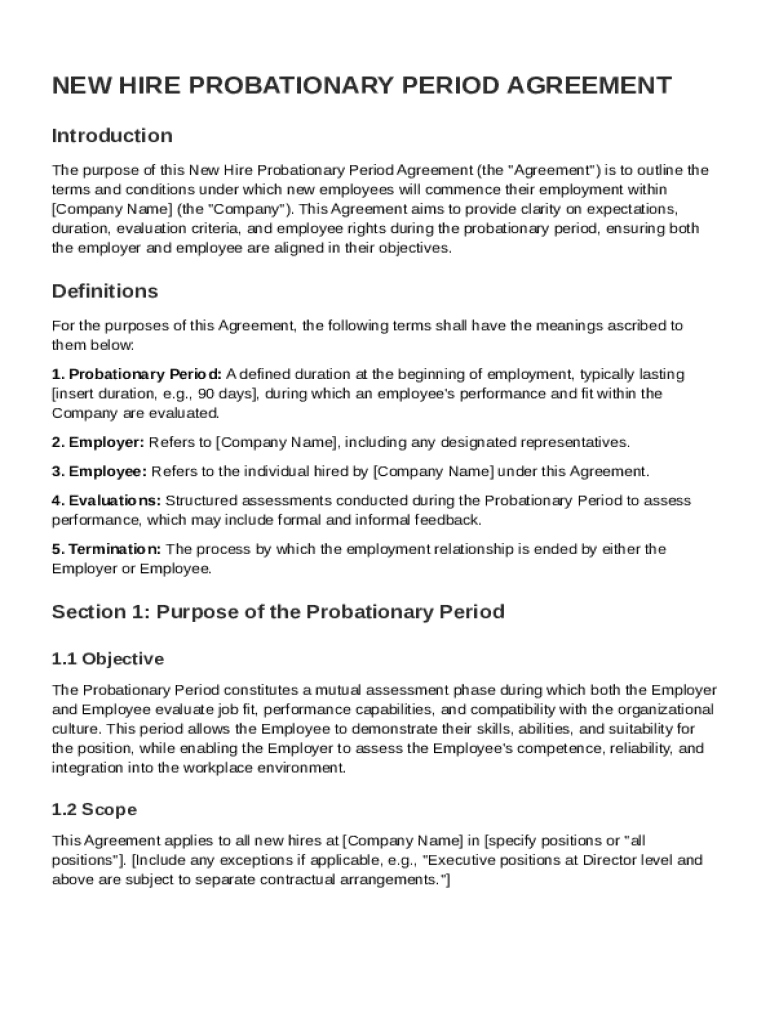
The New Hire Probationary Period Agreement Template is a vital document used by organizations to outline the initial terms and conditions of employment for newly hired employees. This agreement typically specifies the duration and objectives of the probationary period, providing a structured framework for evaluating the new hire's performance and compatibility with the company's culture. By clearly defining expectations and evaluation metrics, both the employer and employee gain a mutual understanding that facilitates a smooth transition to regular employment.
Key Elements of the New Hire Probationary Period Agreement Template
The New Hire Probationary Period Agreement Template includes several critical elements that ensure clarity and consistency. Key components often found in this agreement are:
- Probationary Period Duration: States the exact timeframe, often ranging from 30 to 90 days, during which performance and fit are assessed.
- Performance Expectations: Describes specific criteria and benchmarks that the new hire is expected to meet.
- Evaluation Process: Outlines how the employee's performance will be reviewed, including any feedback or meetings scheduled with supervisors.
- Termination Conditions: Details the conditions under which employment may be terminated during the probationary period if expectations are not met.
- Employee Rights and Benefits: Clarifies any benefits accessible during the probation period, which may differ from those of regular employees.
How to Use the New Hire Probationary Period Agreement Template
Using the New Hire Probationary Period Agreement Template effectively involves several steps:
- Customizing the Template: Tailor the template to fit the specific role and company policies.
- Communicating Terms: Clearly explain the terms of the agreement to the employee during the onboarding process.
- Ensuring Mutual Understanding: Both employer and employee should sign the document to acknowledge acceptance of its terms.
- Monitoring Performance: Actively track the new hire's progress against the set benchmarks.
- Providing Feedback: Hold regular meetings to discuss achievements and areas needing improvement, using the agreement as a reference point.
Legal Use of the New Hire Probationary Period Agreement Template
The New Hire Probationary Period Agreement Template must be used within the legal framework to protect both the company and the employee:
- Compliance with Labor Laws: Ensure the template adheres to state and federal labor laws, including those related to probationary periods.
- Non-Discriminatory Practices: The terms should apply equally to all new hires in similar roles to avoid discrimination claims.
- Documenting Terms: Keep signed copies as a legal record of the agreed terms should any disputes arise later.
Important Terms Related to New Hire Probationary Period Agreement Template
Understanding specific terms within the New Hire Probationary Period Agreement Template is crucial:
- Mutual Assessment: Refers to the collaborative nature of the probation period, where both employer and employee evaluate fit.
- Job Fit: Evaluates how well the employee adapts to the role and company culture.
- Feedback Loop: The mechanism through which ongoing performance discussions and adaptations occur.
- Transition Criteria: The conditions that must be met for moving from probation to regular employment status.
Steps to Complete the New Hire Probationary Period Agreement Template
Completing this agreement template involves several clear steps:
- Review the Job Description: Align the agreement with the specific responsibilities and expectations of the role.
- Insert Relevant Data: Fill in specifics such as the employee's name, position, and probationary period dates.
- Outline Evaluation Metrics: Clearly define how performance will be measured.
- Include Conditions for Extensions: Specify if and when the probationary period can be extended.
- Finalize and Sign: Ensure both parties review and sign the document, indicating acceptance of the terms.
State-Specific Rules for the New Hire Probationary Period Agreement Template
Different states in the U.S. may have specific rules affecting probationary agreements, including:
- At-Will Employment Provisions: Some states have unique interpretations that might affect the enforceability of probationary terms.
- Minimum Wage and Hour Regulations: Ensure compliance with state-specific labor laws governing wages and working hours during probation.
- Collective Bargaining Agreements: In states with strong union presences, ensure the agreement complies with any existing union contracts.
Examples of Using the New Hire Probationary Period Agreement Template
Practical examples highlight the template's use in real-world settings:
- Technology Companies: Use detailed performance metrics aligned with technical skill evaluations.
- Retail Businesses: Focus on customer service assessments and sales targets.
- Healthcare Providers: Emphasize compliance with safety and patient care standards as evaluation criteria.
By leveraging a comprehensive and detailed New Hire Probationary Period Agreement Template, employers and employees can navigate the initial phase of employment with clarity and mutual understanding, ensuring a productive start to their working relationship.