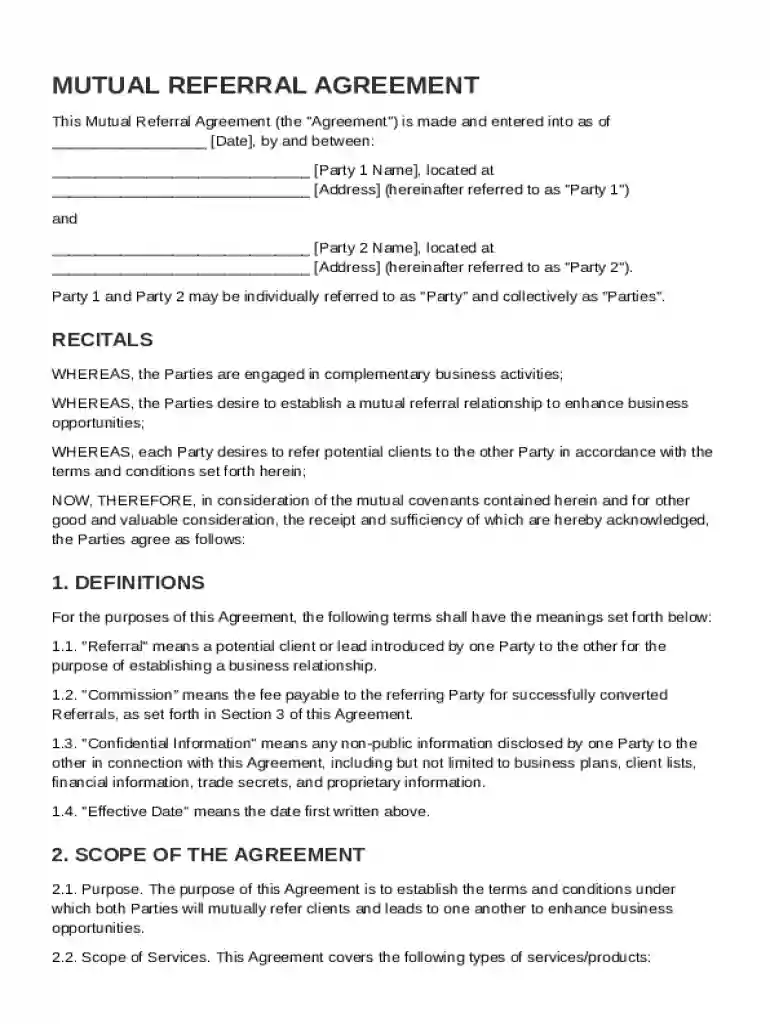
Mutual Referral Agreement Template 2026

Get Form
Mutual Referral Agreement Template Preview on Page 1

Here's how it works

01. Edit your form online
Type text, add images, blackout confidential details, add comments, highlights and more.

02. Sign it in a few clicks
Draw your signature, type it, upload its image, or use your mobile device as a signature pad.

03. Share your form with others
Send it via email, link, or fax. You can also download it, export it or print it out.

Definition of a Mutual Referral Agreement Template

A Mutual Referral Agreement Template is a formalized document that outlines a collaborative arrangement between two parties who agree to refer potential clients to each other, with the intent to enhance business opportunities. This agreement provides a structured approach to managing the referral process, ensuring both parties fulfill their roles effectively. It includes key definitions, responsibilities, and procedures to follow, creating clarity and preventing misunderstandings in business transactions.

Key Components of the Agreement

  • Parties Involved: Clearly defines the entities entering the agreement, including their respective roles and responsibilities in the referral process.
  • Commission Structures: Establishes how commissions will be handled for successful referrals, including payment methods and timelines.
  • Confidentiality Obligations: Details the measures both parties must take to protect sensitive information shared during the referral process.
  • Amendment Procedures: Specifies how the agreement can be modified, ensuring changes are only made through mutual consent.

Steps to Complete the Mutual Referral Agreement Template

Completing a Mutual Referral Agreement Template involves several essential steps to ensure the document accurately represents the interests of both parties.

  1. Identify Parties: Clearly name and describe the parties entering the agreement, specifying their roles and responsibilities in managing referrals.
  2. Define Key Terms: Establish definitions for critical terms such as “referral,” “client,” and “commission” to ensure both parties have a shared understanding.
  3. Outline Responsibilities: Detail specific duties each party must perform regarding client referrals, including timelines and expected outcomes.
  4. Set Commission Structures: Agree on commission rates and payment processes to ensure transparency and fairness in financial transactions.
  5. Include Confidentiality Clauses: Agree on measures to protect any sensitive information exchanged under the agreement.
  6. Agree on Dispute Resolution: Establish procedures for resolving any conflicts or misunderstandings that may arise.

Additional Considerations

  • State-Specific Clauses: Some states may have unique legal requirements or standards for referral agreements, so it's critical to include any necessary state-specific clauses.
  • Legal Review: Having the document reviewed by a legal professional can help ensure compliance with relevant laws and regulations.

Legal Use of the Mutual Referral Agreement Template

The Mutual Referral Agreement Template is legally binding once signed by all parties. It ensures that both parties have their rights and obligations clearly defined, minimizing potential legal conflicts. The agreement also outlines the process for dispute resolution, which is crucial for maintaining a professional working relationship between parties.

Compliance with U.S. Laws

In the United States, this agreement must comply with several laws and regulations, including those regarding business operations and confidentiality. The use of electronic signatures must adhere to the standards set by the ESIGN Act, guaranteeing the enforceability of digital agreements.

Key Elements of the Mutual Referral Agreement Template

Definitions and Responsibilities

  • Referral Definitions: Provides a clear explanation of what constitutes a referral and the expected process for handling such referrals.
  • Responsibilities of Each Party: Clearly outlines the specific actions each party must take, such as following up on referrals or maintaining client relationships.

Commission Structures and Confidentiality

  • Commission Payments: Details how and when commissions are paid out to ensure clarity and reduce disputes.
  • Confidentiality Clauses: Protect each party from unauthorized disclosure of proprietary or sensitive information.

Who Typically Uses the Mutual Referral Agreement Template

This template is commonly used by businesses seeking to expand their client base through strategic partnerships. This includes:


  • Real Estate Agents: Who may refer clients to each other based on geographic or specialization preferences.
  • Consultancy Firms: Sharing clients for specific projects or expertise areas.
  • Health Care Providers: Cross-referring patients for specialized treatments or services.
decoration image ratings of Dochub

Benefits for Various Business Types

Businesses of all sizes can benefit from this structured approach. Small businesses, in particular, find value in leveraging referred clientele to grow their market presence.

Examples of Using the Mutual Referral Agreement Template

Consider an IT services company and a marketing firm entering a mutual referral agreement. The IT company might refer clients who need website development, while the marketing firm refers those seeking SEO services. This synergy can enhance offerings, create added value for clients, and generate additional revenue streams through commission agreements.

Case Study

An example involves two consulting firms that specialized in different industries. By referring clients to each other, they were able to offer more comprehensive solutions to their clients, resulting in increased satisfaction and repeat business.

State-Specific Rules for the Mutual Referral Agreement Template

While the core structure of a Mutual Referral Agreement remains consistent, certain states have additional legal requirements that need to be considered.

Considerations for Different States

  • Tax Implications: Varying state tax laws can affect commission agreements and should be clearly outlined within the agreement.
  • Professional Licenses: Some states may require specific licenses or registrations for businesses engaged in referral agreements.

Business Types That Benefit the Most

Businesses with complementary services stand to gain the most from mutual referral agreements. This includes industries like finance, where financial advisors might refer clients to tax professionals, or hospitality, where venues might cross-refer to event planners.

Versatile Applications

These agreements can be adapted across various sectors, promoting cooperative growth and expanding service offerings seamlessly between businesses that align in values and goals.

be ready to get more

Complete this form in 5 minutes or less

Get form

Security and compliance

At DocHub, your data security is our priority. We follow HIPAA, SOC2, GDPR, and other standards, so you can work on your documents with confidence.

Learn more
ccpa2
pci-dss
gdpr-compliance
hipaa
soc-compliance
be ready to get more

Complete this form in 5 minutes or less

Get form