
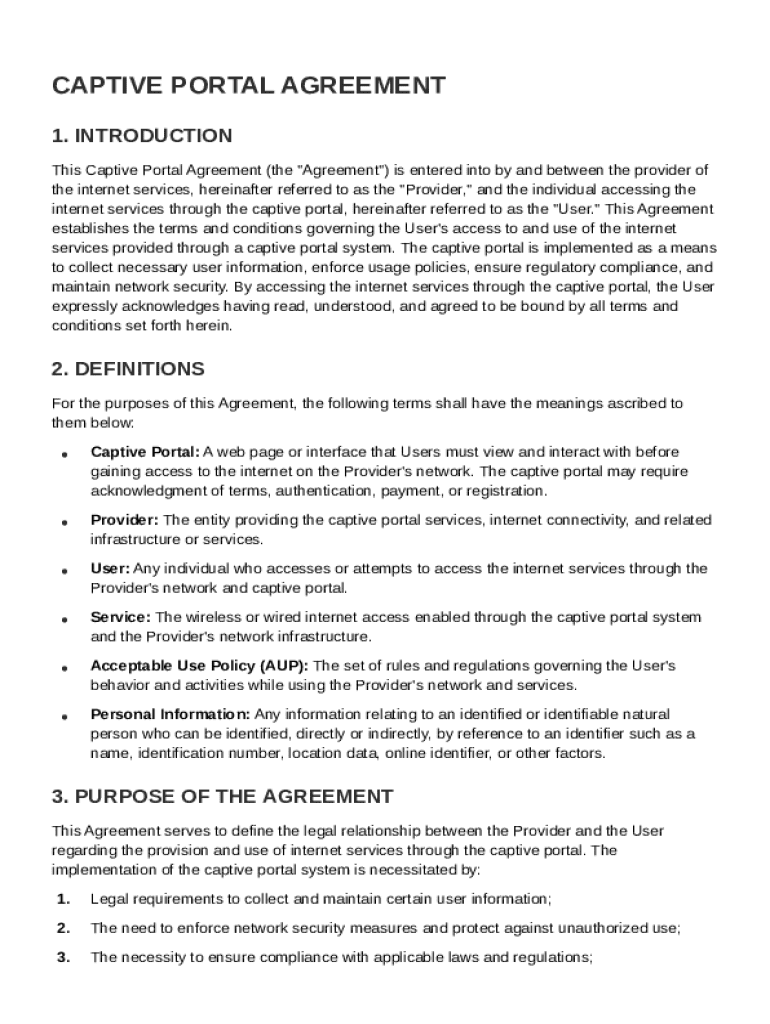







Definition and Purpose of a Captive Portal Agreement Template
A Captive Portal Agreement Template serves as a standardized document that outlines the terms and conditions for users accessing internet services through a captive portal provided by an internet service provider (ISP). This template covers various aspects, including user obligations, acceptable use policies, data privacy, and provider responsibilities. By providing a clear framework, it ensures that all parties are aware of their rights and duties, thereby promoting compliance with legal and security requirements.
ISPs use this agreement to inform users about the terms they must accept before gaining internet access. This agreement emphasizes the importance of network security and proper service usage, ensuring that users comply with the stated policies to maintain service integrity. The template also assists in protecting the provider from liabilities related to network misuse by outlining clear guidelines and responsibilities.
Key Elements of the Captive Portal Agreement Template
The Captive Portal Agreement Template includes several crucial components designed to provide comprehensive guidance for both providers and users. These elements ensure that the terms of service are transparent and well-understood:
-
User Obligations and Responsibilities: This section outlines what is expected of users when accessing the portal, including compliance with laws and regulations and prohibitions against illegal activities.
-
Provider Responsibilities and Liabilities: Details the ISP's duties, such as maintaining network security and protecting user data. It also limits the provider's liability concerning user actions.
-
Privacy and Data Collection: Addresses how personal information is collected, used, and protected, ensuring transparency about data handling practices.
-
Network Usage Monitoring: Describes the provider's right to monitor network activity for security purposes, ensuring that users are aware of and consent to this practice.
-
Indemnification Clauses: Protects the ISP against certain legal actions related to user misconduct, reinforcing the responsibility of users to adhere to the agreement terms.
Steps to Complete the Captive Portal Agreement Template
Completing a Captive Portal Agreement Template involves several key steps to ensure all necessary details are included and both parties understand their roles:
-
Review the Template: Carefully read through the entire agreement to understand the standard terms and consider any specific requirements related to your network.
-
Customize for Specific Use: Tailor the template to suit your network's needs. This might include specific usage policies or additional terms relevant to your location or service type.
-
Consult Legal Counsel: It's advisable to have a legal expert review the customized agreement to ensure compliance with local laws and regulations.
-
Implement User Acknowledgement: Ensure that users must actively acknowledge and accept the terms before gaining access, such as through a mandatory click-through page.
-
Regularly Update the Agreement: Keep the agreement up to date with changes in laws, technology, or services offered to ensure ongoing compliance and relevancy.
Legal Use and Compliance Considerations
The legal validity of a Captive Portal Agreement largely depends on its adherence to relevant legislation, such as data protection laws and consumer rights regulations. ISPs must ensure that the document aligns with laws such as the ESIGN Act for electronic agreements.
For the agreement to hold up legally, it must be comprehensible, unambiguous, and accessible to all users. Including a mechanism such as a click-wrap agreement can provide additional legal protection, as this requires users to actively consent to the terms before accessing the internet services. Legal compliance also involves providing clear information regarding privacy practices and obtaining explicit consent from users regarding data collection and monitoring.
Who Uses the Captive Portal Agreement Template
Primarily, ISPs and organizations providing internet services through captive portals utilize this template. These can include:
-
Businesses offering guest Wi-Fi: Offices, cafes, and hotels that provide Wi-Fi access to customers and visitors often employ captive portal agreements to manage service use and maintain security.
-
Educational Institutions: Schools and universities that provide network access to students and staff utilize these agreements to control access and uphold network policies.
-
Event Organizers: Large public events or conferences often offer internet access through captive portals and use these agreements to manage user access compliantly.
Variations and Alternatives to the Captive Portal Agreement Template
There are various formats and alternatives to the standard Captive Portal Agreement Template, allowing for flexibility depending on the service type and user base:
-
Custom-Specific Templates: Developed for specific industries or user groups, these versions might include additional clauses relevant to particular use cases.
-
Integrated Terms of Service: Some organizations integrate the captive portal agreement within broader terms of service documents, providing a comprehensive document that covers all service aspects.
-
Digital Agreement Platforms: Services like DocHub allow customization and easy management of digital agreements, providing tools to tailor and update agreements efficiently.
Software Compatibility and Integration
Managing a Captive Portal Agreement can be seamless when using software that integrates well with existing digital environments. Platforms like DocHub ensure compatibility with various file formats (PDF, DOC, etc.) and cloud storage services, which is essential for managing and updating agreements efficiently.
-
Google Workspace Integration: DocHub's integration with Google Workspace allows for easy importing and exporting of documents from Google Drive or Gmail, facilitating efficient management and organization of agreement templates.
-
Security Integration: Features like 256-bit SSL encryption and OAuth 2.0 ensure that documents and user data are protected during transfer and storage. This security is crucial when handling sensitive information within captive portal agreements.
Examples of Use Cases for Captive Portal Agreement Templates
Captive Portal Agreements have diverse applications and are used extensively in various sectors to manage user access to internet services:
-
Retail Sector: Stores that offer customers Wi-Fi access use captive portal agreements to regulate access and gather customer data for marketing purposes while maintaining security.
-
Healthcare Facilities: Hospitals and clinics provide network access to patients and visitors and employ these templates to ensure appropriate public network use and compliance with privacy laws.
-
Corporate Offices: Businesses with visiting clients or partners may use these agreements to safeguard proprietary network resources while offering internet access selectively.
State-Specific Regulations and Requirements
Different states in the U.S. may have unique requirements regarding captive portal agreements, especially concerning data privacy and internet usage laws. It is crucial for ISPs to be aware of these differences and ensure that their agreements comply with all relevant state regulations. This might involve varying data protection measures or terms related to liability and indemnification unless federal law preempts these aspects.
Understanding specific state requirements helps tailor agreements effectively and ensures compliance with local legislation, which can significantly impact the legality and effectiveness of the agreement.




