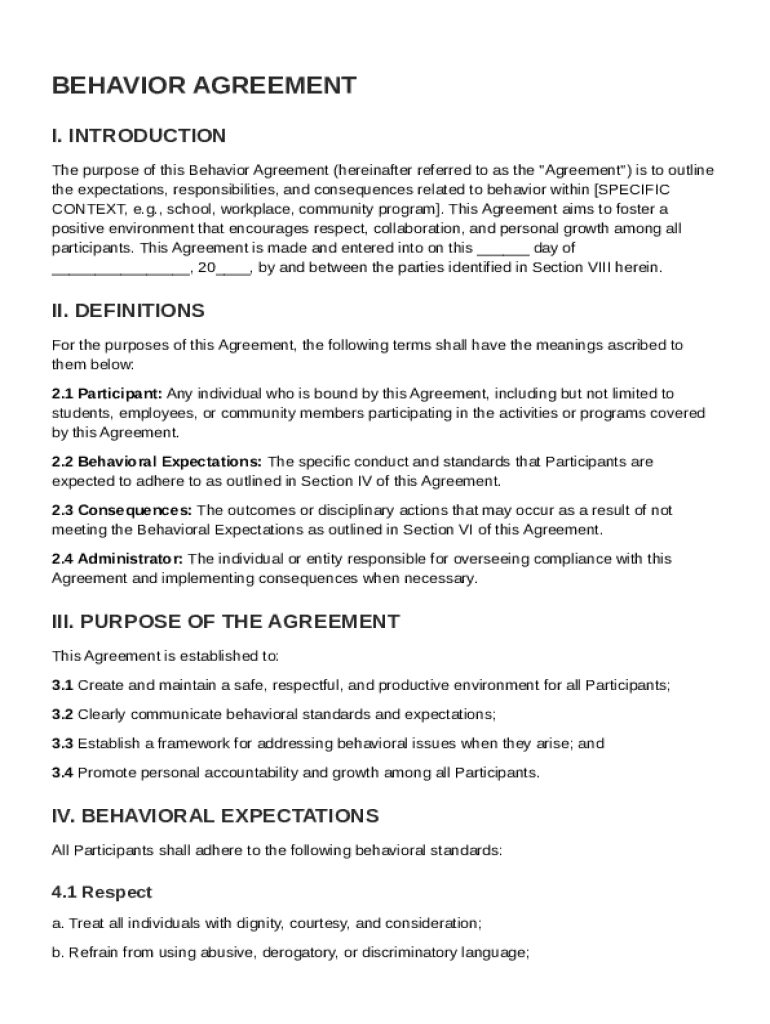







Definition and Purpose of a Behavior Agreement Template
A Behavior Agreement Template serves as a formal document outlining the expectations, responsibilities, and consequences associated with behavior within a particular context. This template aims to create a positive environment that fosters respect, collaboration, and personal growth among participants. The agreement often defines key terms such as 'Participant' and 'Behavioral Expectations,' establishing standards for respectful conduct, responsibility, and integrity. It also includes details about potential consequences for non-compliance, ensuring that all parties understand the implications of not adhering to the set standards. In addition, the template often provides resources for support and conflict resolution, specifying the duration of the agreement, along with procedures for review and amendments.
Steps to Complete the Behavior Agreement Template
Completing a Behavior Agreement Template involves several key steps to ensure that it is comprehensive and enforceable:
-
Identify Participants: Clearly list all parties involved in the agreement, ensuring that each individual understands their role and responsibilities. This might include students, employees, or members of a specific organization.
-
Define Behavioral Expectations: Outline the specific behaviors that are expected from each participant. This may involve listing acceptable and unacceptable behaviors, providing examples for clarity.
-
Detail Responsibilities: Each participant's responsibilities should be discussed and detailed within the document. This ensures that everyone understands their specific duties and obligations under the agreement.
-
Outline Consequences: Specify the consequences for failing to meet the behavioral expectations. Consequences should be fair, reasonable, and proportionate to the behavior in question.
-
Include Support Resources: Provide information on available resources and support for those who may need additional guidance or assistance in meeting the expectations outlined in the agreement.
-
Set Duration and Review Process: Establish the duration of the agreement and outline the process for reviewing and amending it as necessary. This ensures that the document remains relevant and up to date.
Key Elements of the Behavior Agreement Template
The Behavior Agreement Template typically includes several essential elements that ensure its effectiveness and enforceability:
-
Introduction: An overview of the purpose and importance of the agreement, setting the context for the document.
-
Participant Details: A comprehensive list of individuals or groups involved, including their roles and responsibilities.
-
Behavioral Expectations: A detailed description of the expected behaviors, with examples where necessary.
-
Consequences for Non-Compliance: Clear explanations of the repercussions for failing to adhere to the agreement.
-
Support and Resources: Information about available support systems, including contact details for relevant personnel or departments.
-
Review and Amendments Clause: Procedures for the periodic review and amendment of the agreement to ensure its continued relevance.
Legal Use and Compliance of the Behavior Agreement Template
Behavior Agreement Templates play a critical role in ensuring legal compliance and reducing potential liabilities:
-
Legally Binding: These agreements, when properly executed, are often legally binding, ensuring that all parties are held accountable for their actions.
-
Documentation: Provides a written record of expectations and obligations, which can be pivotal in resolving disputes.
-
Conflict Resolution: Enhances the ability to manage and resolve conflicts, with clearly outlined processes for addressing grievances.
-
Compliance with Regulations: Ensures adherence to relevant laws and regulations, reducing the risk of legal issues.
Examples of Using the Behavior Agreement Template
Behavior Agreement Templates are versatile and can be employed in various scenarios:
-
Educational Institutions: Schools and universities use these templates to set student conduct expectations and handle disciplinary matters effectively.
-
Workplaces: Employers implement behavior agreements to promote a safe and respectful working environment.
-
Community Groups: Community organizations utilize these documents to establish standards for group interactions and collaborations.
-
Sports Teams: Coaches and managers often require team members to sign behavior agreements as part of promoting sportsmanship and team cohesion.
Who Typically Uses the Behavior Agreement Template
The Behavior Agreement Template is widely used by a range of entities seeking to establish clear behavior guidelines:
-
Educational Administrators: To promote a conducive learning environment.
-
Human Resource Professionals: As part of employee onboarding and policy enforcement.
-
Community Leaders: To foster unity and collaboration among group members.
-
Team Managers and Coaches: To encourage sportsmanship and teamwork.


Differences in State-Specific Regulations
While the fundamental purpose of a Behavior Agreement Template remains consistent across different jurisdictions, state-specific regulations can affect its implementation:
-
Regulatory Requirements: Some states may have specific requirements for what must be included in a behavior agreement.
-
Enforcement Mechanisms: Variations in enforcement mechanisms, particularly in educational settings, may require tailored agreements that align with local laws.
-
Privacy Laws: Compliance with state privacy laws can influence how participant information is handled and shared.
Creating a Tailored Behavior Agreement
Creating a tailored Behavior Agreement Template involves customizing the document to suit the specific needs of the organization or group:
-
Customization: Adapt the agreement to reflect the unique context, goals, and challenges of the particular setting.
-
Consultation with Stakeholders: Engage with participants or representatives to gather input and ensure the agreement meets everyone’s needs.
-
Periodic Review and Updating: Regularly review and update the agreement to adapt to new challenges, legal requirements, or organizational changes.