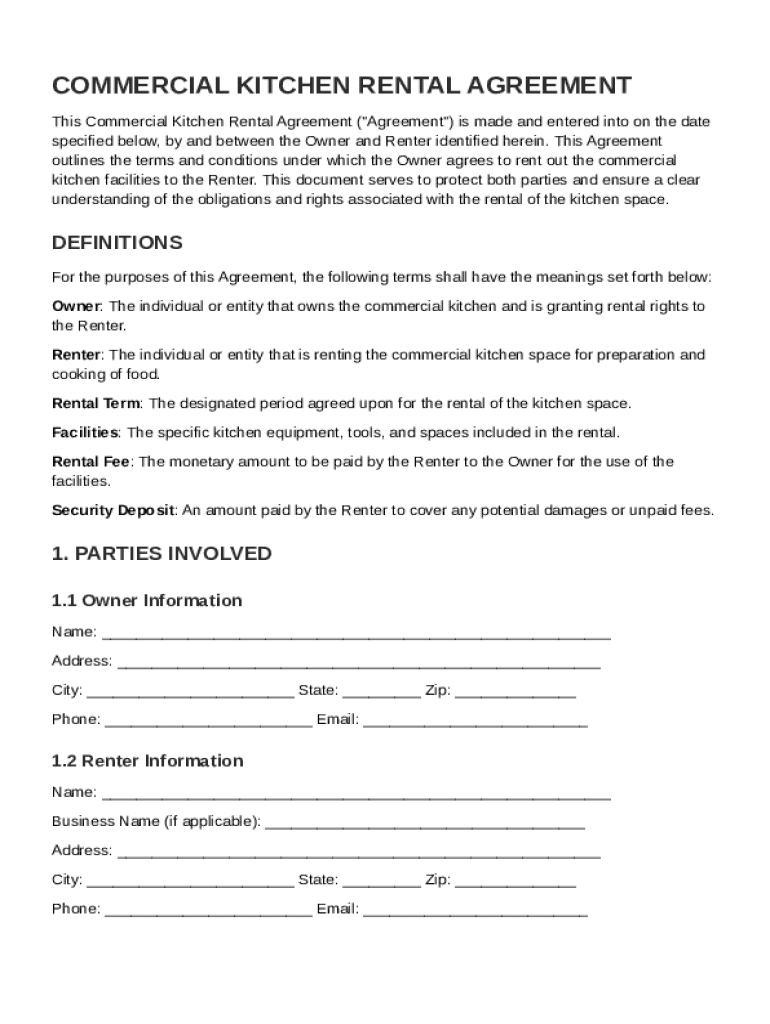







Definition & Meaning
A Commercial Kitchen Rental Agreement Template is a structured document used to outline the terms and conditions under which a kitchen owner rents their facilities to a tenant. This agreement is specifically tailored to cover the unique aspects of commercial kitchen rentals, setting forth clear guidelines on several critical areas. It includes essential components such as the rental period, payment terms, the responsibilities of both parties, and provisions for maintenance and compliance with legal standards. By formalizing these aspects, the agreement protects both parties, ensuring each understands their rights and obligations.
Key Elements of the Commercial Kitchen Rental Agreement Template
The template contains several crucial elements to ensure clarity and completeness. Some of the most significant components are:
- Parties Involved: Clearly specifies the identities of the owner and the renter.
- Rental Duration: Details the start and end dates of the rental period.
- Payment Terms: Includes the amount of rent, payment frequency, and mode of payment.
- Maintenance Obligations: Outlines each party's responsibilities for maintaining the kitchen facilities, including cleaning and repairs.
- Compliance Requirements: Addresses adherence to health, safety, and business regulations.
- Insurance: Specifies the kind of insurance coverage required by both parties to cover liabilities and property damage.
- Termination Clauses: Establishes the conditions under which the agreement can be terminated, including notice periods and breach scenarios.
How to Use the Commercial Kitchen Rental Agreement Template
To use the template effectively, follow these steps:
- Review the Template: Start by reading through the entire document to understand its structure and requirements.
- Customize the Information: Input specific details related to the rental circumstances, such as the names of the parties, rent amount, and duration.
- Negotiate Terms: Discuss any terms that may require negotiation between the owner and renter to ensure mutual agreement.
- Legal Review: Consider having an attorney review the agreement to ensure compliance with state laws and completeness of terms.
- Sign the Agreement: Once both parties are satisfied, they should sign the document to make it legally binding.
Steps to Complete the Commercial Kitchen Rental Agreement Template
Completing this template involves several detailed steps to ensure that every part of the agreement is addressed:
- Gather Necessary Information: Collect all relevant data, including contact information for both parties, specifics about the kitchen space, and any legal documents required.
- Input Custom Details: Fill in specific information such as rental start and end dates, payment terms, and other agreed provisions.
- Specify Legal and Compliance Requirements: Ensure that the document includes clauses that address compliance with local health and safety regulations.
- Set Insurance Provisions: Clearly state the insurance requirements for both owner and renter to mitigate potential liabilities.
- Finalize and Sign: Once all details are in place and reviewed, both parties should sign the agreement.
Important Terms Related to Commercial Kitchen Rental Agreements
Understanding key terms is crucial for both parties in a rental agreement:
- Lessee and Lessor: The renter (lessee) and the landlord (lessor) as the respective parties in the agreement.
- Premises: The physical location of the kitchen being rented.
- Security Deposit: A deposit paid by the lessee to cover potential damages or unpaid rent, often refundable upon satisfactory completion of the rental period.
- Indemnification Clause: A provision where one party agrees to compensate the other for certain damages or lawsuits.
Who Typically Uses the Commercial Kitchen Rental Agreement Template
This template is most frequently utilized by:
- Small Business Owners: Entrepreneurs who need access to a commercial kitchen for food production.
- Catering Companies: Businesses in the catering industry that require professional facilities for large-scale meal preparation.
- Pop-Up Restaurants: Temporary restaurant installations that need kitchen access without committing to long-term leases.
- Cooking Schools: Educational institutions offering culinary classes and seeking a professional setting.


Legal Use of the Commercial Kitchen Rental Agreement Template
The template serves a crucial legal purpose by:
- Establishing Legal Obligations: Clearly defining the duties and rights of both kitchen owners and renters.
- Serving as Evidence: Providing written documentation that can be used in any legal proceedings if a dispute arises.
- Ensuring Compliance: Facilitating adherence to local regulations and industry standards through specified clauses.
State-Specific Rules for Commercial Kitchen Rental Agreements
Each state in the U.S. may have specific requirements governing commercial kitchen rentals:
- Health Regulations: Vary by state and typically involve food safety standards and kitchen maintenance requirements.
- Zoning Laws: Impact the legality of operation in certain districts; necessary to confirm that commercial use is permitted.
- Licensing: Some states may require additional permits or licenses for operating a commercial kitchen.
- Legal Counsel: It is advisable to seek local legal advice to ensure that all state-specific requirements are met.
By comprehensively understanding and implementing the Commercial Kitchen Rental Agreement Template, parties involved can ensure clear communication and mutual protection throughout the rental period.