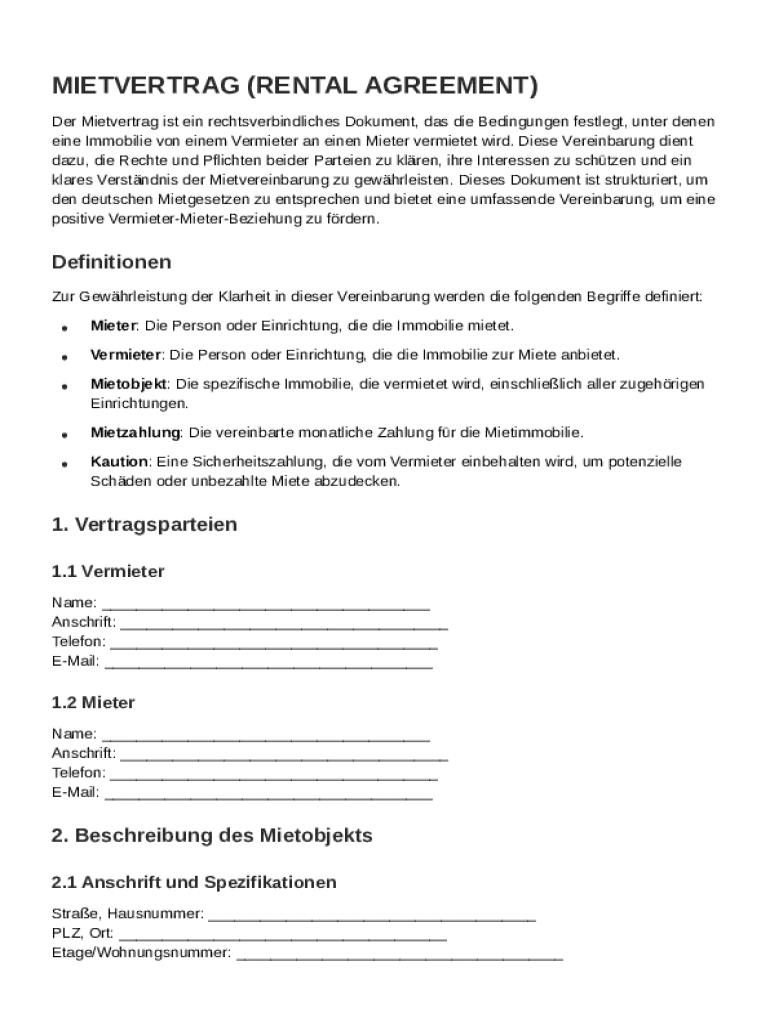







Definition and Meaning
The German Rental Agreement Template is a legally binding document that defines the terms and conditions for renting a property between a landlord and a tenant. It outlines the rights and responsibilities of both parties, managing expectations related to rent, deposits, maintenance, and adhering to German tenancy laws. The template serves as a standard framework ensuring both parties understand and comply with the agreed-upon terms.
Key Elements of the German Rental Agreement Template
The template includes essential components necessary for rental contracts. Key elements typically cover:
- Parties Involved: Identification details for both landlord and tenant.
- Property Details: Description and address of the rented property.
- Lease Term: Duration of the tenancy, specifying start and end dates.
- Rent Terms: Amount, frequency, and method of rent payment.
- Security Deposit: Amount required and terms for its return.
- Maintenance Obligations: Responsibilities regarding repairs and upkeep.
- Termination Clauses: Conditions under which the lease can be terminated.
- Applicable Laws: References to relevant legal requirements.
Each component ensures clarity and prevents potential disputes by setting clear guidelines for the rental relationship.
How to Use the German Rental Agreement Template
To effectively utilize the template, follow these steps:
- Download the Template: Obtain a digital copy compatible with your preferred software.
- Customize Accordingly: Fill in the blanks with specific details of the rental agreement.
- Review with Both Parties: Ensure both the landlord and tenant agree on the filled-in details.
- Legal Consultation (Optional): Seek professional legal advice to confirm compliance with relevant laws.
- Finalize the Document: Both parties should sign the agreement, making it legally binding.
- Store a Copy: Keep a signed copy accessible for reference throughout the rental term.
These steps help streamline the agreement process, making the document both practical and enforceable.
Steps to Complete the German Rental Agreement Template
Completing the template involves systematic data entry and verification:
- Enter Personal Information: Start with names, contact information, and identification numbers.
- Detail Property Information: Address and description of the rental property.
- Specify Financials: Clearly state rent, deposit, and any additional fees.
- Set Timeframes: Define the lease term, renewal options, and notice periods.
- Outline Rules and Responsibilities: Maintenance duties, pet policies, and other expectations.
- Include Legal Clauses: Add relevant legal stipulations per German tenancy law.
- Cross-Verification: Review details to ensure accuracy.
- Sign and Date: Both parties sign to validate the contract.
This process ensures the document's integrity and legal standing.
Important Terms Related to the German Rental Agreement Template
Understanding key terms within the agreement is crucial:
- Mietvertrag (Lease Agreement): The official title of the rental contract.
- Kaution (Security Deposit): Funds held as security against damages or violations.
- Nebenkosten (Additional Costs): Utilities or services included in rent payments.
- Betriebskosten (Operating Costs): Expenses related to property maintenance.
- Mietrückstand (Rent Arrears): Unpaid rent indicating a breach of contract.
Grasping these terms facilitates better communication and adherence to the agreement.
Examples of Using the German Rental Agreement Template
Real-world applications demonstrate the template's utility:
- Standard Lease: A family rents an apartment in Munich with a one-year lease, agreeing to all standard terms.
- Corporate Rental: A company arranges a long-term lease for employee housing, with specialized clauses for utility payments.
- Short-Term Lease: During a festival, a landlord offers a three-month lease with adjustments for temporary usage.
These examples highlight the template's flexibility and applicability across diverse scenarios.
Legal Use of the German Rental Agreement Template
The document must align with:
- German Civil Code (BGB): Overarching legal framework governing tenancy agreements.
- Local Regulations: Municipal rules that may affect terms like notice periods or allowed increases in rent.
- Tenant Rights: Protection against unjust eviction or terms that breach local tenant laws.
Ensuring compliance protects both parties and upholds the contract's validity.
Digital vs. Paper Version
Both versions have their merits:
- Digital Version: Allows easy customization and sharing. It's compatible with various document editing tools, ensuring flexibility in modification.
- Paper Version: Provides a tangible record that may be more acceptable in some legal contexts. Storage and signing might be traditional but offer a sense of permanence.
Choose based on convenience and preference, ensuring both versions retain the same legal strength.
State-Specific Rules for the German Rental Agreement Template
While German tenancy law is federally regulated, some stipulations might be localized. These can include variance in:
- Rent Controls: Some states have stringent rent capping laws.
- Environmental Regulations: Impact on maintenance duties for sustainability compliance.
- Tenant Protection Laws: Different protections in eviction or dispute scenarios.
Understanding these nuances ensures agreements are enforceable and fair across different German states.