






Definition and Purpose of the CR-403 Order
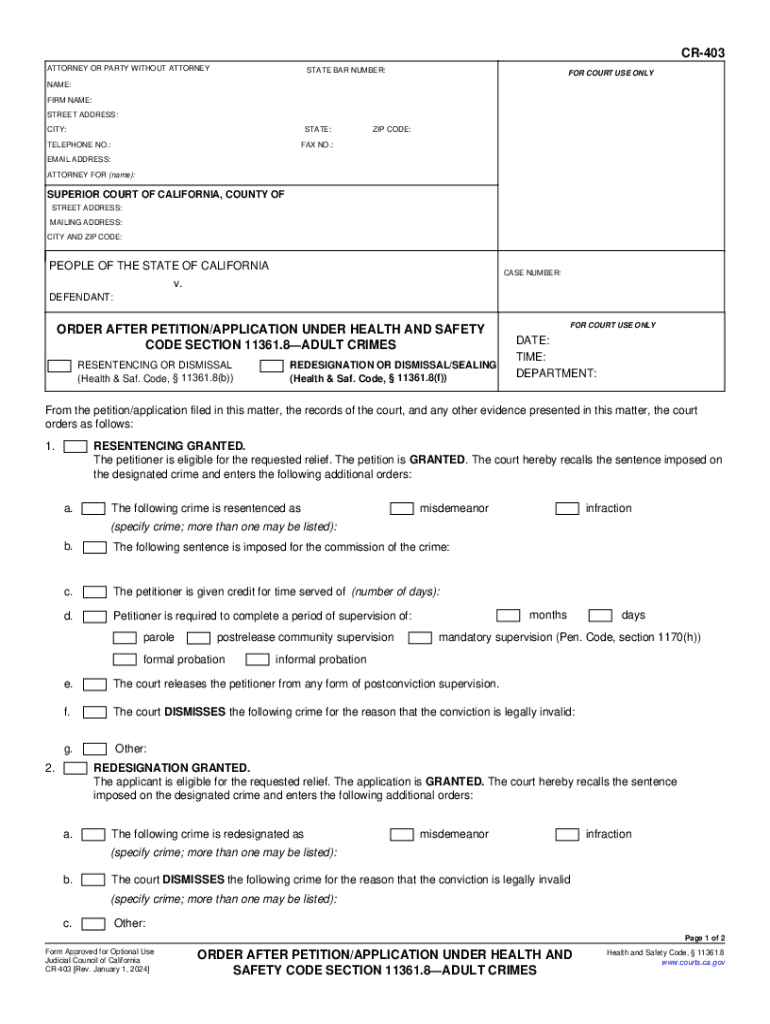
The CR-403 Order After Petition Application, under the Health and Safety Code, is an essential legal document that addresses the processes related to petitions or applications involving adult crimes. This document is pivotal in determining whether a conviction will undergo resentencing, redesignation, dismissal, or sealing. Its primary purpose is to ensure that eligible individuals can have their criminal records reassessed, potentially altering the legal repercussions, including changes to criminal records and registration requirements. Understanding its meaning and function is crucial for those seeking legal relief under the specified section of the Health and Safety Code.
Key Elements of the CR-403 Order
The CR-403 Order includes several critical elements that define its applicability and execution. The document outlines eligibility criteria that consider the nature and severity of the original crime, the petitioner's age at the time of the offense, and public safety concerns. Additionally, it specifies the procedures for evaluating requests, emphasizing both the legal and procedural aspects that must be adhered to during the process. Understanding these elements is vital for petitioners to navigate the application effectively.
Criteria for Eligibility
- Nature and severity of the crime
- Age of the petitioner at the time of the offense
- Considerations regarding public safety
Steps to Complete the CR-403 Order
To successfully complete the CR-403 Order After Petition Application, applicants must follow a methodological approach:
- Review Eligibility Requirements: Ensure that the criteria align with your case specifics.
- Gather Necessary Documentation: Collect all relevant documents that support your eligibility and case background.
- Complete the Application Form: Fill out the form accurately, detailing all required information with precision.
- Submit the Form: Choose the method (online, mail, or in-person) that suits your convenience and submit the completed form.
- Track the Application: Keep track of the submission and any feedback from the issuing authority.
Each step requires careful attention to detail to ensure compliance and increase the likelihood of a favorable outcome.
Who Typically Uses the CR-403 Order
The CR-403 Order is primarily used by individuals seeking to address past criminal records under specific provisions of the Health and Safety Code. These individuals often aim to modify the legal impact of their prior convictions. Such modifications can be crucial for improving their social and professional opportunities. Typically, this form is utilized by:
- Former offenders eligible for resentencing or record amendment
- Legal representatives advocating on behalf of their clients
- Jurisprudence professionals interpreting sentencing reforms


Legal Use of the CR-403 Order
The legal use of the CR-403 Order is grounded within the judicial framework that allows for reconsiderations of past convictions. It provides a formal mechanism through which individuals can petition for legal relief. This form is not merely a tool for alteration but serves as a formal request for juridical review based on predefined legal standards. Legal practitioners often leverage this document to ensure their clients receive a fair reassessment of their cases.
Form Submission Methods
Different methods are available for submitting the CR-403 Order After Petition Application:
- Online Submission: Provides a convenient, paperless way for submission and real-time tracking.
- Mail Submission: Traditional method that may be preferred by those without reliable Internet access.
- In-Person Submission: Ideal for those who prefer personal engagement or require immediate confirmation of receipt.
Each option offers unique advantages, and applicants should choose based on their personal circumstances and technological access.
Required Documents for Submission
Accurate and complete documentation is critical when submitting a CR-403 Order:
- Identity Verification: Government-issued ID or other official documents proving identity.
- Court Records: Previous court orders and records related to the conviction.
- Supporting Evidence: Any additional documents that support the change in sentencing or record.
Failure to provide the necessary documents can delay the processing or result in the rejection of the application.
Eligibility Criteria
Assessing eligibility is a fundamental part of utilizing the CR-403 Order. The criteria are established to ensure that only those who qualify can proceed with their applications. Considerations include:
- The type and seriousness of the offense
- The impact of the criminal record on the petitioner's livelihood
- The degree of rehabilitation demonstrated since the original conviction
Understanding these criteria helps potential applicants ascertain their likelihood of a successful petition.