






Definition and Purpose of VA Form 2130
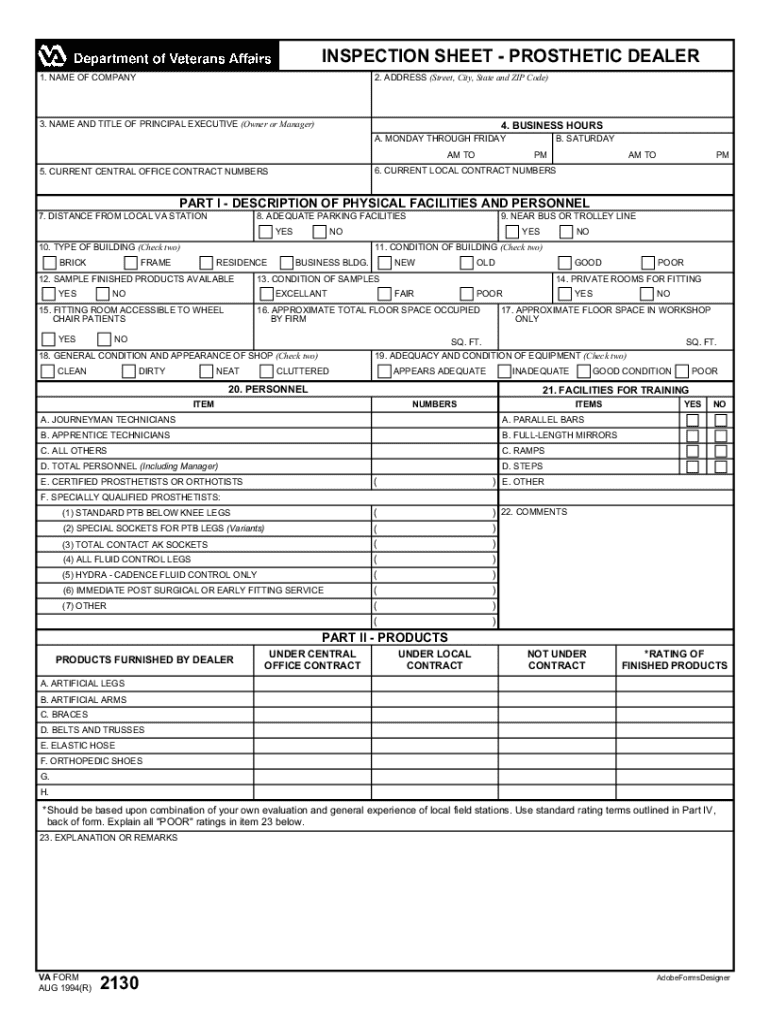
VA Form 2130 serves as an inspection sheet used specifically for prosthetic dealers. It is designed to facilitate the assessment of their facilities, staff, products, and service associations with local Veterans Affairs (VA) stations. The form covers multiple aspects of a dealer's operations to ensure that they meet certain standards required for collaboration with VA stations, making it essential for maintaining compliance and ensuring quality care for veterans.
-
Scope of Evaluation: The form focuses on evaluating the physical conditions of the dealer's premises, examining product offerings, and assessing the quality of services provided.
-
Compliance: Completing this form is a crucial step for prosthetic dealers aiming to establish or maintain partnerships with VA stations, ensuring that they meet the rigorous standards set forth by VA regulations.
-
Functionality: It serves as a diagnostic tool to identify areas needing improvement, thus aiding dealers in enhancing their operations for better service delivery.
Steps to Complete the VA Form 2130
Filling out VA Form 2130 involves a systematic approach to ensure that all necessary information is captured accurately.
-
Gather Required Information: Before attempting to complete the form, collect detailed information about the company, including facility condition reports, a list of products, and relevant service records.
-
Company Information Section: Start by filling in the dealer's general information such as name, address, contact information, and any relevant registration numbers.
-
Evaluate Physical Conditions: Document the general condition of the facilities, noting features like accessibility, cleanliness, and any modifications made to accommodate veterans' needs.
-
Product Offerings: List all the prosthetic products available, including their specifications, manufacturers, and compliance with VA quality standards.
-
Review of Service Quality: Detail the protocols in place for service quality assurance, capturing any feedback or complaints from previous interactions with VA stations.
-
Overall Evaluations: Conclude the form by summarizing the overall findings from the inspection. This section should highlight strengths, note any deficiencies, and propose remedial actions if necessary.
Who Typically Uses VA Form 2130
VA Form 2130 is primarily utilized by prosthetic suppliers and vendors seeking to engage with VA medical centers.
-
Prosthetic Dealers: Both new and existing dealers who supply prosthetic devices to veterans through the VA system use this form to ensure compliance with contracts and standards.
-
VA Inspectors: Officials from the VA conduct evaluations using this form as part of their routine assessments to verify that vendors uphold the required operational and service standards.
-
Quality Assurance Teams: Internal teams within prosthetic companies may use the form to self-assess and prepare for VA inspections, streamlining efforts to meet compliance regulations.
Legal Use and Compliance Related to VA Form 2130
The legal use of VA Form 2130 underscores the importance of compliance for prosthetic dealers working with the VA.
-
Regulatory Standards: The form ensures that dealers meet the legal and operational standards set by the VA to provide prosthetic devices to veterans.
-
Audit Trail: It serves as a record for both the dealer and the VA, ensuring transparency in the inspection process and accountability in service delivery.
-
Penalties for Non-Compliance: Failure to meet VA standards as documented in the inspection can lead to penalties, including the potential loss of contracts or opportunities to supply products to VA facilities.
Key Elements of VA Form 2130
Each section of VA Form 2130 captures critical elements to ensure a thorough evaluation.
-
Company Overview: Information about the business’s operational reach, contact figures, and affiliations is required.
-
Facilities Inspection: Details of the physical examination of the dealer's operational facilities and infrastructure.
-
Products and Services: In-depth information regarding the prosthetic products offered, including service delivery and support mechanisms.
-
Service Relationship: How the dealer interacts with VA stations, detailing past service delivery and areas for improvement.
Obtaining VA Form 2130
Acquiring VA Form 2130 is an essential step for prosthetic dealers looking to remain compliant and maintain operations with the VA.
-
VA Station Requests: Typically, the form can be obtained directly through a request from a local VA station during initial setup of contracts.
-
Official Channels: It can also be accessed through official VA communication channels, such as their website or directly via correspondence with approved VA contacts.
-
Vendor Support: Vendors may also have access to it via industry networks or associations that work closely with the VA.
Importance of Using VA Form 2130
Using VA Form 2130 is vital for maintaining operational integrity and securing contracts with the VA.
-
Ensures Quality: Consistent use helps maintain high service and product standards required by the VA, ensuring quality care for veterans.
-
Risk Management: It helps identify operational risks early, allowing dealers to address potential issues before they affect service delivery.
-
Long-term Benefits: Consistent compliance not only strengthens vendor relationships but also improves standing with the VA, offering potential for expanded opportunities.
Penalties for Non-Compliance with VA Form 2130
The consequences of not adhering to the form’s requirements can be significant for businesses.
-
Contractual Penalties: Non-compliance can lead to fines or penalties imposed by the VA, which can affect the business’s bottom line and reputation.
-
Loss of Business Opportunities: Continuous non-compliance may result in the termination of existing contracts and affect future opportunities to work with VA facilities.
-
Legal Repercussions: Not meeting VA standards can also have legal consequences, potentially involving lawsuits or other legal actions against the dealer.
Each of these blocks ensures that prosthetic dealers and VA officials can use VA Form 2130 to its full potential, ensuring compliance, improving operational standards, and ultimately enhancing the quality of care provided to veterans.