




01. Edit your form online
Type text, add images, blackout confidential details, add comments, highlights and more.

Type text, add images, blackout confidential details, add comments, highlights and more.

Draw your signature, type it, upload its image, or use your mobile device as a signature pad.

Send it via email, link, or fax. You can also download it, export it or print it out.
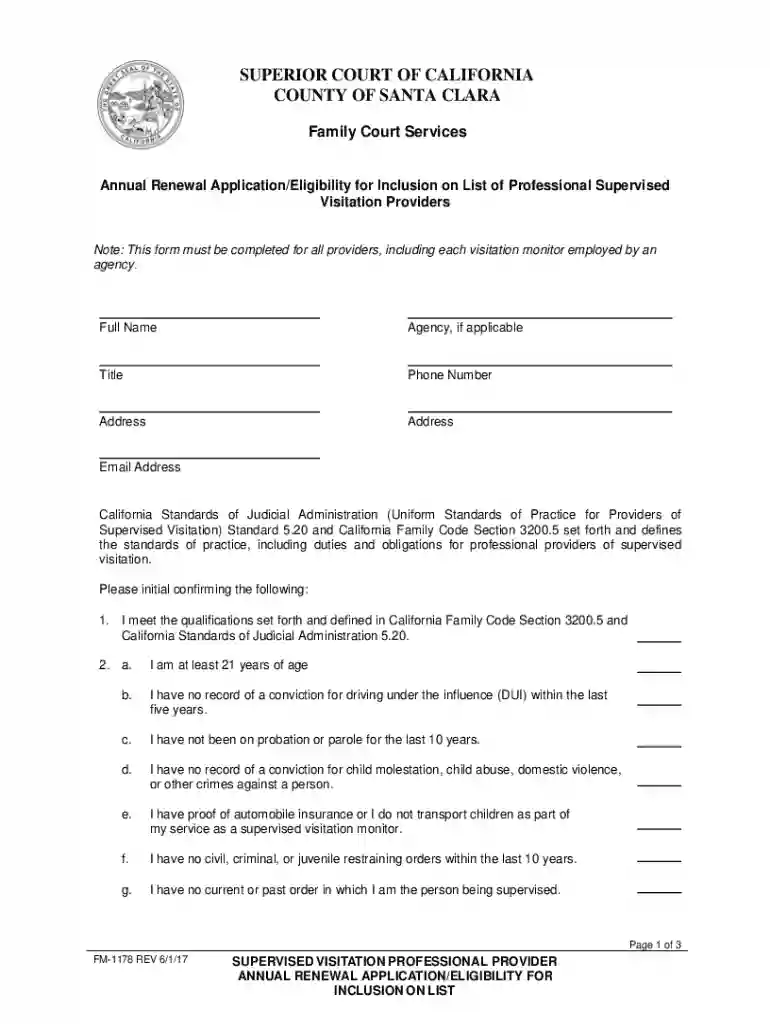
The "Custody and VisitationSuperior Court of California" form is a legal document used within the California judicial system to manage and formalize the custody and visitation arrangements for minors. This document is crucial in outlining the legal responsibilities of guardianship and establishing visitation rights, ensuring that these arrangements are honored and enforced within the framework of California law. It serves as a cornerstone for protecting the best interests of the child by detailing how custody and visitation should be conducted. This form is typically employed in family law cases where parents or guardians are seeking to resolve issues of custody and visitation through legal means.
The form is designed to capture essential information regarding custody and visitation. Key elements typically include:
These elements are integral for legal clarity and enforcement, ensuring that both parties adhere to the agreed-upon arrangements.
Completing the form accurately is critical to prevent delays or rejections, ensuring that the child's welfare and rights are upheld.
The form is utilized within the legal framework of California family law to protect the rights of children and parents in custody cases. It legally binds parents to adhere to the agreed terms, serving as a reference for law enforcement and the courts in case of disputes or violations. By formalizing custody arrangements, it reduces conflicts and misunderstandings, providing clear documentation for all parties involved. Courts rely on this form to make informed decisions on custody and visitation, prioritizing the child's best interests based on the provided information.
California has unique regulations governing custody and visitation, which are reflected in the form. State-specific rules include:
Understanding these state-specific nuances is vital for anyone involved in filling out or submitting the form in a legal context.
The form can be obtained through several channels:
Having multiple ways to obtain the form provides flexibility for parents or guardians as they initiate the legal process.
Understanding the legal jargon associated with the form is crucial. Important terms include:
Each of these terms carries significant legal implications, impacting the overall custody and visitation dynamics.
The form is predominantly used by:
These parties benefit from the structure and legal certainty the form provides, creating a legally-binding document that outlines all aspects of custodial arrangements.


We've got more versions of the Custody and VisitationSuperior Court of California form. Select the right Custody and VisitationSuperior Court of California version from the list and start editing it straight away!
| Versions | Form popularity | Fillable & printable |
|---|---|---|
| 2017 | 4.3 Satisfied (36 Votes) |
At DocHub, your data security is our priority. We follow HIPAA, SOC2, GDPR, and other standards, so you can work on your documents with confidence.




Unmarried parents who want to get custody or visitation orders must first open a family law case, and, if parentage has not been legally established, must firstRead more
The branch has three levels of courts. Cases move up from the Courts of Appeal and the superior (trial) courts.


