






Understanding the DMV Facility Application
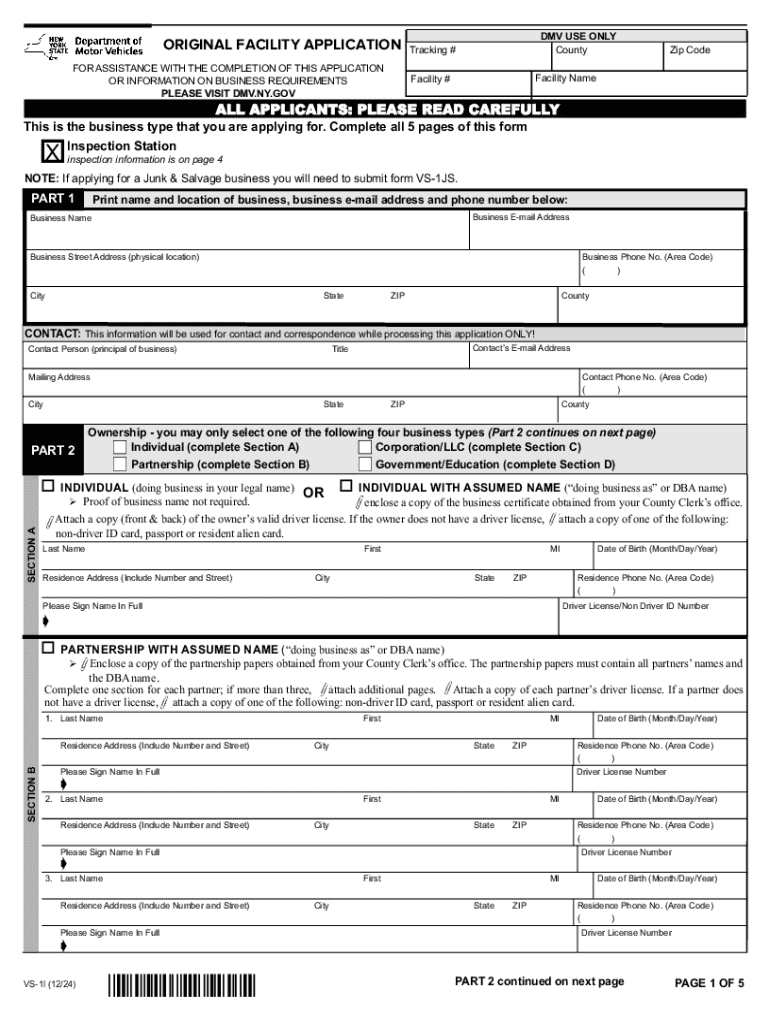
The DMV Facility Application is a crucial document for businesses in the United States seeking to operate as vehicle inspection stations. This application outlines the essential information required for new facilities to comply with state regulations. It mandates businesses to provide comprehensive details, such as ownership structures and prior licensing history. Understanding the structure and requirements of this application is essential for ensuring a successful submission process.
Steps to Complete the DMV Facility Application
Completing the DMV Facility Application involves several critical steps:
- Gather Required Information: Ensure you have all necessary business details ready, including ownership documentation and past inspection station licenses if applicable.
- Fill Out the Application Form: Carefully complete each section, addressing questions related to business type, ownership, and compliance history.
- Attach Supporting Documents: Collect and attach required documents such as proof of business name registration and previous licenses.
- Review and Proofread: Thoroughly check your application for accuracy and completeness to avoid any delays.
- Submit the Application: Depending on state guidelines, submit the application through appropriate channels, which may include online, mail, or in-person delivery.
Legal Use and Compliance
Operating as an inspection station requires strict adherence to state-specific regulatory frameworks. Legal use of the DMV Facility Application ensures that the business remains compliant with these regulations:
- Ownership and Operational Requirements: The application will delineate what is legally permitted in terms of business operations and ownership structures.
- State Regulations Compliance: Applicants must align with state-specific inspection station standards and operational protocols.
- Documentation Safeguarding: Ensure documentation accuracy and transparency to maintain legal compliance.
Who Typically Uses the DMV Facility Application
Businesses aiming to operate vehicle inspection stations primarily use the DMV Facility Application. These can include:
- Automotive Service Stations: Organizations offering repair and maintenance services that include vehicle inspections.
- Automobile Dealerships: Dealerships seeking to offer inspection services as part of their vehicle sales offerings.
- Independent Mechanic Shops: Smaller businesses looking to provide inspection services in accordance with state mandates.


Key Elements of the DMV Facility Application
Understanding the essential components of the application can streamline the application process. Key elements include:
- Business Information Section: This includes the business name, address, and contact information.
- Ownership Details: Full disclosure of ownership structure; required for all applicants irrespective of business entity type.
- Previous Licenses and Certification: Information on any past inspection station licenses and their statuses.
- Compliance and Legal Declaration: A section that verifies adherence to state regulations and legal acknowledgment of required conditions.
Important Terms Related to the DMV Facility Application
Familiarity with specific terminology within the DMV Facility Application can aid in accurate completion:
- Inspection Station: Authorized entity to conduct vehicle inspections in accordance with state laws.
- Business Structure: Classification of the business entity, such as an LLC, Corporation, or Partnership.
- Compliance Documentation: Records that demonstrate adherence to state regulations for inspection stations.
State-Specific Rules for the DMV Facility Application
State regulations may vary significantly, affecting how the application is processed. Awareness of these variations is crucial:
- State Regulatory Bodies: Each state has specific departments that manage and enforce vehicle inspection standards.
- Unique Documentation Needs: Some states may require additional documentation, such as environmental impact assessments.
- Process Timeframes: Regulatory approval times can differ, impacting business commencement schedules.
Penalties for Non-Compliance
Ignoring or incorrectly completing the DMV Facility Application could lead to severe penalties:
- Denial of License: Inadequate or erroneous submissions could result in denial.
- Fines and Legal Repercussions: Non-compliance with the necessary legal requirements can lead to monetary fines.
- Operational Delays: Delays in obtaining the necessary approval due to non-compliance can impact business operations.
Examples of Using the DMV Facility Application
Practical examples of the application in use help illustrate its broader significance:
- Automobile Dealership Expansion: A dealership opening a new location applies to offer inspection services, utilizing past successful applications as a guideline.
- Franchised Repair Center: A franchised chain of repair centers expands into new services by securing DMV operation status.
- Renewal for Existing Stations: Existing services apply for license renewals, ensuring continued compliance with updated regulations.
Who Issues the Form
Each state has a designated department responsible for issuing and processing the DMV Facility Application, typically within the Department of Motor Vehicles (DMV). Business applicants must know where to submit and whom to contact for application-related inquiries, ensuring a direct line for addressing potential application issues.
Application Process and Approval Time
The timeframe for processing the DMV Facility Application varies by state. It can range from a few weeks to several months, depending on the thoroughness of the application and the efficiency of the reviewing body. Business owners should plan for this period to avoid delays in opening or continuing inspection station services.