







Definition and Meaning
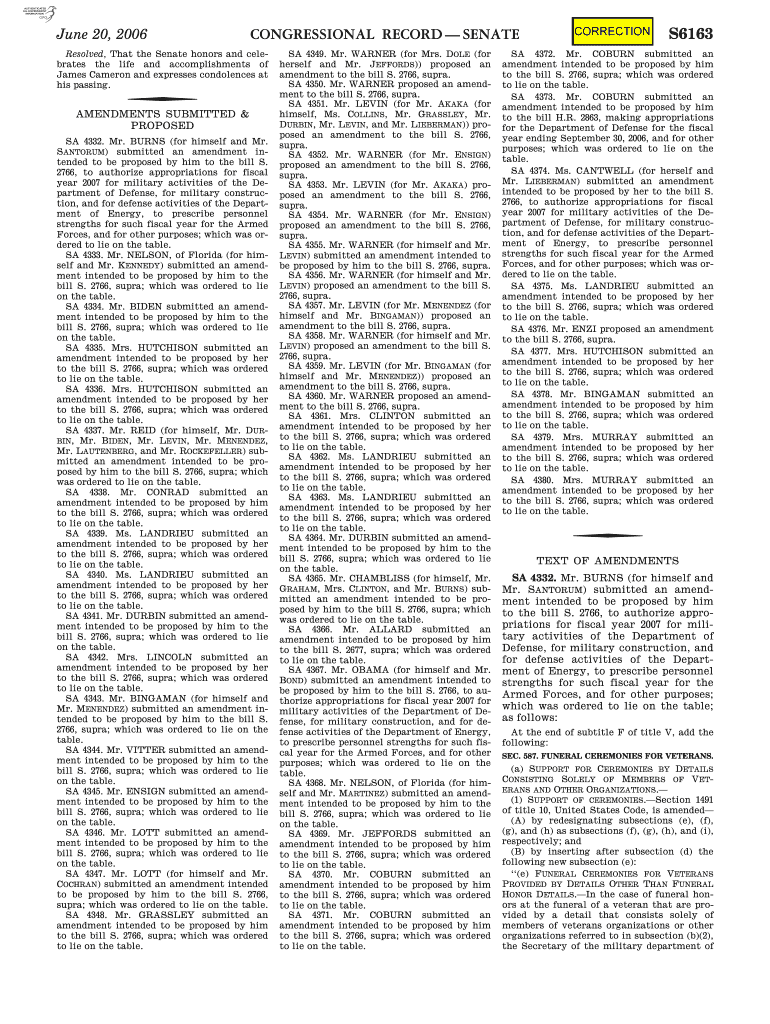
The form "Resolved, That the Senate honors and celebrates the life and accomplishments of" is officially used to recognize individuals or groups for their significant contributions and achievements. This declaration is typically adopted through a formal resolution by the Senate and is a part of the legislative process where specific accomplishments are acknowledged on a governmental level.
Characteristics of Senate Resolutions
- Purpose: These resolutions are symbolic expressions of consensus or recognition rather than legally binding documents.
- Subject Matter: They honor achievements in various fields such as public service, military, education, or culture.
- Documentation: Often recorded in the Congressional Record, these resolutions stand as a testament to noteworthy contributions.
Key Elements
- Citation of Honors: The resolution specifies who is being honored and the reasons for their recognition.
- Date of Passage: This marks when the resolution was officially adopted by the Senate.
- Legislative Context: It may cite previous resolutions, amendments, or bills associated with the honoree's achievements.
How to Use the Resolved, That the Senate Honors and Celebrates the Life and Accomplishments of
This resolution serves as a formal recognition and is usually presented in ceremonial contexts.
Practical Application
- Award Ceremonies: Often read aloud during events where individuals are publicly acknowledged.
- Public Records: It can be used as part of official documentation related to awards or honors being given.
- Media Releases: The resolution may be quoted in press releases to highlight the significance of the honoree's achievements.
Example Usage
- Educational Impact: An educator might be recognized for innovations in teaching methods.
- Community Service: A non-profit leader could be honored for substantial contributions to community welfare.
Steps to Complete the Resolved, That the Senate Honors and Celebrates the Life and Accomplishments of
The creation of such a resolution involves specific procedural steps to ensure its legitimacy and formal adoption.
Step-by-Step Process
- Proposal Drafting: A senator or committee drafts the initial resolution.
- Committee Review: The draft is reviewed by the relevant Senate committee.
- Senate Approval: It is presented to the Senate for discussion and approval.
- Formal Adoption: Upon approval, the resolution is adopted and recorded in official government records.
Involvement of Stakeholders
- Senators: Play a crucial role in drafting and advocating for the resolution.
- Community Leaders: May collaborate with senators to propose an individual or group for recognition.
Who Typically Uses the Resolved, That the Senate Honors and Celebrates the Life and Accomplishments of
Various actors within the legislative framework utilize this resolution.


Key Users
- Senate Members: Engage in the drafting and approval process.
- Government Officials: Facilitate the implementation and presentation of the resolution.
- Community Organizations: May propose nominees for recognition to their local senators.
Example Scenarios
- Veterans' Recognition: Resolutions may be used to honor military veterans for their service.
- Cultural Leaders: Artists and cultural figures might receive recognition for contributions to the arts.
Legal Use of the Resolved, That the Senate Honors and Celebrates the Life and Accomplishments of
While not legally binding, these resolutions serve as formal acknowledgments within a governmental context.
Contextual Use
- Public Record: Acts as an official record of recognition, implicitly encouraging continued excellence.
- Civic Recognition: Provides a governmental stamp of honor which can enhance the recipient's public profile.
Jurisprudence Context
- Symbolic Legislation: Though symbolic, it plays a role in broader legislative activities as a part of civic documentation.
- Precedent Setting: Sets a precedent for future recognitions, shaping the way similar achievements are celebrated.
Key Elements of the Resolved, That the Senate Honors and Celebrates the Life and Accomplishments of
To ensure effective recognition, these resolutions incorporate specific elements that delineate their purpose and effectiveness.
Consistent Components
- Acknowledgment Text: Clear wording acknowledging the achievements.
- Supporting Evidence: Documentation and testimonials supporting the recognition.
- Date and Timing: Specifies the timing of recognition in relation to the honoree’s achievements.
Variations in Structure
- Length and Detail: Some may be brief, while others provide a detailed account of the accomplishments.
- Temporary vs. Perpetual: Some resolutions recognize a singular event, while others commemorate ongoing contributions.
Examples of Using the Resolved, That the Senate Honors and Celebrates the Life and Accomplishments of
Examples provide practical insight into how these resolutions are utilized and their impact on communities and individuals.
Real-world Instances
- Military Service: Resolutions may honor veterans who have demonstrated exceptional bravery.
- Educational Innovators: Recognizing educators who have transformed educational practices.
Potential Outcomes
- Public Awareness: Raises public awareness about significant achievements, encouraging others in similar fields.
- Legacy Building: Establishes an enduring legacy for the honoree within governmental records.
Application Process & Approval Time
Understanding the timeline and procedure for proposing and adopting a resolution helps streamline the recognition process.
Application Process
- Identification of Nominee: Begin by identifying an individual or group worthy of recognition.
- Draft Proposal: Compose a draft statement outlining the reasons for recognition.
- Submit to Senator: The draft is submitted to a senator who may sponsor the proposal.
Approval Timeline
- Committee Deliberation: Depending on the complexity of the resolution, committee deliberation can vary from days to weeks.
- Senate Voting: After committee approval, the resolution proceeds to the Senate floor for voting, which can take additional time based on scheduling.
Impact of Timeline
- Expedited Process: Urgent recognitions might require an accelerated timeline.
- Routine Deliberation: Standard resolutions follow regular Senate discussion schedules.




