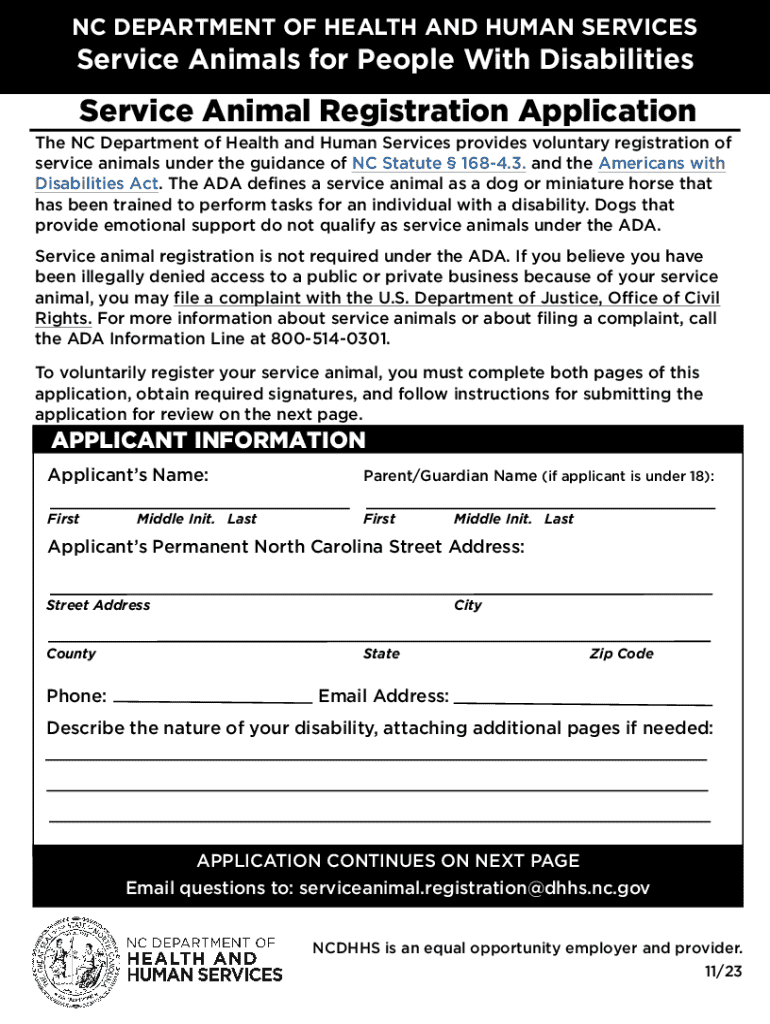







Definition and Purpose of Emotional Support Animal Registration
The "Free Emotional Support Animal Registration: Fill Out and Sign" form serves as a method to document and formally recognize an individual's emotional support animal (ESA). Emotional support animals provide comfort to individuals suffering from mental or emotional disabilities. Unlike service animals defined under the Americans with Disabilities Act (ADA), ESAs are generally not trained for specific tasks. However, their presence can be therapeutic, alleviating symptoms associated with certain emotional or psychiatric conditions. Registering an ESA can help ease interactions with landlords or airlines by providing proof of the animal's role in the owner's treatment plan.
How to Complete the Registration Form
-
Gather Necessary Information:
- Personal details including full name, address, and contact information.
- Details about the emotional support animal such as name, type (dog, cat, etc.), breed, and weight.
- A letter from a licensed mental health professional, indicating the need for an emotional support animal.
-
Filling the Form:
- Carefully enter all the required personal and animal information into the specified fields.
- Attach any necessary documents, such as the healthcare professional’s letter, in digital or physical form if submitting via mail.
-
Review and Sign:
- Review all entries for accuracy. Ensure that all information is up-to-date.
- Sign the form digitally if completing it online, or print, sign, and scan it if submitting electronically through email.
Steps to Submit the Registration Form
-
Online Submission:
- Upload the completed form along with supporting documents through the designated portal or email.
- Verify that all attachments are correctly formatted and file sizes are within the acceptable range for submission.
-
Mail Submission:
- If opting for mail, print the completed form and include copies of supporting documentation.
- Send the packet to the appropriate address, ensuring that postage is adequate for delivery.
-
Verification:
- Some platforms may offer a follow-up verification process. Ensure that you respond promptly to any additional requests or queries to confirm submission status.
Legality and Benefits of Registration
While there is no federal requirement to register emotional support animals, having official documentation can offer benefits. These include facilitated communication with landlords under the Fair Housing Act and considerations by airlines under the Air Carrier Access Act. It's essential to note that carrying such documentation may not guarantee access but aids in discussing accommodations with relevant parties.
Who Typically Uses the Registration
Emotional support animal registrations are typically utilized by individuals with mental health conditions such as anxiety, depression, or PTSD. These individuals benefit from the therapeutic presence of their ESA, which can reduce symptoms or prevent deterioration of mental health. Registration often takes place when individuals need to assert their rights for reasonable accommodation in housing or travel.


Important Terms Related to ESAs
- ESA Letter: A document from a licensed mental health professional stating the necessity of an ESA for the individual's mental health treatment.
- Reasonable Accommodation: Adjustments or modifications provided to enable individuals with disabilities to have equal access, often applicable in housing.
Key Elements of the Registration Form
- Personal Identification Fields: Requires accurate and up-to-date personal information.
- Animal Information: Includes descriptors for the ESA, ensuring it can be uniquely identified.
- Authorization and Signature Fields: For legal acknowledgment and completion of the registration process.
Variations or Alternatives to Formal Registration
While informal online registries exist, they are not legally required. Alternatives include simply obtaining an ESA letter from a licensed mental health professional, which suffices for most housing and travel-related needs. It's essential to ensure that any documentation aligns with the individual’s specific circumstances and complies with applicable state and federal regulations.
State-Specific Considerations
Though federal laws provide guidelines, individual states may have additional provisions regarding ESAs. It is crucial to verify state-specific regulations to ensure compliance and to understand any unique rights or responsibilities that may exist within the local jurisdiction. If moving between states, reviewing and updating ESA documentation may be necessary to align with local legal requirements.