






Definition and Purpose of the App-201
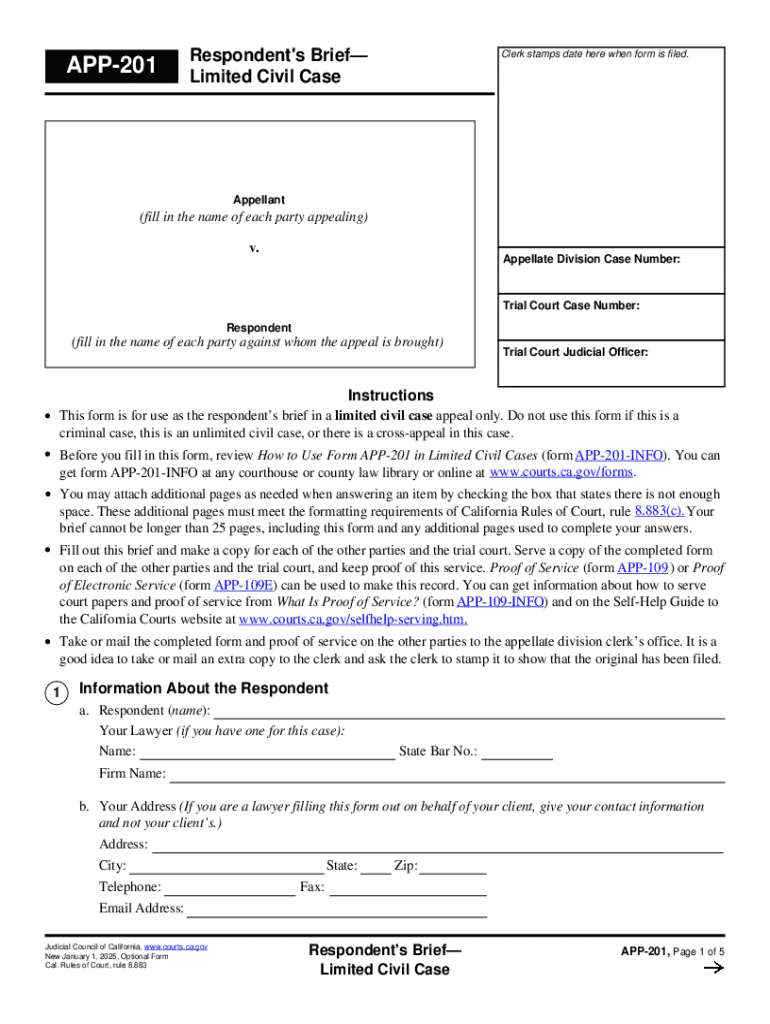
The App-201 is a legal form used for submitting a respondent's brief in a limited civil case appeal. This document is vital as it allows the respondent to articulate their standpoint in response to the appellant's arguments. Key elements include detailed information about the parties involved, a concise statement of facts, and specified requests directed to the appellate division. It emphasizes compliance with established formatting and procedural mandates, such as serving copies to all involved parties and retaining proof of service. The App-201 ensures that responses to appeals are orderly and adhere to legal standards, providing an organized framework for legal discourse.
How to Use the App-201
Utilizing the App-201 involves several specific steps to ensure that all necessary information is accurately conveyed. The form allows respondents to itemize their arguments against those presented in the appeal, requiring clarity and precision in addressing the appellant's points. Users must:
- Provide contact and role information for all parties involved.
- Outline factual statements underpinning the respondent's claims.
- Present counter-arguments to the appellant’s assertions.
Additionally, it is crucial to comply with the procedural regulations, which may include:
- Serving the document to other parties involved.
- Maintaining proof of service to support the procedural integrity of submissions.
Accurate completion is critical, as it prevents procedural dismissals or unfavorable rulings due to non-compliance.
Steps to Complete the App-201
Completing the App-201 involves a systematic approach to ensure that all the necessary sections are filled out thoroughly and correctly. Key steps include:
-
Review the Guidelines: Before beginning, familiarize yourself with the specific instructions provided, which outline formatting and procedural requirements.
-
Fill Out Party Information: Clearly input details about the respondent and other parties, ensuring that all names and contact information are accurate.
-
Statement of Facts: Provide a detailed account of the factual background relevant to the case, ensuring objectivity and precision.
-
Respond to Appellant's Arguments: Address each point raised by the appellant, providing counter-arguments backed by legal precedents where applicable.
-
Requests to the Appellate Division: Outline any specific requests or relief sought from the appellate division.
-
Proof of Service: Ensure documentation of service, including dates and methods, is prepared and retained as part of your filing documentation.
Timeliness and attention to detail are crucial in this process, as errors can lead to delays or unfavorable decisions.
Legal Use of the App-201
The App-201 is legally designated for use in situations where a respondent needs to submit their brief in a limited civil case appeal. This form upholds the respondent's legal rights to articulate their defense and seek specific judicial relief. It is crucial to adhere strictly to the rules and guidelines surrounding its use to ensure that submissions are valid and considered by the court. Legal practitioners often advise respondents to maintain strict compliance with the procedural requirements of the form, which supports the legal process and upholds the standards of judicial review.
Key Elements of the App-201
Several core components are essential to the App-201:
- Parties Involved: Details personal and contact information of all parties connected to the case.
- Factual Summary: A factual background supporting the respondent’s claims.
- Response Scope: Specific responses to the points raised by the appellant.
- Relief Requests: Explicit requests and objectives directed towards the appellate division.
- Proof of Service: Documentation evidencing that all procedural requirements and service mandates have been satisfied.
These elements ensure that the document fulfills its required function as a comprehensive legal brief.
Important Terms Related to the App-201
Understanding specific terminology associated with App-201 is essential for successful completion:
- Respondent: The party against whom an appeal is filed.
- Appellant: The party who initiates an appeal against a decision.
- Brief: A written document submitted in appellate court proceedings, summarizing arguments and legal foundations.
- Proof of Service: Evidence confirming that copies of documents have been delivered to parties involved in the legal process.
Familiarity with these terms helps ensure that respondents address all necessary components effectively.
Filing Deadlines and Important Dates
Adhering to filing deadlines is critical when using the App-201. The timeline for submitting the form typically aligns with specific procedural schedules established by appellate courts. Important dates to consider include:
- Response Submission Deadline: Often dictated by the date the appeal is filed.
- Proof of Service Deadline: Must coincide with the response submission to ensure all parties have the information promptly.
Failure to meet these legal deadlines can severely impact the progression and outcome of the appeal process.
Form Submission Methods
The App-201 can typically be submitted through various channels, which include:
- Online Submission: Accessible via court e-filing systems for expedited processing.
- By Mail: Offers a traditional method, although potentially slower due to postal timelines.
- In-Person: Direct submission at the courthouse can ensure immediate acceptance and processing.
Choosing an appropriate submission method depends on factors like proximity to the courthouse and the urgency of the filing. Each method has its unique considerations, such as proof of delivery in case of mail submissions or immediate acknowledgment of receipt when filing in person.