






Definition and Significance of Appointment RequestTGH Imaging
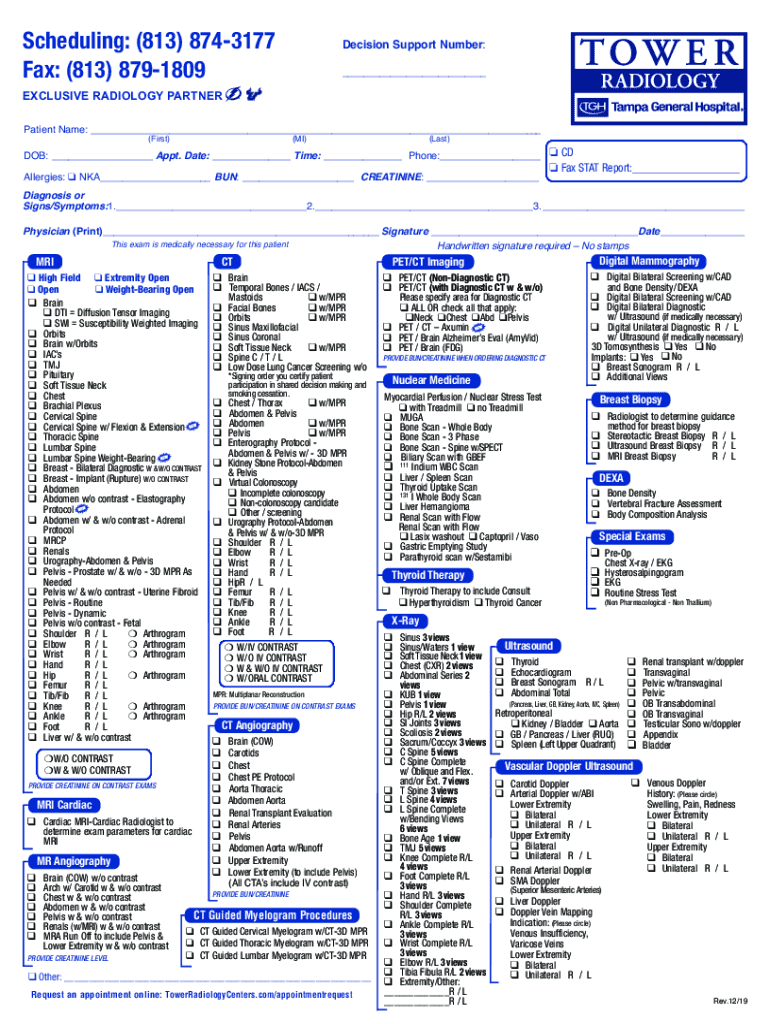
The "Appointment RequestTGH Imaging" form serves as an essential tool for scheduling radiological services at TGH Imaging facilities. This form is designed to collect critical patient information, document the types of imaging procedures required, and facilitate the coordination of these services across multiple locations. By organizing all necessary data, the form ensures that both healthcare providers and patients can efficiently plan and prepare for appointments involving complex radiological diagnostics.
Importance and Utility
The form's structured format is instrumental in enhancing the healthcare experience for patients, clinicians, and administrative staff. It serves a dual purpose: first, to streamline appointment requests; and second, to ensure that all pertinent details are captured upfront, reducing the chances of errors or miscommunications. By detailing patient medical history and the specific imaging tests needed, the form aids diagnostic accuracy and timeliness, ultimately contributing to better health outcomes.
How to Use the Appointment RequestTGH Imaging Form
Completing the Appointment RequestTGH Imaging form involves several nuanced steps designed to gather comprehensive patient and procedural information efficiently.
-
Personal Information Collection
Patients must provide full contact details, including their name, address, and phone number. This section ensures that the healthcare provider can communicate seamlessly with the patient and manage appointment logistics. -
Describing the Medical History
The form requires a detailed account of the patient’s medical history, specifically focusing on past diagnoses, treatments, and any pertinent ongoing health concerns. Accurate medical documentation is vital for clinicians to interpret imaging results within the context of existing health conditions. -
Specifying Imaging Procedures
Different radiological services, such as MRI, CT scans, and ultrasound, can be selected based on the clinician’s recommendations. Patients must indicate the requested procedures, ensuring readiness for each service upon arrival. -
Appointment Preferences
Patients can select preferred dates and times based on their convenience and availability. It is crucial for ensuring that healthcare services are aligned with patient schedules.
Key Elements of the Appointment RequestTGH Imaging Form
The Appointment RequestTGH Imaging form consists of various critical components that ensure all relevant data for an imaging appointment is adequately captured.
-
Patient Details
Includes demographic data like full name, date of birth, contact information, and insurance details, which are essential for identification and billing processes. -
Referring Physician Information
Captures the name and contact details of the referring physician, which facilitates communication between imaging centers and healthcare providers. -
Procedure Codes and Descriptions
Allows for the precise identification of requested imaging services, ensuring the appropriate radiological procedures are performed. -
Insurance and Payment Information
Features sections for insurance provider details and authorization information, streamlining the billing process and reducing patient wait times.
Steps to Complete the Form
Completing the form requires attention to detail and accuracy.
-
Patient Verification
Start by confirming personal details and ensuring all identification fields are accurately filled to avoid mix-ups. -
Medical History Input
Detail significant health information, focusing on any conditions that might influence the imaging procedure. -
Selecting Procedures
Clearly mark all required imaging services, adhering strictly to the recommendations made by medical professionals for diagnostic purposes. -
Submit for Authorization
Once filled, the form should be verified for completeness and submitted to the relevant imaging center for scheduling and insurance approval.
Why You Should Use the Appointment RequestTGH Imaging
Using this form offers numerous advantages:
-
Enhanced Efficiency
It automates and organizes appointment requests, minimizing administrative workload and reducing the potential for scheduling errors. -
Improved Patient Care
By ensuring thorough documentation, this form enhances the accuracy of diagnoses, leading to more effective treatment plans. -
Streamlined Communication
Facilitates better coordination between various healthcare entities, ensuring that both referring physicians and imaging centers are synchronized in the diagnostic process.
Who Typically Uses the Appointment RequestTGH Imaging Form
The form is predominantly used by a diverse range of stakeholders within the healthcare ecosystem:
- Patients seeking diagnostic imaging services to investigate health issues and facilitate necessary medical evaluations.
- Healthcare Providers such as doctors and specialists, who request imaging services to support diagnosis and treatment plans.
- Administrative Staff within imaging centers, utilizing the form to manage appointments, insurance verifications, and patient communications.


Legal Use of the Appointment RequestTGH Imaging Form
The legal implications of using the Appointment RequestTGH Imaging form hinge upon compliance with healthcare regulations and patient privacy laws.
Data Protection and Patient Privacy
- HIPAA Compliance
The form must adhere to HIPAA standards to ensure that patient data is securely handled and protected throughout the scheduling and imaging process. - Authorization and Consent
It includes obtaining documented patient consent for performing procedures and sharing data with insurance providers, ensuring compliance with federal mandates.
Software Compatibility for Digital Appointment Requests
The digital aspect of managing the Appointment RequestTGH Imaging form is facilitated by its compatibility with various software platforms, ensuring ease of access and data management.
- Electronic Health Record Systems (EHRs)
The form integrates with EHRs to streamline the documentation process, allowing seamless updates to patient records based on imaging results. - Cloud-Based Solutions
Compatibility with cloud storage services enables secure digital storage and retrieval, ensuring data integrity and accessibility. - Imaging Center Platforms
Ensures that appointment schedules and patient information are electronically transmitted and shared, reducing manual entry errors and enhancing operational efficiency.