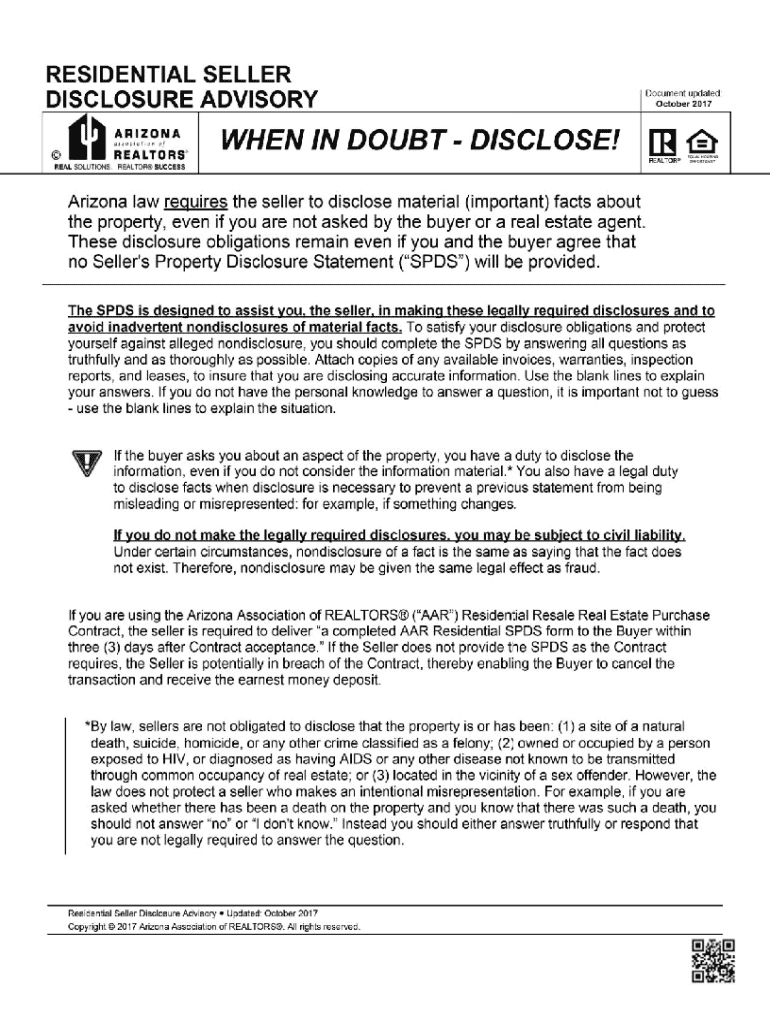







Definition & Meaning
The SPDS - Res Seller's Property Disclosure Statement is a critical document used in real estate transactions, particularly focused on ensuring transparency between sellers and buyers. This form details the condition of a property, aiming to disclose material facts that may affect its value or desirability. Understanding its significance is essential for both parties to facilitate informed decision-making.
Purpose and Relevance
- Transparency: Provides a mechanism for sellers to disclose known issues with a property.
- Legal Obligation: Often a legal requirement in various jurisdictions within the United States.
- Buyer Protection: Aims to protect buyers by offering a comprehensive overview of property conditions.
How to Use the SPDS - Res Seller's Property Disclosure Statement
The SPDS is typically filled out by the seller early in the transaction process. Proper completion can prevent misunderstandings or legal conflicts.
Steps for Effective Use
- Gather Property Information: Begin by compiling all necessary details about the property, including any known defects or alterations.
- Complete the Form: Carefully fill out each section, ensuring accuracy and completeness. Include any repairs or updates made to the property.
- Submit to Buyer: Once completed, the form should be presented to the potential buyer for review.
Common Mistakes to Avoid
- Omissions: Failing to disclose known issues can lead to disputes.
- Inaccuracies: Providing incorrect information can complicate or derail a sale.
Key Elements of the SPDS - Res Seller's Property Disclosure Statement
The SPDS contains several critical sections, each focusing on different aspects of the property. Ensuring each part is filled accurately is crucial for compliance and clarity.
Important Components
- Property Details: Basic information about the property, such as address and type of dwelling.
- Structural Information: Details regarding the construction and condition of structural elements like roofs, foundations, and walls.
- Utility Systems: Information about plumbing, electrical, and heating systems.
- Environmental Concerns: Disclosure of any environmental hazards, such as mold or asbestos.
Steps to Complete the SPDS - Res Seller's Property Disclosure Statement
Complete the form with due diligence, ensuring that all sections are addressed.
Detailed Process
- Consult with Professionals: Seek guidance from real estate agents or inspectors to verify any doubts.
- Meticulous Reporting: Thoroughly document all known issues and improvements.
- Review and Revise: Go through the completed form to catch any errors or omissions before submission.
Practical Considerations
- Verify Dates: Ensure the timelines for any repairs or updates are consistent with records.
- Include Receipts: Attach any supporting documents or receipts for repairs, if applicable.
Legal Use of the SPDS - Res Seller's Property Disclosure Statement
The legal aspect of the SPDS is a cornerstone of its use in real estate transactions. Ensuring compliance with legal standards is vital.
Compliance and Considerations
- State Regulations: Different states may have varying requirements for disclosure, making it important to be informed about local laws.
- Potential Consequences of Non-Disclosure: Failure to properly disclose can result in legal action from buyers or nullification of sale agreements.
State-Specific Rules for the SPDS - Res Seller's Property Disclosure Statement
Regulations governing the use of the SPDS can vary considerably across different states. Being aware of these differences is crucial.
Common Variations
- Mandatory Sections: Some states may require additional sections or specific disclosures.
- Seller Liability: Differences in how seller liability is interpreted across jurisdictions.
Adaptations for Local Laws
- Seek Expert Guidance: Consult with a local real estate attorney to ensure compliance.
- State Forms: Use state-specific SPDS forms whenever possible to cover all legal bases.
Examples of Using the SPDS - Res Seller's Property Disclosure Statement
Understanding practical applications can enhance comprehension and application of the form.
Real-World Scenarios
-
Urban Properties: In cities, disclosures might focus on age-related wear and tear or utility concerns.
-
Rural Homes: May require disclosure of well water systems, septic tanks, or wildlife-related issues.
-
Case Study: A seller in Arizona used the state-specific SPDS to successfully disclose a past roof repair, reassuring the buyer and streamlining the sale.
Required Documents
Aside from the SPDS itself, several other documents may be required to support the information disclosed.
Supporting Documentation
- Repair Records: Documents evidencing past repairs or renovations.
- Inspection Reports: Providing buyers with recent inspection findings can boost transparency.
- Environmental Tests: Reports on any environmental issues previously addressed.
Pre-Preparation Tips
- Organize Documents: Keep all related paperwork well-organized for quick reference.
- Multiple Copies: Prepare several copies of all documents to expedite the process during open houses or buyer meetings.