






Definition and Purpose of the Form FL-105(A)/GC-120(A)
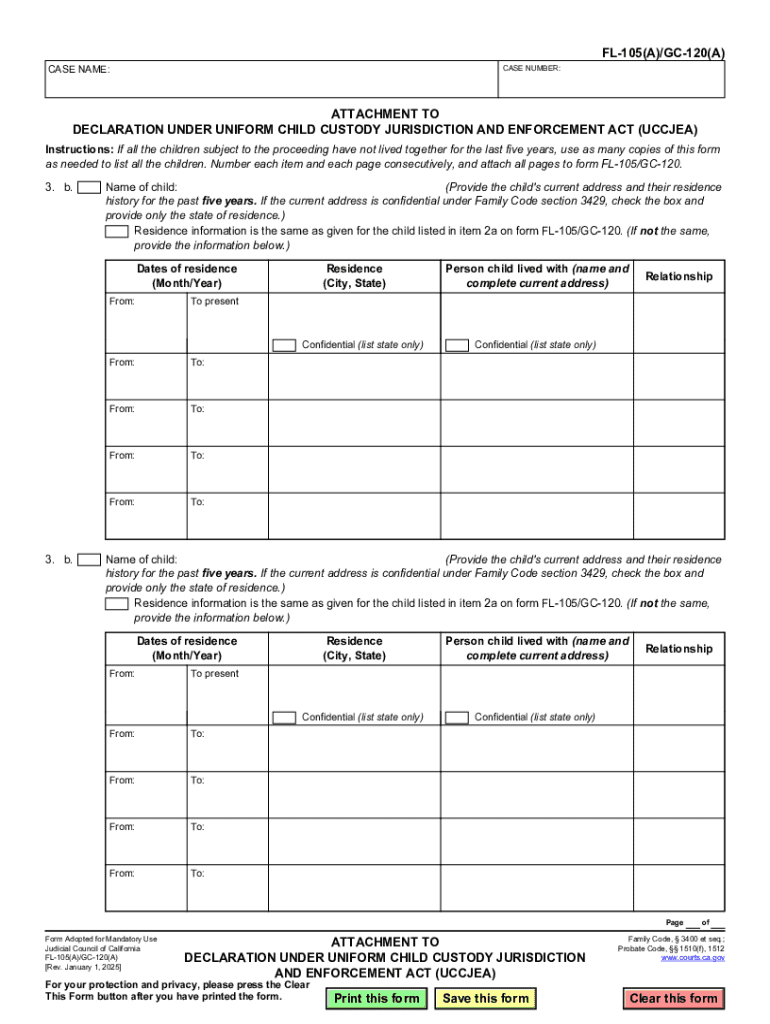
The form FL-105(A)/GC-120(A) acts as a supplementary document under the Uniform Child Custody Jurisdiction and Enforcement Act (UCCJEA). Its primary purpose is to collect comprehensive information about the residence history of children involved in custody proceedings. This includes detailed addresses, duration of residence, and the individuals with whom the children have lived. By mandating this information, the form ensures accurate jurisdictional decisions in custody cases. Furthermore, the form emphasizes confidentiality, safeguarding sensitive information that must remain private during legal proceedings.
How to Obtain the FL-105(A)/GC-120(A)
Securing a copy of the FL-105(A)/GC-120(A) is a straightforward process. The form is readily available through several channels:
-
Official Court Websites: Many judicial websites provide downloadable PDF versions of the form, ensuring easy access.
-
Legal Aid Offices: Community legal aid centers offer resources and forms for public use.
-
Lawyer’s Office: If you're working with legal counsel, they will often provide the necessary documents for custody proceedings.
-
Clerk’s Office: Visit your local court’s clerk office to get a hard copy.
Once acquired, the form can be completed digitally using document management platforms like DocHub for ease of editing and submission.
Steps to Complete the FL-105(A)/GC-120(A)
Filling out the FL-105(A)/GC-120(A) requires careful attention to detail:
-
Personal Information: Start by entering basic personal details of the parents or guardians involved in the custody proceedings.
-
Children’s Information: Clearly specify each child’s full name, birth date, and current residence address.
-
Residence History: Document the residence history for the past five years. Include details such as addresses, living arrangements, and duration of stay for each location.
-
Confidentiality Sections: Note sections marked for confidentiality. Ensure that this sensitive information is accurately and securely recorded.
-
Signature and Date: Complete the form with signatures from the responsible parties involved in the custody matter. Verify all information before signing and dating the document.
Completing this form thoroughly is crucial, as accurate information supports fair jurisdictional rulings in custody cases.
Who Typically Uses the FL-105(A)/GC-120(A)
The FL-105(A)/GC-120(A) form is predominantly used by:
- Parents or Guardians: Involved in custody disputes where jurisdiction needs determination.
- Family Law Attorneys: Legal professionals representing clients in custody matters often prepare this documentation.
- Court Officials: They rely on the form to guide decisions regarding jurisdiction and enforce legal orders under the UCCJEA.
Understanding the form’s purpose aids these parties in complying with jurisdictional requirements, thus facilitating smoother custody proceedings.


Key Elements of the FL-105(A)/GC-120(A)
Understanding the essential components of the form helps ensure accurate completion:
-
Child’s Current Residence: Clearly specify where the child currently lives, essential for determining current jurisdiction.
-
Resident History: List all places of residence over the last five years, which marks geographic stability and living conditions.
-
Caretaker Information: Information about those living with the child is critical to establishing legal custodial authority.
-
Confidentiality Clauses: Some sections are designed to protect sensitive information from public record exposure.
These elements collectively ensure that courts have complete information to make informed decisions about child custody.
Legal Use of the FL-105(A)/GC-120(A)
Legal applications of the FL-105(A)/GC-120(A) include:
-
Jurisdictional Decisions: Helps determine which state has jurisdiction over custody cases under UCCJEA.
-
Court Proceedings: Functions as evidence in custody hearings, providing a comprehensive domicile history of the involved children.
In-depth comprehension of these applications ensures proper legal use and compliance across custody-related matters.
Examples of Using the FL-105(A)/GC-120(A)
Real-world scenarios illustrate the utility of the form:
-
Divorce Proceedings: When spouses residing in different states seek custody, this form clarifies where jurisdiction lies based on the children’s residence history.
-
Custody Modifications: Parents seeking to modify existing custody arrangements use this form to demonstrate changes in a child's living situation.
These case examples highlight the form's role in supporting fair judgment and legal consistency in family law cases.
State-Specific Rules for the FL-105(A)/GC-120(A)
While the FL-105(A)/GC-120(A) form is standardized, slight variations might exist based on state-specific legal precedents or additional requirements. For instance:
- California: Emphasizes strict confidentiality elements, aligning with state privacy laws.
Knowing state-specific nuances is essential for precise compliance, ensuring the form is filled out according to both universal and regional legal standards.