
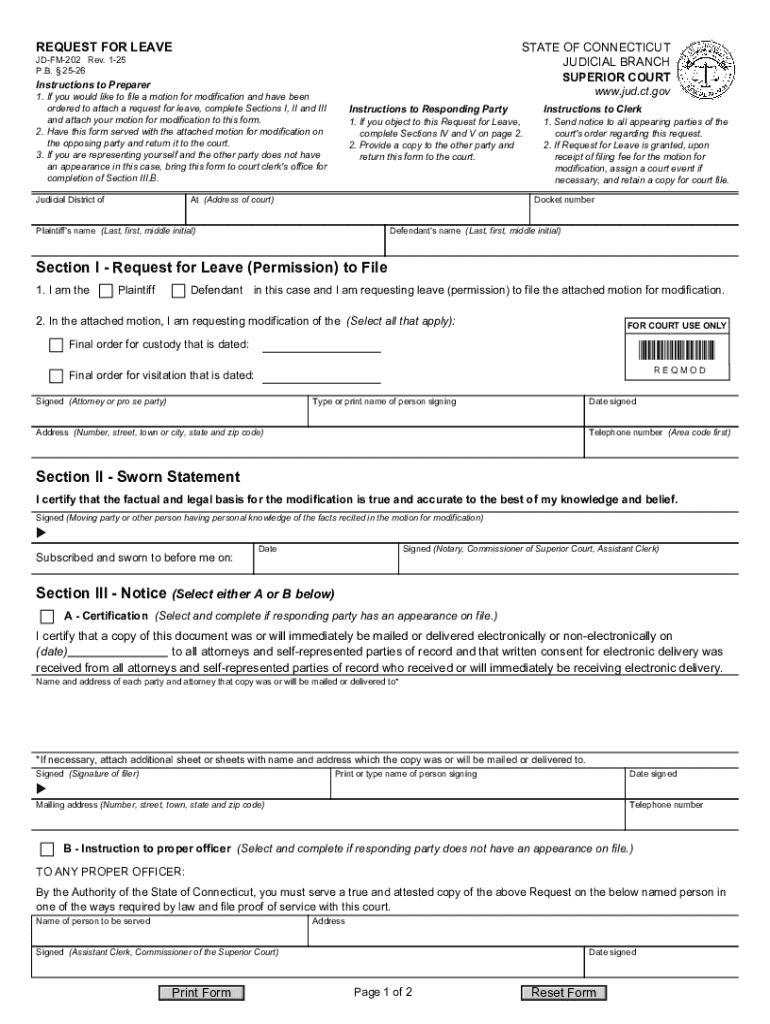







Definition and Meaning of Request for Leave
A "Request for Leave" form is a formal document that individuals use to request permission for absence from work, school, or other obligations. This document is pivotal in detailing the type and duration of the leave requested, ensuring that there's a clear record for both the requester and the organization involved. In legal contexts, such as within the Connecticut Judicial Branch, this form can be used to request permission for actions like filing a motion for modification in court. Understanding the specific purpose of the leave requested is critical, whether it’s for personal reasons, medical leave, or other official purposes.
Steps to Complete the Request for Leave
Completing a Request for Leave form involves several critical steps to ensure accuracy and compliance with organizational policies:
-
Identify the Type of Leave: Determine the specific nature of the leave, such as personal, medical, jury duty, or vacation. Clearly understanding this will guide the rest of the form completion process.
-
Enter Personal Information: Fill in details like your full name, contact information, and position or role if it's a workplace-related leave. Accurate entries prevent misunderstandings and ensure the leave request is processed smoothly.
-
Specify Leave Duration: Indicate the start and end dates of the requested leave. Clearly mentioning these dates helps manage workload distribution and ensures coverage during the absence.
-
Attach Supporting Documents: If applicable, provide necessary documentation such as a doctor's note for medical leave or a jury summons. These documents substantiate your request and make it more likely to be approved.
-
Submit for Approval: After filling out the form, submit it to the appropriate authority, which could be a manager, HR department, or court clerk. Ensure it is submitted well in advance of the leave period to allow for processing.
-
Follow Up: After submission, verify the status of your request. Some institutions may require additional discussions or documentation before granting approval.
Importance of Requesting Leave
Requesting leave is crucial for several reasons, offering benefits to both the individual and the organization:
-
Personal Well-being: Taking time off is essential for personal health, allowing individuals to recharge, recover from illness, or handle personal matters without the stress of professional obligations.
-
Organizational Planning: For employers, structured leave requests facilitate better workforce management, ensuring that any gaps in staffing can be efficiently covered.
-
Legal Compliance: Formal leave requests ensure compliance with labor laws and policies, as unauthorized absences can lead to disciplinary actions or legal disputes.
-
Maintenance of Records: Leaves requested and approved are documented, serving as an official record that can be referred back to if needed in the future.
Legal Use and Compliance
The legal use of a Request for Leave form varies depending on the jurisdiction and context:
-
Employment Law: In the U.S., the Family and Medical Leave Act (FMLA) establishes guidelines for certain types of leave, emphasizing the need to conform to legal standards.
-
Judicial Contexts: Within legal settings, like the Connecticut Judicial Branch, a Request for Leave may serve as a procedural step in legal filings, demanding strict adherence to procedural rules.
-
Rights Protection: These forms protect the rights of both the requester and the organization by documenting the agreed terms of leave.
Who Typically Uses the Request for Leave
The Request for Leave form is utilized by a diverse range of individuals and organizations:
-
Employees: Anyone working under an employment contract may require leave for various personal, medical, or legal reasons.
-
Students: Academic institutions often require students to file leave requests to miss classes or exams.
-
Legal Professionals: Used within legal contexts to request procedural allowances or modifications, critical during litigation processes.
-
Businesses: Business entities might use a variation of this form for staff management and compliance reasons.


Key Elements of the Request for Leave
A well-composed Request for Leave form typically contains these key components:
-
Applicant Details: Personal and contact information of the individual requesting leave.
-
Leave Type and Duration: Explicit description of the type of leave and the time span requested.
-
Supporting Documentation: Attach proofs, such as medical certificates or legal documentation, when required.
-
Approval Section: Space for the authority's signature, indicating approval or denial.
-
Terms and Conditions: Any specific requirements or obligations tied to the leave, such as return dates or updates during extended absences.
How to Obtain the Request for Leave
There are multiple avenues to access a Request for Leave form:
-
Online Platforms: Digital services like DocHub offer customizable templates that can be downloaded and filled out electronically, providing a convenient option for users of different digital proficiencies.
-
Employer or Institution’s Portal: Many workplaces and schools provide these forms via internal websites or HR departments.
-
Legal Resources: For legal requests, forms may be available via court websites or legal aid services.
Form Submission Methods
The methods for submitting a Request for Leave generally include:
-
Online Portals: Submission through employer or institutional websites where forms can be uploaded and tracked.
-
Email: Scanned or digitally filled forms sent to the appropriate authority via email, ensuring digital records of correspondence.
-
In-Person Delivery: Direct submission to HR departments, managers, or court clerks, which might still be preferred for sensitive or complex cases.
These structured submission processes ensure that every request is traceable and can be acted upon in a timely manner.




