
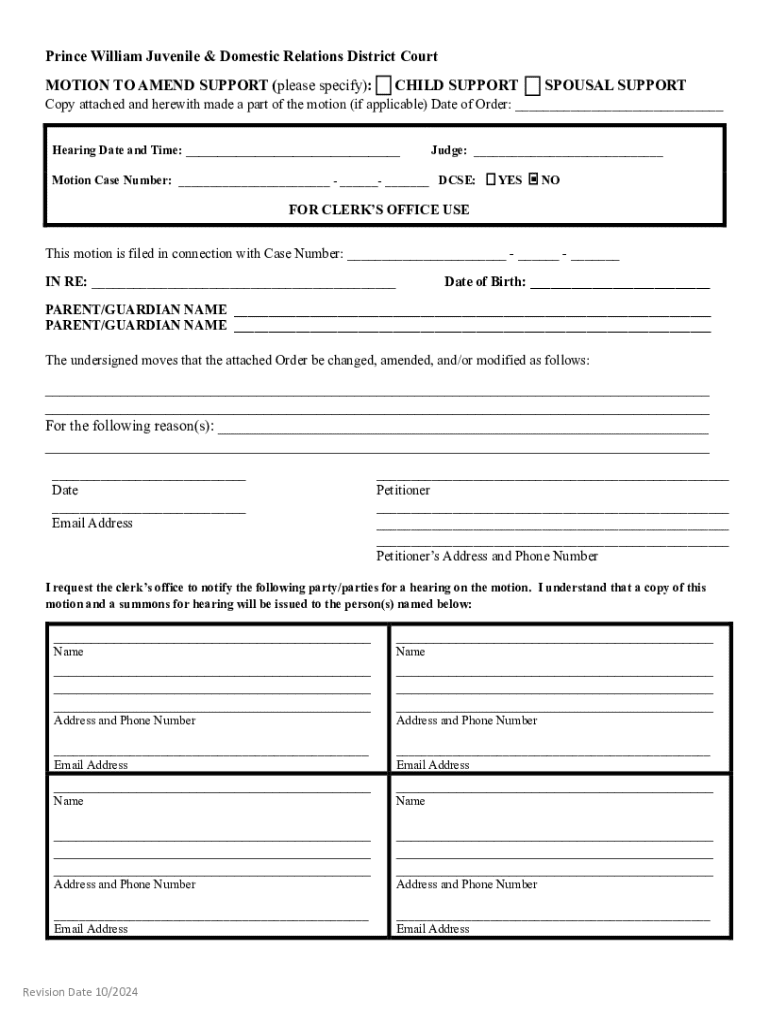







Definition and Purpose of the Prince William Juvenile and Domestic Relations District Court
The Prince William Juvenile and Domestic Relations District Court primarily handles cases involving family and juvenile matters in Prince William County, Virginia. This court deals with legal issues such as child and spousal support, custody disputes, and juvenile delinquency cases. It plays a critical role in maintaining the legal and social fabric by balancing the interests of families and protecting the welfare of minors. The court is part of the state's unified court system, ensuring uniformity and predictability in how domestic issues are resolved.
- Family Cases: Addresses domestic relations cases, including divorce, child custody, and visitation rights.
- Juvenile Concerns: Handles matters concerning juvenile criminal offenses and child welfare cases, including foster care and guardianship.
- Support Orders: Issues rulings on child and spousal support, modifications, and enforcement of existing orders.
How to Use the Court for Family Legal Proceedings
Engaging with the Prince William Juvenile and Domestic Relations District Court necessitates understanding its processes and the necessary documentation for various proceedings. It's important to familiarize yourself with the procedural requirements specific to your case type.
- Identify Your Case Type: Determine if your case falls under juvenile or domestic relations to understand the appropriate procedure.
- Prepare Documentation: Gather necessary legal documents like petitions, motions, and evidence required for filing in court.
- File the Case: Submit your completed paperwork using the preferred submission methods (online, by mail, or in person).
- Attend Hearings: Participate in scheduled court hearings to present your case and adhere to the court's guidelines.
- Follow Court Orders: Comply with court decisions and be prepared for possible modifications to orders if circumstances change.
Obtaining Court Forms for Legal Issues
To obtain forms related to your legal matter in the Prince William Juvenile and Domestic Relations District Court, efficient access to required documentation is essential.
- Court Website: Visit the official court website to download relevant forms, which may include change of support or custody forms, and instructions for completion.
- In-Person Visits: Obtain physical forms directly from the court's clerk office during business hours if you prefer or require printed copies.
- Legal Counsel: Consider consulting with an attorney who can provide guidance on the correct forms for your specific legal needs.
- Online Resources: Utilize online repositories containing form templates pre-approved by Virginia's court system for legal use.
Completing the Court Forms: A Step-by-Step Guide
Accurately completing court forms is vital for efficient processing of your case. Follow these steps to ensure your forms are properly filled out:
- Read Instructions Carefully: Review all guidelines provided on each form before starting to fill them out.
- Fill Out Personal Information: Provide accurate personal details, including names, addresses, and contact information for all parties involved.
- Specify Case Details: Clearly state the case type, case number, and any existing orders relevant to the current proceedings.
- Detail Requested Changes: If amending support or custody, specify changes and justify them with relevant facts or changed circumstances.
- Notification of Opposing Parties: Ensure all involved parties are properly notified about the filing as required by court rules.
- Signature and Date: Complete the forms with your signature and the date, adhering to any notarization requirements.
The Importance of the Court in Legal Family Matters
Understanding why the Prince William Juvenile and Domestic Relations District Court is essential involves grasping its broader role in the community and legal system.
- Legal Resolution: Provides a structured environment for resolving domestic disputes and juvenile issues outside of traditional family arbitration.
- Protecting Minors: Ensures the safety and best interests of children in custody and welfare cases.
- Public Service: Serves as an accessible public institution for enforcing family and juvenile laws, thereby upholding justice and societal standards.
Common Users of the Court's Services
Diverse groups rely on the Prince William Juvenile and Domestic Relations District Court to resolve their matters, including:
- Divorcing Couples: Individuals seeking legal separation and related support or custody arrangements.
- Parents and Guardians: Those involved in child custody, visitation, and guardianship proceedings.
- Minors and Advocates: Juveniles and their representatives involved in delinquency or welfare cases.
- Support Modification: Individuals needing adjustments to existing support orders due to life changes.

Key Elements of Court Forms and Processes
Court forms and processes at the Prince William Juvenile and Domestic Relations District Court consist of essential elements necessary for effective legal proceedings:
- Case Information: Accurate presentation of case type, involved parties, and detailed allegations or requests.
- Legal Justifications: Thorough documentation of legal grounds for petitions, amendments, or requests.
- Compliance Requirements: Adherence to court rules and deadlines for submission of forms and responsive documents.
- Official Notifications: Proper notification methods to inform opposing parties and ensure fair proceedings.
State-Specific Rules Governing Court Proceedings
Understanding state-specific regulations is crucial when engaging with the Prince William Juvenile and Domestic Relations District Court:
- Virginia Laws: Compliance with Virginia's family and juvenile laws, which dictate procedures for support, custody, and juvenile matters.
- Jurisdictional Specifications: Recognizing the court's jurisdiction limits and ensuring cases are filed in the appropriate venue.
- Filing Requirements: Adhering to Virginia-specific documentation and filing standards for domestic relations and juvenile matters.
In-depth knowledge of these elements ensures effective navigation through the court's procedures and maximizes the utility of the court services provided.




