






Definition and Importance of Richmond City, Office of Building Inspection
The Richmond City, Office of Building Inspection oversees the compliance of construction and renovation projects within Richmond, Virginia. This office ensures that all building activities adhere to the city's building codes and regulations, promoting safety and sustainability. It plays a critical role in supporting urban development, maintaining the integrity of existing structures, and enhancing the quality of life for residents and businesses.
- Key Functions: The office's primary functions include reviewing building plans, issuing permits, conducting inspections, and enforcing local building codes. It aims to prevent structural failures and ensure that all building practices meet required safety standards.
- Stakeholders: This office works closely with architects, builders, property owners, and municipal authorities to guide construction projects from inception to completion.
How to Use the Richmond City, Office of Building Inspection
Engaging with the Richmond City, Office of Building Inspection involves understanding the processes for obtaining permits and arranging inspections.
- Research: Before starting a construction project, research zoning requirements and building codes to understand the specific regulations applicable to your project.
- Application: Submit a comprehensive application detailing the scope of your project. This typically involves plans, specifications, and a detailed project description.
- Scheduling Inspections: Once you have your building permit, coordinate with the inspection office to schedule inspections at various stages of construction.
Practical Tips for Navigating the Process
- Use Online Tools: Utilize the Office's online portal to submit applications, track progress, and schedule inspections efficiently.
- Consultation: Engage with an experienced building consultant who can guide you through complex regulations and help streamline the approval process.
Steps to Complete the Richmond City, Office of Building Inspection Requirements
Completing the requirements set by the Richmond City, Office of Building Inspection involves several key steps to ensure full compliance.
- Gather Necessary Documents: Compile all essential plans and specifications, including architectural drawings, site plans, and structural details.
- Submit Application: Use the online permit portal to submit your building permit application.
- Pay Fees: Determine and pay the necessary fees associated with the building permit and inspection services.
- Plan Review: Wait for the office's review of your application. This may take several weeks, depending on the complexity of your project.
- Address Feedback: Respond to any feedback or requests for additional information by the office.
- Obtain Permit: Once approved, receive your building permit and keep it accessible on the construction site.
Inspections and Final Approval
- Schedule Inspections: Contact the office to schedule required inspections at critical points of construction.
- Final Inspection: Upon project completion, conduct a final inspection to obtain a certificate of occupancy or completion.
Why You Need the Richmond City, Office of Building Inspection
This office plays a pivotal role in ensuring that all construction adheres to critical safety and environmental standards.
- Safety Assurance: Conducting strict inspections minimizes risks from structural failures, fires, and other hazards.
- Community Standards: The office helps preserve the aesthetic and safety standards of the community by enforcing regulations that all structures must meet.
Who Typically Uses the Richmond City, Office of Building Inspection
A variety of individuals and organizations engage with the Richmond City, Office of Building Inspection to ensure compliance and safety.
- Property Developers: Large-scale commercial and residential developers must obtain permits and pass inspections to proceed with construction.
- Homeowners: Individuals planning significant renovations or additions to their homes require permits and inspections.
- Contractors and Builders: Professionals responsible for project execution must coordinate with the office to adhere to local codes.


Key Elements of the Richmond City, Office of Building Inspection
Several elements underpin the operations and processes of the Richmond City, Office of Building Inspection.
- Permit Issuance: Permits are essential for new constructions, modifications, demolitions, and electrical, plumbing, and mechanical works.
- Code Compliance: Ensuring projects align with city codes, including zoning laws, building codes, and safety regulations.
- Inspection Procedures: Routine site visits and evaluations check adherence to approved plans and safety measures.
Required Documents for the Richmond City, Office of Building Inspection
Submitting the correct documentation is crucial for successful engagement with the inspection office.
- Architectural Drawings: Detailed plans showing the dimensions, design, and structural components of the project.
- Site Plans: Documents outlining the location of the project, including distances from property lines and other structures.
- Detailed Specifications: Lists of materials and construction methods to assure compliance with safety standards.
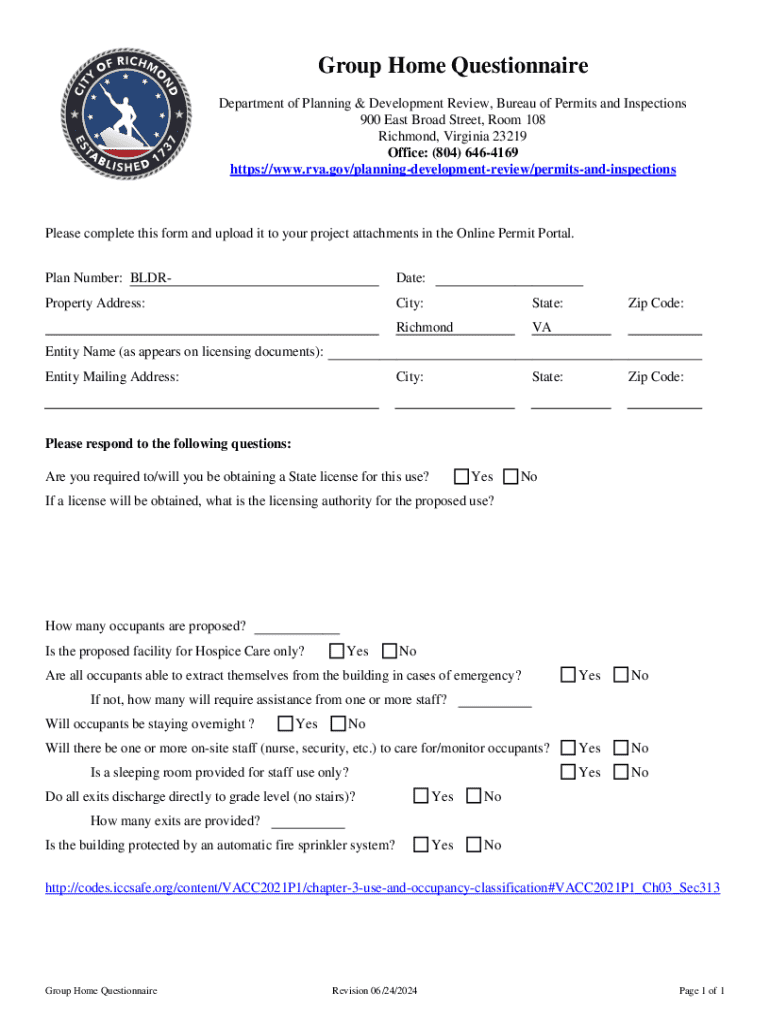
- Completed Application Forms: Properly filled out forms related to building permits and zoning reviews.
Legal Use and Compliance with the Richmond City, Office of Building Inspection
Ensuring legal compliance with the Richmond City, Office of Building Inspection is essential for any construction or modification project.
- Adherence to Codes: Ensure all aspects of construction are in line with the Virginia Uniform Statewide Building Code (VUSBC).
- Environmental Regulations: Comply with local environmental laws that govern waste disposal, resource utilization, and site management.
- Liability Management: Secure necessary insurance to cover potential liabilities during and after construction.
Through comprehensive oversight, the Richmond City, Office of Building Inspection ensures the city's built environment is safe, durable, and compliant with local standards.