
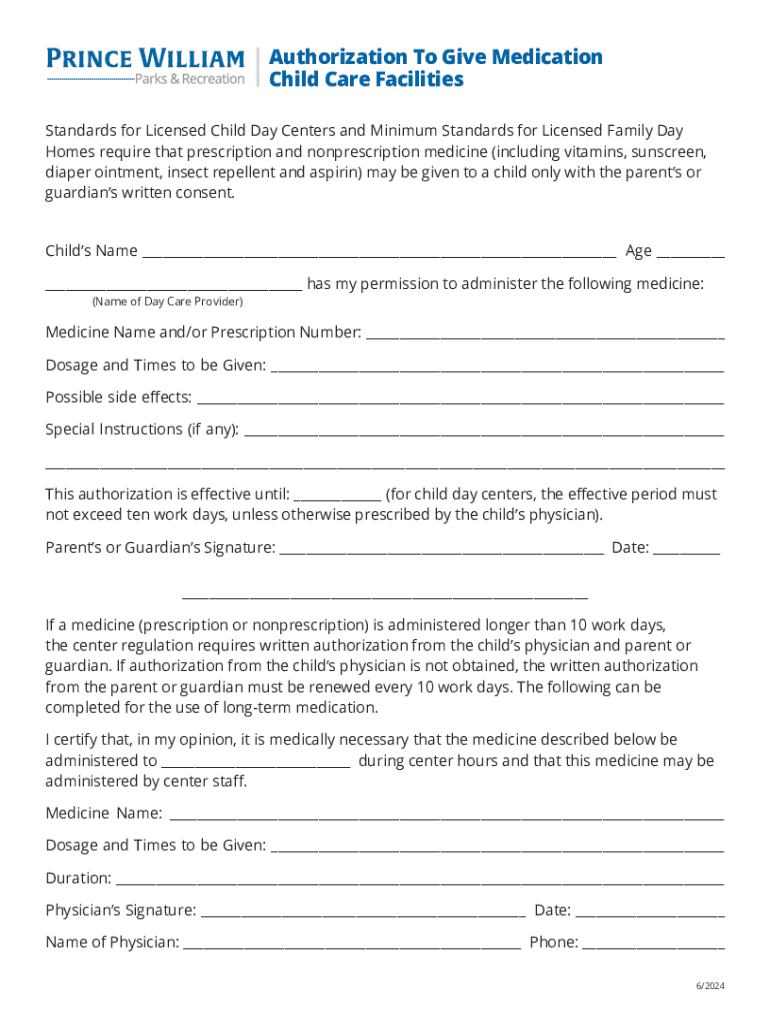







Definition & Importance of Parent Information Regarding Medication, Inhalers, and Epi-Pens
This form is a critical document utilized by parents and guardians to manage the administration of medications, including inhalers and Epi-Pens, for children involved in activities like park programs. It serves as both a record and a guide, ensuring proper handling and authorization of medications. The form's aim is to protect the children's health by allowing program staff to administer necessary medications confidently and in compliance with legal and safety standards.
Essential Components
- Authorization Details: Requires signatures from both parents and physicians to legitimize medication administration.
- Medication Information: Specifics about dosage, frequency, and administration method are detailed for safe handling.
- Emergency Procedures: Outlines steps to manage adverse reactions or emergencies effectively.
How to Use the Parent Information Form Effectively
Effectively using this form involves understanding its sections and ensuring accurate and thorough completion to avoid any miscommunication regarding medication administration.
Step-by-Step Instructions
- Document Personal Information: Begin by entering the child's personal details and emergency contact information.
- Medication Details: Accurately fill in the medication type, dosage, and any special instructions.
- Authorization: Ensure that all necessary signatures from parents and a healthcare provider are obtained.
- Review and Submit: Double-check all information for accuracy before submitting to the program's administrative staff.
Practical Examples
- Emergency Contacts: List at least two contacts who can respond promptly during emergencies involving medication.
- Special Instructions: Note any specific signs or symptoms program staff should watch for after administering medication.
Steps to Complete the Parent Information Form
Completing the form involves detailed attention to each required field to ensure a complete and accurate record is maintained.
Detailed Process
- Gather Required Information: Collect prescriptions, healthcare provider contacts, and current medical records.
- Fill Out Personal Details: Start with basic information, including names, addresses, and contact details.
- Detail Medication Info: Specify each medication's name, dosage, administration method, and times.
- Authorize with Signatures: Have both parental and physician authorization sections signed.
- Double-check for Accuracy: Review each entry for completeness and correctness.
Examples of Frequent Errors
- Missed Signatures: Forgetting a signature can render the form invalid.
- Incomplete Dosage Instructions: Not detailing how and when to administer medication accurately can lead to administration errors.
Key Elements of the Parent Information Form
Understanding the key elements included in the form ensures that all necessary components are accurately filled out, preventing any issues during the handling of medications.
Critical Sections
- Medical History: Information on past and current medical issues.
- Medication Storage Instructions: Detailed guidelines on how the medication should be stored, particularly for temperature-sensitive items such as inhalers and Epi-Pens.
- Consent to Treat: A statement that authorizes program staff to administer medications.
Important Considerations
- Temperature Requirements: Ensuring inhalers and Epi-Pens are stored within appropriate temperature ranges to maintain their efficacy.
- Expiration Dates: Keeping track of medication expiration dates to avoid using ineffective treatments.
State-Specific Rules for Medication Forms
Different states have specific rules concerning the administration of medications to minors, and understanding these can ensure compliance and safety.
Variations by State
- Authorization Requirements: Some states might require additional documentation or notarization of signatures.
- Storage Regulations: States may have distinct laws governing how medications are transported and stored.
Examples
- California: May require proof of parent's legal authority to consent to medical treatments for minors.
- New York: Includes specific forms for each type of medication administered within school or camp settings.
Legal Use and Compliance with Medication Forms
Ensuring the form's legality involves adherence to state requirements and guidelines set by educational or program institutions.
Legal Considerations
- Privacy Compliance: Abide by HIPAA and other privacy regulations concerning children's medical information.
- Authorized Personnel: Only trained staff should handle medications as unauthorized administration is a legal risk.
Potential Penalties
- Non-Compliance: Failing to properly complete or submit the form can lead to legal liabilities or fines.
- Unauthorized Access: Sharing information without consent can breach privacy laws leading to potential legal actions.
Digital vs. Paper Versions of the Form
Both digital and paper versions of the form have benefits and challenges, each suited to different environments and user preferences.
Comparison
- Digital Forms: Enable easier storage and sharing, often accompanied by automated reminders for renewals.
- Paper Forms: Provide a tangible copy for quick access, though they can be susceptible to physical damage.
Software Compatibility
- Integration with Google Workspace: Using platforms like DocHub allows for cloud-based storage and sharing of digital forms for convenience and efficiency.
- Mobile Access: Many digital forms can be filled and submitted via mobile devices, facilitating on-the-go access.
Examples of Using the Parent Information Form
Illustrative scenarios help to understand the practical application and significance of this form in everyday contexts.
Real-World Scenarios
- Summer Camp Settings: Ensures camp staff are equipped to handle medical emergencies.
- School Programs: Facilitates compliance with school medication policies by detailing administration instructions.
Common Situations
- Unexpected Reactions: Enables quick response by detailing emergency contact information and steps.
- Medication Changes: Keeping the form updated with new prescription information to ensure continuous care.
By following these guidelines and understanding the importance of the parent information form regarding medication, inhalers, and Epi-Pens, parents and guardians can ensure their children's safety and well-being during participation in various programs.


