






Definition and Purpose of the Title VI Compliance Assessment Tool
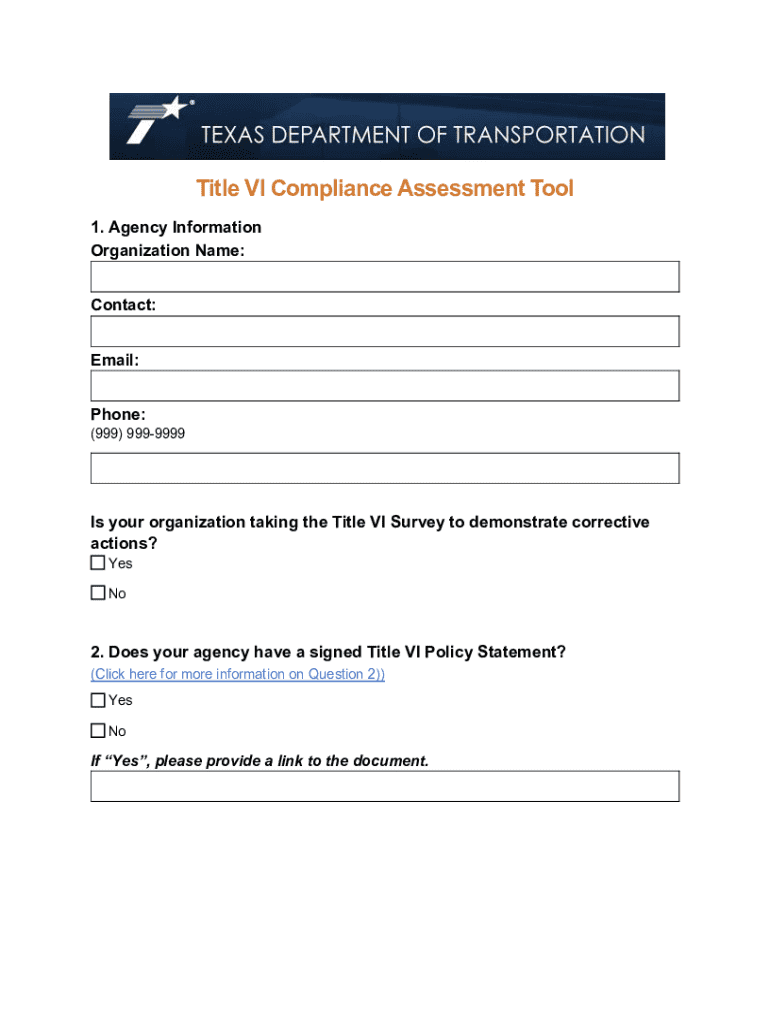
The Title VI Compliance Assessment Tool is a systematic guide designed to help agencies evaluate their adherence to Title VI of the Civil Rights Act of 1964. This federal law prohibits discrimination based on race, color, or national origin in programs and activities receiving federal financial assistance. The tool comprises a series of assessment questions related to the agency's policies, procedures, and actions concerning nondiscrimination mandates.
Core Components Included
- Title VI Policy Statement: Ensures the agency clearly communicates its commitment to nondiscrimination.
- Nondiscrimination Assurance: This element confirms the agency has formalized its commitment by incorporating nondiscrimination clauses in contracts and other formal agreements.
- Title VI Coordinator: Specifies the requirement for a designated person responsible for ensuring compliance with Title VI.
- Limited English Proficient (LEP) Plans: Details the agency's strategy for providing meaningful access to services for individuals with limited English proficiency.
- Data Collection Practices: Focuses on gathering relevant demographic data to monitor and ensure equity in service provision.
Steps to Complete the Title VI Compliance Assessment Tool
Completing the Title VI Compliance Assessment Tool involves several key steps to ensure a thorough evaluation of compliance status:
- Gather Necessary Documentation: Collect existing policies, training records, contracts, and any previously conducted assessments.
- Review Current Policies and Practices: Examine the documented policies and practices to identify any gaps or improvements needed.
- Respond to Evaluation Questions: Answer each assessment question honestly and accurately, using supporting documentation where available.
- Engage Stakeholders: Encourage input from staff responsible for implementation and compliance to gain comprehensive insights.
- Identify Areas for Improvement: Note any deficiencies or compliance risks identified during the assessment.
- Develop an Action Plan: Outline steps to address identified gaps, assign responsibilities, and set timelines for implementation.
Who Uses the Title VI Compliance Assessment Tool
The Title VI Compliance Assessment Tool is primarily utilized by organizations and agencies that receive federal financial assistance. These include:
- State and Local Governments: Entities involved in providing public services or managing public programs.
- Nonprofit Organizations: Organizations that rely on federal grants for their operations or programs.
- Educational Institutions: Schools and universities ensuring equitable access to educational programs.
- Healthcare Providers: Facilities that must provide nondiscriminatory services under federally funded health programs.
Each user group aims to ensure their operations comply with federal nondiscrimination requirements, promoting equity across diverse populations.
Key Elements of the Title VI Compliance Assessment Tool
Understanding the fundamental components of the tool provides clarity on its application and objectives. These key elements include:
- Nondiscrimination Policy: Evaluation of existing written policies to ensure they meet Title VI standards.
- Community Outreach and Engagement: Assessment of efforts to reach and inform minority populations about available services.
- Monitoring and Oversight Strategies: Review of ongoing practices to identify and address discriminatory practices or policies.
- Training Programs: Evaluation of staff training initiatives focusing on compliance and nondiscrimination awareness.
These elements are crucial in fostering an environment that actively supports and adheres to Title VI principles.
Legal Use and Implications of the Title VI Compliance Assessment Tool
Using the Title VI Compliance Assessment Tool has legally significant implications for organizations:
- Documentation of Compliance: Acts as evidence of an organization’s commitment to Title VI principles in the face of inquiries or reviews.
- Mitigation of Legal Risks: Early identification and correction of potential compliance risks help reduce exposure to legal challenges.
- Strengthening Federal Funding Eligibility: Demonstrates that the organization meets necessary prerequisites for federal financial support.
Agencies utilizing this tool protect themselves against potential discrimination claims and enhance trust with stakeholders.
Software Compatibility and Integration
Incorporating the Title VI Compliance Assessment Tool with document management platforms like DocHub can streamline its use:
- Document Import Capabilities: Seamlessly upload related documents from various sources, such as Google Drive or Dropbox.
- Real-Time Collaboration: Multiple team members can work together on the assessment, leveraging DocHub’s collaborative features.
- Secure Storage and Sharing: Utilize encryption and access control features to safeguard sensitive compliance documentation.
These capabilities help ensure efficient management and accessibility of compliance-related documents throughout the assessment process.
Importance of Data Collection and Analysis
Data collection and analysis are integral to the Title VI Compliance Assessment process:
- Informed Decision-Making: Data-driven insights allow for more informed policy adjustments and service improvements.
- Monitoring Equity Outcomes: Regular analysis aids in tracking the effectiveness of nondiscrimination efforts and identifying emerging disparities.
- Support for Reporting Requirements: Collected data facilitates comprehensive reporting to oversight entities and the public.
Proper data collection mechanisms enhance the capability to uphold Title VI standards effectively and transparently.