






Definition and Purpose of Algebra 1 Worksheet 10-4
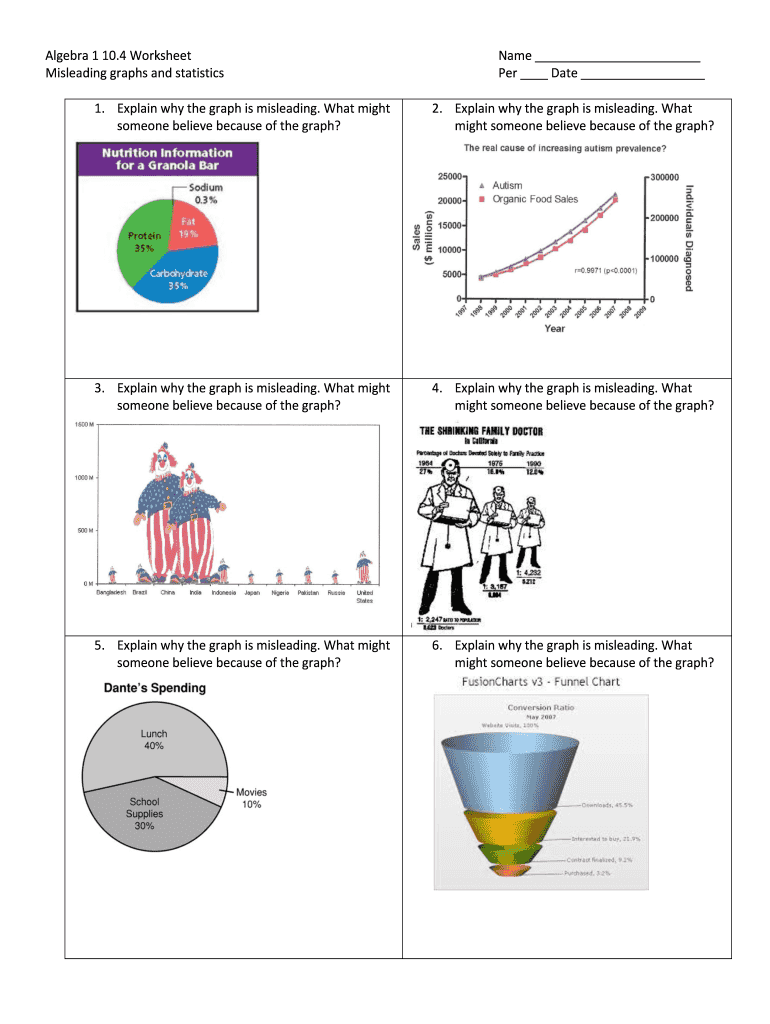
The Algebra 1 Worksheet 10-4 focuses on helping students recognize and critically assess misleading graphs and statistics. This educational tool prompts learners to engage with various scenarios where data visualization might lead to incorrect inferences, fostering a deeper understanding of data literacy and analytics.
How to Utilize the Algebra 1 Worksheet 10-4
The worksheet serves as a practical guide for students to apply algebraic principles in real-world contexts. By following each exercise, students will learn to:
- Analyze graphs and charts critically.
- Identify potential misconceptions in data representation.
- Understand the impact of scale and labeling on data interpretation.
Key Elements of the Worksheet
Understanding the main components of the Algebra 1 Worksheet 10-4 is crucial for effective learning. These elements include:
- Scenarios and Questions: Each section presents a unique situation requiring analysis.
- Graphs and Data Sets: Variations in data presentation to challenge students.
- Critical Thinking Questions: Prompts to guide students in forming conclusions based on their analyses.
Completing the Algebra 1 Worksheet 10-4: Step-by-Step Guide
- Review the Scenarios: Start by carefully reading each scenario provided.
- Analyze the Graphs: Examine graphs for misleading elements such as truncated scales or insufficient labeling.
- Answer the Questions: Use critical thinking to answer questions that probe the implications of the presented data.
- Discuss Findings: Consider discussing your conclusions with peers or educators for feedback.
Who Typically Uses the Algebra 1 Worksheet 10-4
This worksheet is commonly used by:
- High School Students: Enrolled in Algebra 1 courses.
- Teachers and Educators: Incorporating it into classroom activities to emphasize practical learning.
- Tutors: Assisting students in developing analytical skills.


Important Terms in Algebra 1 Worksheet 10-4
Familiarity with certain terms is essential when dealing with this worksheet:
- Misleading Graphs: Visual data representations that can cause misconceptions.
- Data Interpretation: The process of making sense of data presented in graphical form.
- Scale Manipulation: Altering a graph’s axis to exaggerate or minimize data points.
Practical Examples of Using the Worksheet
The worksheet provides hands-on practice with examples such as:
- Poll Results Misinterpretation: Understanding how different graph presentations can change public perception.
- Comparative Data Analysis: Evaluating statistics from different sources for consistency.
State-Specific Guidelines and Adaptations
While the core principles of algebra remain constant, teachers might adapt the worksheet to:
- Align with State Standards: Ensuring the content meets specific educational requirements.
- Address Local Issues: Tailoring scenarios to include local data or relevant state-level case studies.
Versions and Alternatives to the Worksheet
Educational institutions may employ different editions or alternatives, such as:
- Digital Versions: Interactive online tools for dynamic learning experiences.
- Custom Worksheets: Teacher-created materials tailored to specific learning objectives.
By exploring these diverse aspects of the Algebra 1 Worksheet 10-4, students and educators can maximize its effectiveness in teaching critical data interpretation skills.