






Definition & Meaning
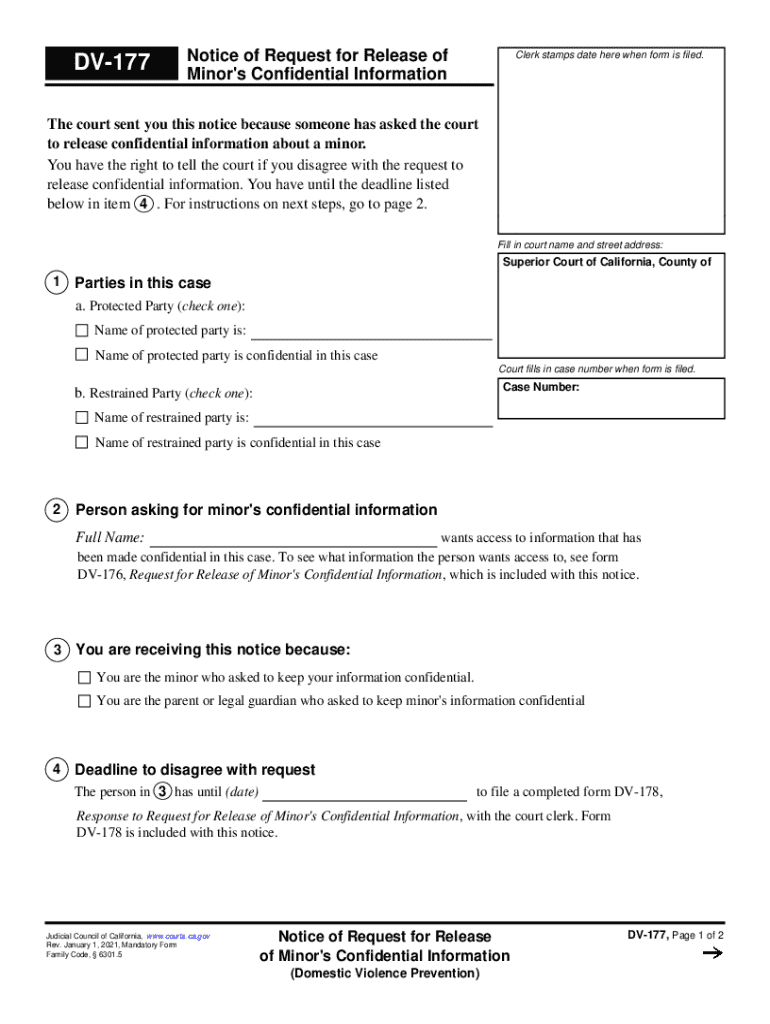
The DV-177 is a notice issued by the Superior Court of California, specifically crafted to address the release of confidential information about a minor. This form serves as an alert to inform involved parties, such as the minor or their legal guardian, about the request to disclose sensitive information. It outlines the process by which the recipient can contest this request, providing a legal framework to maintain the privacy of the individual involved. Understanding its purpose is essential for properly navigating the court's requirements concerning confidentiality.
How to Use the DV-177
Utilizing the DV-177 involves specific steps aimed at protecting personal information. Recipients of the DV-177 should first read the notice carefully to determine what information is being requested for release. If the recipient disagrees with the release of information, the form includes instructions on how to file a formal objection, which might be in the form of another related document like the DV-178. The primary function of the DV-177 is to ensure that the recipient is informed and has the opportunity to contest the matter in a timely manner.
Steps to Complete the DV-177
Completing the DV-177 requires careful attention to detail to ensure compliance with court protocols. When filling out the form:
- Read the Entire Document: Understand the scope and implications of the information being requested.
- Gather Necessary Information: Ensure you have all relevant details about the minor and the circumstances of the confidentiality breach.
- Complete Personal Details: Fill in sections detailing the minor's information and the legal guardian's contact information if applicable.
- Express Consent or Objection: Indicate whether you are contesting or consenting to the release of information.
- Sign and Date the Form: Ensure the document is signed, dated, and if necessary, notarized.
- Submit According to Instructions: Follow specific submission guidelines as per the instructions provided on the DV-177.
Legal Use of the DV-177
The DV-177 is utilized within a legal framework to ensure that the release of confidential information is carefully monitored and contested where necessary. Its use is critical in situations where the privacy of a minor could be compromised. The form explicitly provides legal recourse to those wishing to object to the dissemination of information, allowing them to file a response that is considered by the court before any release of data. This legal tool is designed to align with overarching privacy laws and regulations.
Key Elements of the DV-177
Key components of the DV-177 include:
- Notice of Intent: The form clearly communicates the intention to release certain information.
- Response Instructions: Provides guidelines for contesting the information release.
- Deadline for Filing Objections: Specifies the timeframe within which responses must be filed.
- Court Contact Information: Includes details of how to reach relevant court officials for questions.
- Instructions for Objectors: Lists the steps necessary to lodge a formal objection.
Understanding these elements helps in efficiently managing legal obligations and deadlines.
Who Typically Uses the DV-177
Typically, the DV-177 is utilized by parties involved in legal proceedings concerning minors, such as parents, legal guardians, or attorneys. The court, as the issuing body, generally provides this document to these stakeholders to keep them informed and prepared to take any necessary legal action. This might also involve social workers or child protective services, depending on the circumstances surrounding the case. Familiarity with the process is crucial for these users to adequately protect the minor's interests.


State-specific Rules for the DV-177
Rules governing the use and submission of the DV-177 can vary significantly across states, particularly with differences in privacy laws and child protection statutes. For California, where the DV-177 originates, compliance with both state law and court directives is necessary. Recipients must be aware of any local regulations that might impact how they handle the form and the required actions. Consulting legal advice specific to California state laws ensures adherence to these rules, providing a more reliable approach to managing confidentiality requests.
Filing Deadlines / Important Dates
The DV-177 includes critical deadlines and dates by which recipients must respond. These dates are crucial for ensuring that any objections or responses are considered within the court's decision-making process. Failure to meet these deadlines might result in the release of information without further input from the objector. It is essential to note these dates immediately upon receipt of the DV-177 to plan appropriate actions and to seek extensions if required, depending on the circumstances.
Required Documents
To accompany the DV-177, certain documents may be necessary to validate the objection to releasing information. These might include:
- Proof of Identity: To confirm the identity of the recipient or related parties.
- Legal Documentation: Papers verifying the legal relationship to the minor.
- Supporting Evidence: Any evidence that aids in substantiating the objection.
Providing these documents alongside the DV-177 can strengthen the case for maintaining confidentiality and ensure that the court has all necessary information for a comprehensive review.