
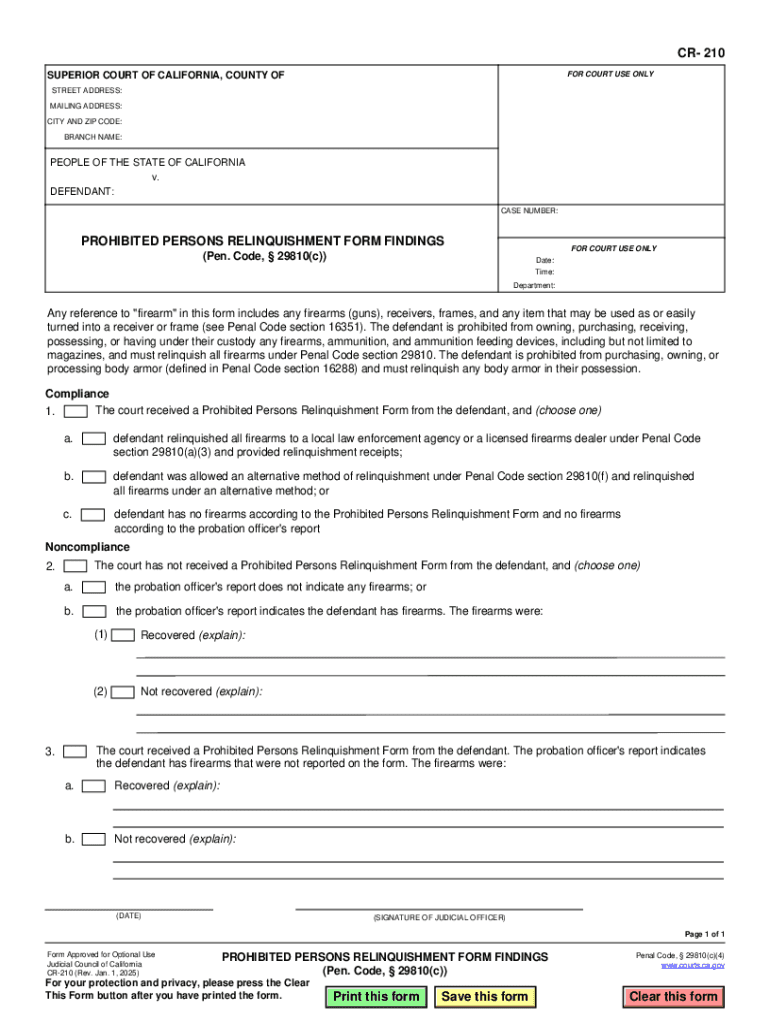







Definition and Meaning of the Cr-210 Form
The Cr-210, known as the Prohibited Persons Relinquishment Form, is utilized by the Superior Court of California. This legal document ensures individuals who are legally prohibited from owning firearms adhere to the requirements of surrendering their firearms and body armor. Based on the Penal Code section 29810, it contains comprehensive guidelines regarding compliance and noncompliance related to the surrender process. The form is essential for both the judiciary and individuals, as it outlines steps for lawful adherence while aiming to maintain public safety.
How to Use the Cr-210 Form
Utilizing the Cr-210 involves several key steps aimed at ensuring full compliance. Primarily, the individual must complete the form by providing all necessary personal information and details about their firearms or body armor. Once completed, the form needs to be submitted to the appropriate court authorities for review. Upon acceptance, individuals must follow outlined procedures for the actual relinquishment of their firearms, often involving local law enforcement agencies. It's important to ensure all information provided is accurate to avoid complications in the compliance process.
Steps to Complete the Cr-210 Form
- Obtain the Form: Acquire the Cr-210 from the Superior Court of California's website or a physical court location.
- Fill Out Personal Details: Include all relevant personal information such as name, address, and contact details.
- Describe Firearms/Body Armor: Provide detailed descriptions of each item, including make, model, and serial numbers.
- Read Compliance Instructions: Carefully review the compliance and noncompliance instructions attached to the form.
- Submit to Court: Present the completed form to the designated court clerk or law enforcement officer.
- Follow Up: Engage with the relevant authorities to confirm receipt and any further actions needed.
Key Elements of the Cr-210 Form
The Cr-210 form encompasses several critical components, each vital to its successful completion:
- Personal Information: Captures the identify of the individual required to relinquish firearms.
- Itemized Inventory List: Details of all firearms and body armor in question, providing accountability and traceability.
- Judicial Instructions: Guidance regarding legal compliance and enforcement.
- Compliance Timeline: Specifies deadlines for various stages of the relinquishment process to ensure timely action.
- Penalties and Consequences: Outlines potential legal repercussions for failing to comply, emphasizing the importance of adherence.
Legal Use of the Cr-210 Form
The Cr-210 is a legally binding document that plays a crucial role in public safety. It is enforced under California's Penal Code section 29810, applicable to individuals prohibited from firearm ownership due to legal restrictions. The form is a tool for courts and law enforcement to manage the safe surrender of firearms, ensuring compliance and tracking. It underlines the state's commitment to reducing firearm-related incidents by ensuring those who are legally barred from possession comply with the relinquishment laws.
Who Typically Uses the Cr-210 Form
Typically, the Cr-210 form is used by individuals who find themselves legally prohibited from owning firearms. This could be due to various reasons such as criminal convictions, restraining orders, or mental health judgments that mandate relinquishment. Law enforcement officials and court personnel are also key users, as they manage and oversee the surrender process. Legal practitioners may use the form when advising clients on compliance requirements. It is a document of necessity, signifying adherence to court orders and legal judgments.


Penalties for Non-Compliance
Non-compliance with the Cr-210 can lead to serious legal repercussions. Failing to submit the form or complete the surrender process within the stipulated timeframe can result in fines, additional legal sanctions, and even imprisonment. The aim of these penalties is to enforce adherence to relinquishment orders strictly. Each penalty serves as a deterrent and a reminder of the importance of complying with safety and legal guidelines as outlined by the court.
Examples of Using the Cr-210 Form
Consider an individual who has been legally restrained from possessing firearms due to a recent legal conviction. Completing the Cr-210 is a mandatory step for them, including a thorough inventory of the firearms to be surrendered. In another case, someone might have undergone a legal review and received a mental health-related prohibition. Surrendering firearms through this form guarantees adherence to the court's decision. Both examples demonstrate the form's role in maintaining legal compliance and protecting public safety.
State-Specific Rules for the Cr-210 Form
While the Cr-210 form is a California-specific document, its rules may vary within different jurisdictions within the state. Local counties or court districts might have additional procedures or timelines for submission. Some areas adopt strict compliance monitoring protocols to ensure all steps are properly followed. It is imperative for individuals to understand the nuances of their locality to ensure complete compliance. This form embodies the broader principles of firearm safety and regulation at a state level, adapted to meet local requirements.


