






Definition & Meaning
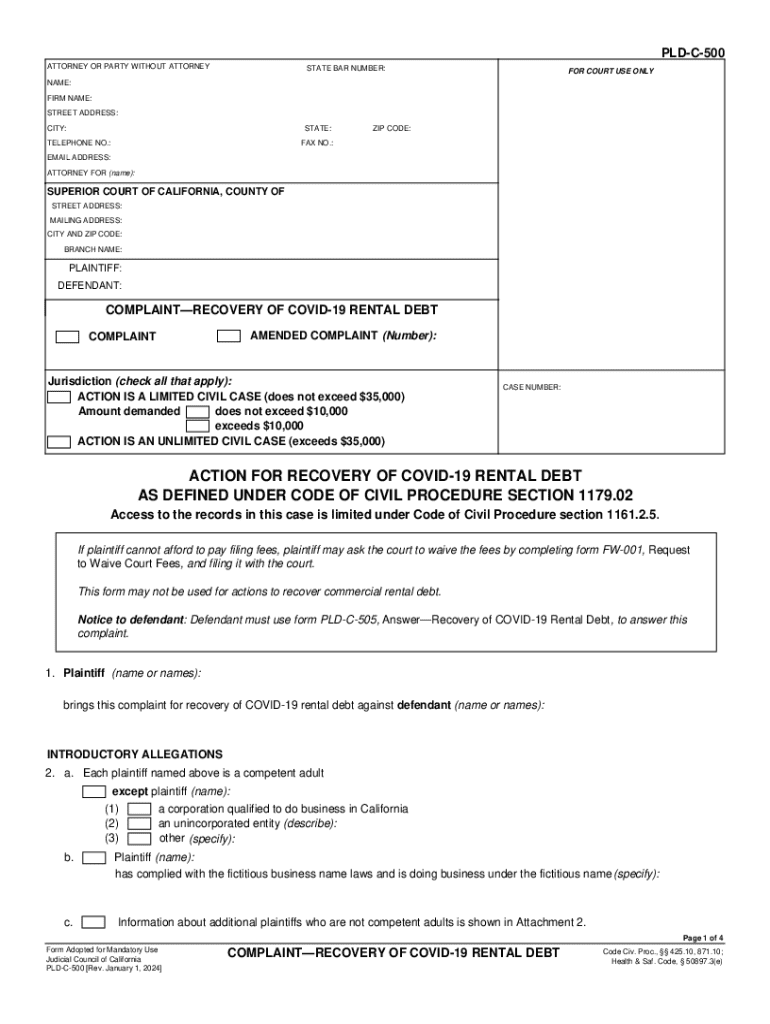
The PLD-C-500, known as a legal complaint form in California, is utilized for the recovery of rental debt related to COVID-19. This form serves as a vital tool for landlords seeking compensation for unpaid rent during specific periods impacted by the pandemic. It compiles necessary details about the plaintiff and defendant, clearly outlining jurisdictional requirements and allegations regarding unpaid rent. By providing a standardized format, the form ensures that all relevant information is collected efficiently and consistently.
Steps to Complete the PLD-C-500
Completing the PLD-C-500 involves several detailed steps to ensure accuracy and completeness:
-
Gather Information: Begin by collecting all necessary information about the plaintiff, defendant, and the specific rental agreement in question.
-
Fill Out Plaintiff Details: Enter the name, address, and contact information of the plaintiff, who is typically the landlord seeking recovery of debt.
-
Complete Defendant Information: Provide details of the defendant, including name and address, to ensure the form correctly identifies the party accused of non-payment.
-
Describe Jurisdiction: Explain why the specific court has jurisdiction over the case. This often involves detailing the location of the rental property and the parties involved.
-
Outline Allegations: Clearly state the allegations regarding unpaid rent, specifying the amount owed and the period it covers.
-
Include Rental Assistance Information: Attach any documentation related to rental assistance that has been applied for or received, as required by the form.
-
Review and Sign: Confirm all details are accurate and complete before signing the form. It may be beneficial to have a legal professional review the document for completeness and compliance.
Key Elements of the PLD-C-500
The PLD-C-500 form consists of several critical components that must be accurately filled to comply with legal standards:
- Plaintiff and Defendant Details: Names, addresses, and a description of their roles in the dispute.
- Jurisdiction Clarification: Justification of why the case is being filed in the chosen court.
- Rent Owed Details: Specific figures and timeframes detailing the unpaid amounts.
- Rental Assistance Documentation: Evidence of application or receipt of rental assistance during the specified period.
- Additional Allegations: Space for further claims beyond the unpaid rent, such as property damage or other breaches of contract.
- Demand for Judgment: The final section where the plaintiff outlines the desired outcome, such as full payment of the debt plus any applicable court costs.
Who Typically Uses the PLD-C-500
The primary users of the PLD-C-500 form are landlords or property management companies in California who experienced rental delinquencies due to COVID-19. These entities utilize the form to officially file a complaint in court to recover debts. Additionally, legal professionals working with landlords may use this form to guide them through the litigation process. Understanding the form’s details and how to complete it is essential for these users to effectively seek compensation.


Legal Use of the PLD-C-500
The legal framework governing the use of the PLD-C-500 is designed to standardize how rental debt recovery cases are presented in California courts. The form’s use adheres to California's civil procedure rules, ensuring that claims are made lawfully and fairly. By using this form, landlords ensure their complaints meet legal requirements, effectively setting the stage for judicial proceedings aimed at resolving disputes. Legal counsel can assist in navigating complex cases, advising on additional supporting documents or evidence.
Examples of Using the PLD-C-500
Several scenarios illustrate the practical application of the PLD-C-500 form:
- Case Example 1: A landlord rents an apartment in Los Angeles, and the tenant fails to pay rent for several months during 2020. The landlord uses the PLD-C-500 to claim the owed rent in small claims court.
- Case Example 2: A commercial property owner experiences a rental delinquency due to a business closure mandated by COVID-19 restrictions. They file a claim using the form to recover losses.
- Case Example 3: A property management firm overseeing multiple rental units in San Francisco uses the form to consolidate several claims against tenants who collectively owe significant amounts of unpaid rent.
State-Specific Rules for the PLD-C-500
California has set specific guidelines and requirements for using the PLD-C-500 form to ensure consistency across rental debt cases:
- Applicability: Strictly applicable to rental debts related to COVID-19 impacts, particularly those involving temporary rent freezes or eviction moratoriums.
- Filing Locations: Must be filed in the jurisdiction where the rental property is located.
- Document Requirements: Accompanied by proof of rental agreements and any communication regarding rent payments or assistance applications.
- Timelines: Compliance with deadlines established for filing such complaints, often aligned with state emergency measures or moratoriums.
Required Documents
Completing the PLD-C-500 effectively requires the submission of various supporting documents:
- Signed Rental Agreement: Validates the contractual relationship between the landlord and tenant.
- Payment History: Evidence of rent payments received and those missed, detailing the amounts and dates.
- Communication Records: Email or letter correspondence concerning rent arrears or any payment plans discussed.
- Rental Assistance Applications: Copies of any applications submitted for state or federal rental assistance programs, including results or award letters.
Through these documents, the form captures a comprehensive and legally sound portrayal of the rental situation, aiding courts in their judgment.