






Definition & Meaning
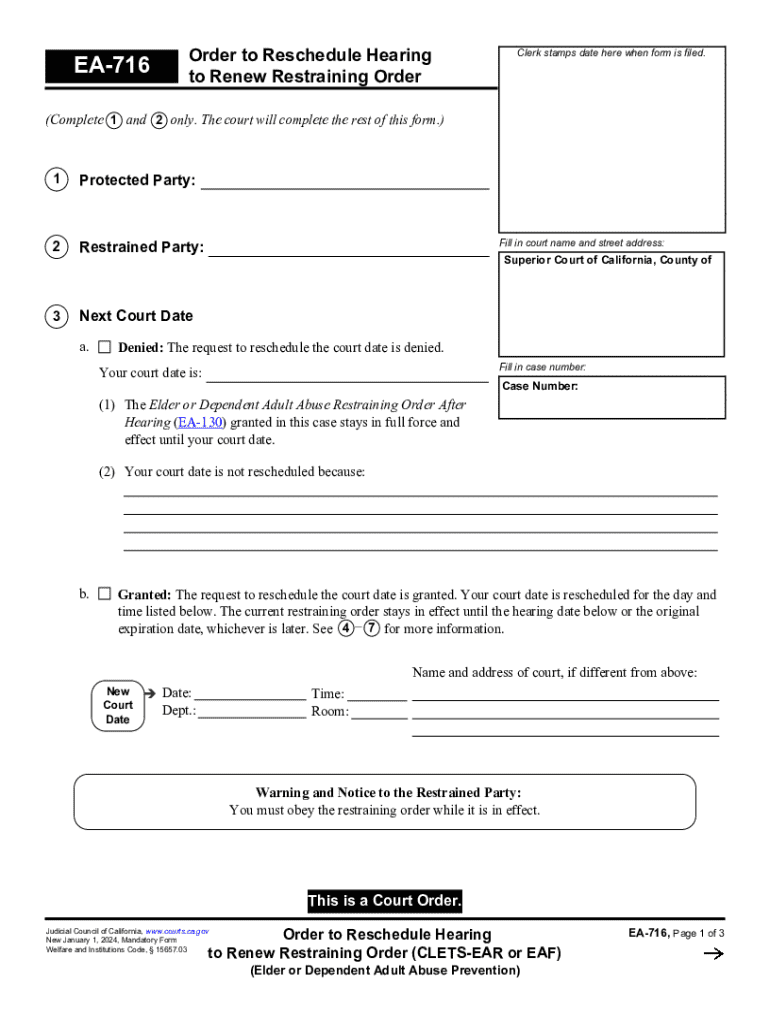
The EA-716 is a formal legal document issued by courts to reschedule hearings for the renewal of restraining orders related to elder or dependent adult abuse. This document serves as both a notification and instruction on amending the court date while ensuring that the existing restraining order continues to be effective until the new hearing. The primary purpose is to provide clarity and assurance about the steps involved when rescheduling a hearing for such sensitive matters.
How to Use the EA-716
- Review the Document: Begin by comprehensively understanding the contents of the EA-716 form. This includes the specific sections outlining conditions for rescheduling requests.
- Determine Eligibility: Verify that the criteria for rescheduling the hearing are met, including any specific requirements highlighted on the form.
- Fill Out Necessary Sections: Complete the required sections of the EA-716 with accurate information. This includes detailing why a new date is required and any supporting evidence.
- Serve the Notice: Follow the instructions provided on the document to properly notify all relevant parties about the new hearing date, ensuring compliance with legal standards.
Important Terms Related to EA-716
- Restraining Order: A legal order issued to protect individuals from harassment or harm, which remains valid until the rescheduled hearing as per EA-716 instructions.
- Elder or Dependent Adult Abuse: The form is specifically used in cases involving abuse against elderly or dependent individuals, ensuring their protection.
- Court Hearing Rescheduling: EA-716 facilitates changing the date of a court hearing without affecting the restraining order's current legal standing.
Steps to Complete the EA-716
- Gather Required Information: Collect all necessary information, including current restraining order details and justification for rescheduling.
- Complete the Form: Fill in each section of the EA-716 accurately, ensuring that all information is legible and complete.
- Submit the Form: Follow submission methods as instructed, which may include filing the document with the appropriate court authority.
- Notify Involved Parties: Ensure all parties involved are adequately informed within the stipulated time as outlined in the document instructions.
Legal Use of the EA-716
EA-716 is legally utilized to maintain the continuity of a restraining order while providing both parties the opportunity to have a fair hearing at a rescheduled date. It ensures proper legal proceedings without compromising the protection of vulnerable individuals. The EA-716 must be used in accordance with legal guidelines provided by the issuing court, respecting both federal and state-specific regulations.
Who Typically Uses the EA-716
The form is generally used by legal representatives or individuals directly involved in cases of elder or dependent adult abuse. Attorneys often manage the procedural aspects of the EA-716, but the form can also be used by individuals seeking to reschedule their hearing for legitimate reasons as stated by legal criteria.


Form Submission Methods (Online / Mail / In-Person)
- Online: Some courts may offer online submission of the EA-716 via their official websites. Ensure that the form is submitted in a compatible digital format.
- Mail: Submit the completed form via standard mail, making sure it is addressed correctly to the designated court department.
- In-Person: Deliver the form directly to the court filing office. This method allows for immediate feedback on submission completeness.
State-Specific Rules for the EA-716
Different states may have varying rules on how the EA-716 is executed. It is essential to consult with local jurisdiction guidelines to determine any unique submission, notification, or procedural requirements that might alter the standard process described on the form. Be aware that some states require additional documentation alongside the EA-716 submission.