Form 2193-zh-2026

Get Form
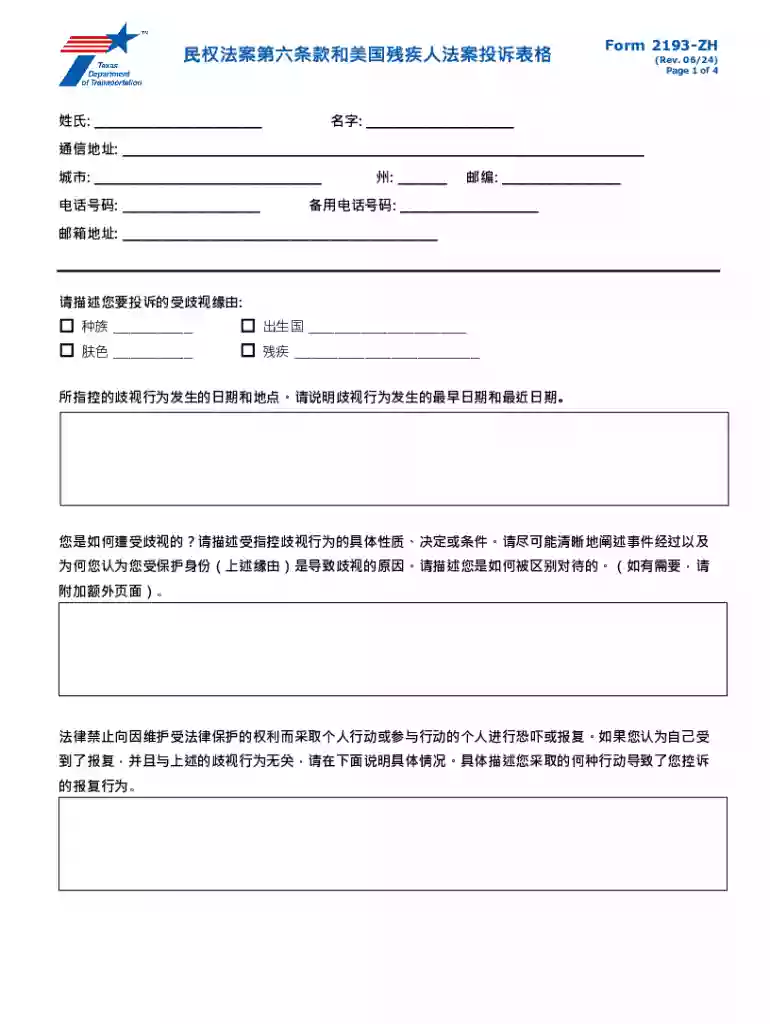
Form 2193-zh Preview on Page 1

Here's how it works

01. Edit your form online
Type text, add images, blackout confidential details, add comments, highlights and more.

02. Sign it in a few clicks
Draw your signature, type it, upload its image, or use your mobile device as a signature pad.

03. Share your form with others
Send it via email, link, or fax. You can also download it, export it or print it out.

Definition and Purpose of Form 2193-zh

Form 2193-ZH is a specialized complaint form used to address issues regarding discrimination based on race, color, national origin, or disability. This essential document enables individuals to report discriminatory practices that they have experienced or witnessed. By collecting personal information from the complainant and details about the alleged discriminatory actions, the form provides a structured method for initiating formal complaints with appropriate agencies. It also offers a venue for victims to outline desired remedies and ensures that the complaint is directed to the relevant department for further investigation and potential action.

Important Aspects of Form 2193-zh

  • Personal Information: The form requests personal details from the complainant to identify them and facilitate follow-up communication.
  • Incident Details: Detailed information about the discriminatory act, including the date, location, and nature of the incident, is collected to provide context.
  • Witnesses and Contacts: Including the contact details of any witnesses or additional supporting individuals strengthens the complaint.
  • Agency Involvement: The form inquires about previous complaints filed with other agencies to ensure a comprehensive approach.
  • Desired Remedies: Complainants can specify the outcomes they seek, which guides resolution efforts.

Steps to Complete the Form 2193-zh

Completing Form 2193-ZH involves a thorough step-by-step approach to ensure all relevant information is accurately captured. Proper completion is crucial to facilitate an effective evaluation of the complaint.

Step-By-Step Process

  1. Gather Personal Information: Begin by entering your full name, address, and contact details in the designated fields.
  2. Describe the Incident: Provide a detailed description of the discriminatory event, specifying the date, place, and nature of the discrimination.
  3. List Witnesses: Include details of any individuals who witnessed the incident or who can provide supportive information.
  4. Specify Other Complaints: Indicate if you've previously filed complaints with other authorities.
  5. Outline Desired Outcomes: State your desired resolution or remedy clearly to guide the adjudication process.
  6. Review and Sign: Ensure all information is correct before signing the form, as an unsigned form may not be processed.

Practical Example

Imagine a scenario where an employee experiences discrimination at work due to their national origin. The employee would fill out the form, detailing the incident, listing any colleagues who witnessed what happened, and specifying their preferred resolution, such as requesting mediation or training for the perpetrator.

Legal Use and Protection with Form 2193-zh

Form 2193-ZH provides a legally recognized avenue for addressing discrimination complaints. It also protects the complainant by documenting incidents comprehensively.

Legal Considerations

  • ESIGN Act Compliance: Submissions should adhere to electronic signature laws for validity.
  • Confidentiality: Information provided is usually confidential and only shared with pertinent authorities.
  • Submission Protocols: Clear guidelines ensure that the form is submitted appropriately to become an actionable legal document.

Practical Importance

The legal framework accompanying this form ensures that individuals facing discrimination can pursue justice, knowing their case will be treated with confidentiality and respect. By ensuring compliance with electronic documentation standards, individuals can submit these forms with legal backing, receiving the assurance that their complaints will be appropriately addressed.

Who Typically Uses the Form 2193-zh

The primary users of Form 2193-ZH are individuals who have been subjected to or have witnessed discriminatory practices. However, understanding who else might benefit from this form is important for broader context.


decoration image ratings of Dochub

Typical Users

  • Employees: Workers who face discrimination in the workplace are frequent users of this form.
  • Students: Those experiencing discrimination in educational settings.
  • Customers: Consumers who encounter discriminatory practices while accessing services.
  • Witnesses: Individuals who observe discriminatory incidents against someone else.

Organizational Context

Organizations such as the Texas Department of Transportation may utilize these forms for internal records, guiding them in implementing systems that foster inclusion and prevent future discrimination. They are also useful for creating statistics that influence policy creation.

Submission Methods for Form 2193-zh

Form 2193-ZH can be submitted in multiple ways, ensuring that individuals have accessible options for delivering their complaints.

Available Submission Methods

  • Online: Many forms offer online submission through secure platforms.
  • Mail: There is typically an option to mail the completed form to the specified address.
  • In-Person: Some agencies accept forms submitted in person for expedited processing.

Ensuring Secure Submission

  • Online Protocols: Utilizing SSL encryption for online submissions ensures data security.
  • Mail Considerations: Use certified mail to track your document and confirm delivery.
  • In-Person: Be sure to follow the agency's protocols, which might include scheduling an appointment or using specific drop-off points.

Gathering Required Documents

Accurate completion of Form 2193-ZH often necessitates the collection of supplementary documents that validate the complaint's claims.

Essential Documents to Collect

  • Identity Verification: Copies of legal identification.
  • Incident Evidence: Any physical evidence, such as photographs, written notes, or communication records, that substantiate the claim.
  • Witness Statements: Signed statements from witnesses who observed the discriminatory event.
  • Previous Correspondence: Copies of any prior communications with involved parties or other agencies.

Use Case Scenario

When filing the form, a complainant might need to attach an email chain that captures discriminatory language used by an employer, accompanied by written testimonies from colleagues. These supporting documents enhance the complaint's credibility and comprehensiveness.

Key Elements of Form 2193-zh

Understanding the vital components of Form 2193-ZH helps users navigate its structure effectively, ensuring no critical section is overlooked.

Main Sections

  • Complainant Information: Essential for identifying and contacting the individual making the complaint.
  • Discriminatory Behavior Description: Central to establishing the core issues and context.
  • Witness Information: Adding credibility and supporting the complaint.
  • Resolution Sought: Offers guidance on addressing the situation through specified outcomes.

Common Mistakes to Avoid

  • Incomplete Information: Failing to fill out all mandatory fields can result in processing delays.
  • Missing Signatures: Unsigned forms might be rejected, underscoring the importance of a complete submission.
  • Inaccurate Details: Incorrect dates or event descriptions might weaken the complaint's impact.

Real-World Examples and Case Studies

Exploring actual cases where Form 2193-ZH was effectively utilized provides clarity and encourages effective use.

Case Study Examples

  • Workplace Discrimination: An employee witnessing national origin bias used the form to report the incident, leading to corrective action by the employer.
  • Public Accommodation Discrimination: A customer filed a complaint after being denied service due to racial profiling, resulting in a policy review.
  • Successful Resolution: Outcomes included formal apologies, policy changes, or educational interventions for offending parties, illustrating the form's potential impact.

Learning from Examples

These real-world applications of Form 2193-ZH demonstrate its utility in creating awareness and enforcing equitable standards in various realms, from employment settings to public spaces. By analyzing these case studies, complainants can better prepare their submissions to reflect similar levels of detail and substantiation.

be ready to get more

Complete this form in 5 minutes or less

Get form

Security and compliance

At DocHub, your data security is our priority. We follow HIPAA, SOC2, GDPR, and other standards, so you can work on your documents with confidence.

Learn more
ccpa2
pci-dss
gdpr-compliance
hipaa
soc-compliance