






Definition and Purpose of Cr-223
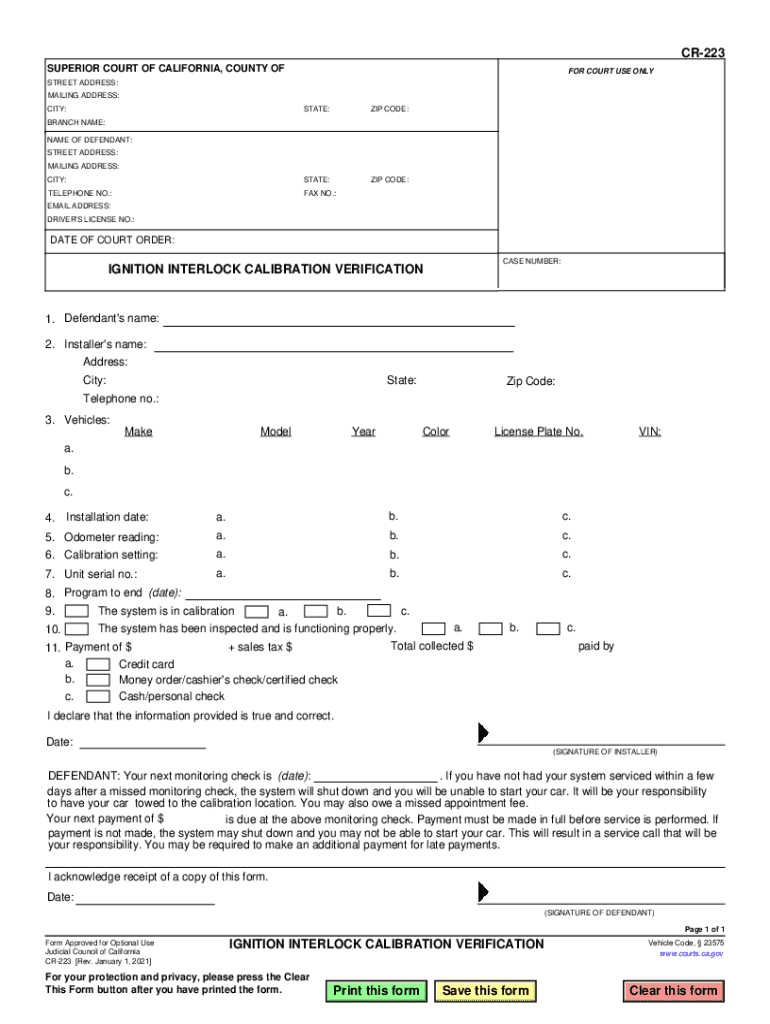
The Cr-223 form is used by the Superior Court of California to verify the calibration of ignition interlock devices installed in vehicles. This form is essential in ensuring that these devices, which are often mandated as part of DUI convictions, are functioning correctly. Ignition interlock devices are designed to prevent a vehicle from starting if the driver’s alcohol level exceeds a pre-set limit, thereby promoting road safety. The Cr-223 form documents crucial information such as the defendant’s details, vehicle information, and calibration settings, ensuring compliance with the court's requirements.
Importance of Timely Compliance
Meeting the deadlines and requirements associated with the Cr-223 is crucial. Failure to comply with the form’s regulations can result in penalties, including extended suspension of driving privileges or additional legal repercussions. It is vital for individuals required to use an ignition interlock device to maintain accurate records and submit the Cr-223 form timely to demonstrate their adherence to court orders.
Key Elements of the Cr-223
The form Cr-223 is structured to capture several critical pieces of information. Each section serves a specific purpose to ensure the proper functioning and monitoring of the ignition interlock device. Key elements typically included are:
- Defendant's Information: Details such as name, address, and case number for identification and verification purposes.
- Installer’s Information: Information about the certified technician or company responsible for the installation and calibration of the device.
- Vehicle Details: This includes the make, model, VIN, and license plate number to link the device with the specific vehicle.
- Calibration Settings: Technical specifications and settings of the device to ensure it meets the necessary standards and is correctly adjusted to the legal requirements.
- Payment Information: Documentation of any fees or payments made for the installation and monitoring of the device, crucial for financial tracking.
Additional Sections
Beyond these primary elements, the form may also include acknowledgment statements regarding the responsibilities of the individual in using and maintaining the device. These acknowledgments often emphasize the importance of regular service checks to keep the device operational and compliant with the law.
How to Obtain the Cr-223 Form
Obtaining the Cr-223 form can be done through various methods depending on your location and preferences. Generally, the form can be acquired in the following ways:
- Court Websites: Many Californian judicial websites provide downloadable versions of the Cr-223 form.
- In-Person at Court Offices: Visiting the local Superior Court can allow for direct access and assistance.
- Legal Representatives: Attorneys or law firms dealing with DUI cases often have the Cr-223 or can assist in obtaining it.
- Ignition Interlock Providers: Companies providing ignition interlock devices may also supply forms as they coordinate with legal entities.
Steps to Complete the Cr-223
Completing the Cr-223 requires attention to detail to ensure all sections are accurately filled out. Below is a step-by-step process:
- Gather Information: Collect all necessary information, including personal details, vehicle information, and contact details for the installer.
- Fill Out Defendant’s Section: Enter your full name, case number, and contact information.
- Input Installer Information: Provide the details of the certified installer, including their certification number.
- Vehicle and Calibration Settings: Record all specifics about your vehicle and ensure the calibration details meet the required standards.
- Sign and Date: Ensure the form is signed by relevant parties, verifying the accuracy and attestation of the information provided.
- Review Submission Guidelines: Double-check the instructions to determine the preferred submission method, whether online, by mail, or in-person.
Submitting the Form
Following the completion of the form, it should be submitted according to the court’s guidelines. This could involve submitting it directly during a court visit, mailing it to the prescribed address, or electronically uploading it via a judicial portal if available.
Legal Implications and Uses of the Cr-223
The Cr-223 plays a significant role in the legal system, primarily concerning DUI cases. It serves as an official record verifying that a defendant complies with court mandates regarding ignition interlock systems. The legal implications extend to:
- Ensuring Compliance: Demonstrating adherence to preventative measures ordered by the court.
- Monitoring and Accountability: Allowing the court to track compliance with servicing and usage conditions set forth in the defendant's sentencing.
- Potential Legal Consequences: Outlining penalties for non-compliance or inaccurate submissions that may lead to further legal action.
Who Typically Uses the Cr-223
The form is generally used by individuals who have been mandated by the court to install an ignition interlock device due to a DUI conviction. These individuals must prove the device’s proper installation and calibration to maintain their driving privileges. It also involves:
- Legal Representatives: Assisting clients by ensuring all documentation complies with legal requirements.
- Ignition Interlock Service Providers: Collaborating with clients to provide necessary details and certifications.


Customization for Different Cases
Depending on the specifics of each legal case, certain sections of the Cr-223 may be more emphasized. Legal representatives often customize the completion strategy, focusing on the most relevant areas for their clients' circumstances.
Alternatives and Related Forms
While the Cr-223 is the standard for verifying ignition interlock compliance, there may be additional or alternative documentation necessary depending on the case's complexity or jurisdictional requirements. Alternatives or related forms may include:
- Court-Specific Variants: Some jurisdictions might have additional forms augmenting the Cr-223.
- Documentation for Additional Services: Related forms may detail service agreements for the maintenance and monitoring of the device.
Compatibility with Digital Document Systems
The Cr-223 can often be completed digitally through compatible systems. Platforms like DocHub facilitate the digital completion and submission of such forms, ensuring compliance with 256-bit SSL encryption and other security measures for sensitive information. Users can seamlessly import and export the Cr-223 form for electronic record-keeping and sharing.