






Definition and Meaning
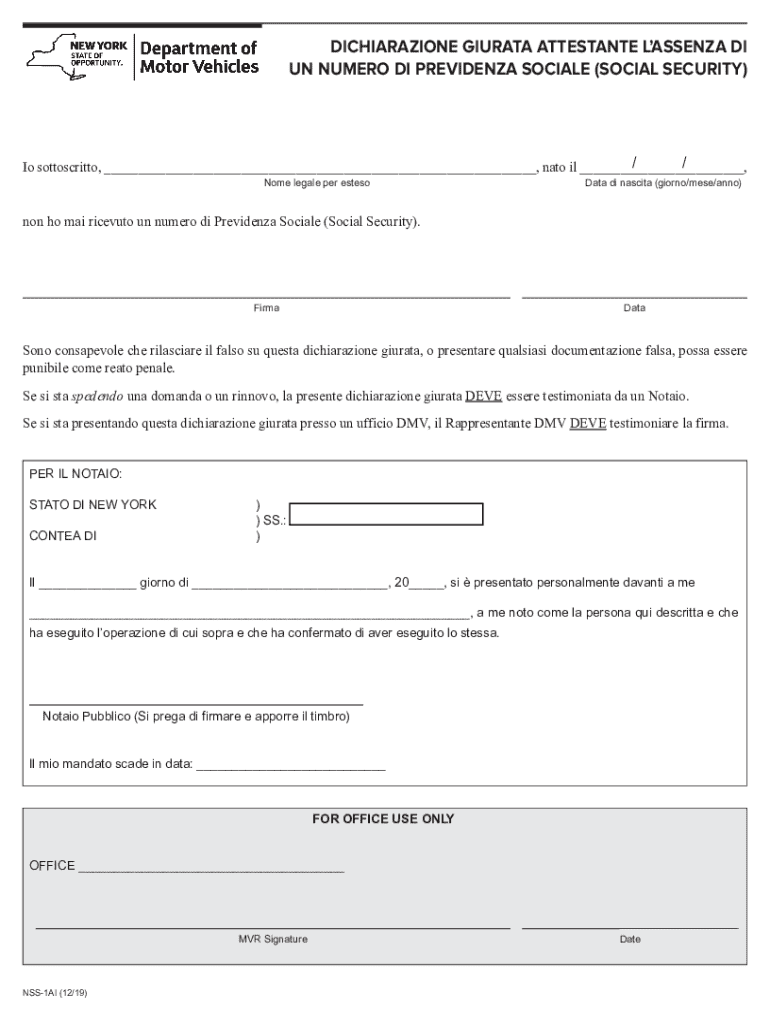
The "Dichiarazione Giurata Attestante L'assenza Di Un Numero Di Previdenza Sociale" translates to a sworn declaration asserting the absence of a Social Security number. This document is often used in scenarios where an individual needs to confirm officially that they have never been assigned a Social Security number. It includes personal identification details and is considered a legal affidavit, which means providing false information can lead to legal repercussions.
How to Use the Declaration
When using the "Dichiarazione Giurata Attestante L'assenza Di Un Numero Di Previdenza Sociale," it is critical to understand its purpose. The primary use is to provide official proof of not having a Social Security number, often needed in government processes or when applying for certain benefits or services. It helps validate an individual's status when involved in legal, financial, or administrative transactions requiring a Social Security number confirmation.
Steps to Complete the Declaration
-
Gather Personal Information: Start by collecting all relevant personal details, such as full name, date of birth, and contact information.
-
Fill Out the Form: Enter all required information accurately in the designated sections of the form.
-
Include a Statement of Truth: Add a statement verifying the truthfulness of the information provided.
-
Notarization or Legal Verification: Ensure that the form is notarized or verified by a legal authority, as required.
-
Submit the Form: Submit the completed and verified form to the appropriate agency or organization that requested it.
Who Typically Uses the Declaration
This document is primarily used by individuals who have never been issued a Social Security number. It is common among foreign nationals residing temporarily in the U.S. without establishing permanent residency. It can also be used by individuals who opt for a different identification system due to personal or legal reasons.


Important Terms Related to the Declaration
- Affidavit: A written statement used as evidence in legal documents.
- Notarization: The process of a notary public verifying the identity and signature of the individual completing the document.
- Social Security Number (SSN): A nine-digit number issued to U.S. citizens and some residents by the Social Security Administration.
Legal Use of the Declaration
The declaration is legally binding, meaning any false information can result in penalties. It is crucial for contexts where legal verification of identity status is required. The form ensures that both parties—individual and requesting entity—have a clear understanding of an individual's identification status without a Social Security number.
Key Elements of the Declaration
- Personal Identification Details: Essential information needed to ascertain the applicant's identity.
- Statement of Accuracy: An assertion that the information presented is true and accurate to the best of the individual's knowledge.
- Verification Section: Space for official notarization or an equivalent legal verification process.
State-Specific Rules for the Declaration
Different states may have variations in the submission or acceptance processes for the declaration, depending on local regulations. It is advised to check with the local authority or consult legal counsel to ensure compliance with state-specific requirements.
Form Submission Methods
The form can generally be submitted through various methods, including online submission, mailing, or in-person delivery. The available methods depend on the requesting authority's protocols. Digital submissions might require advanced verification steps, like digital signatures or additional personal identification.