






Definition & Importance of a Dog Walking Contract
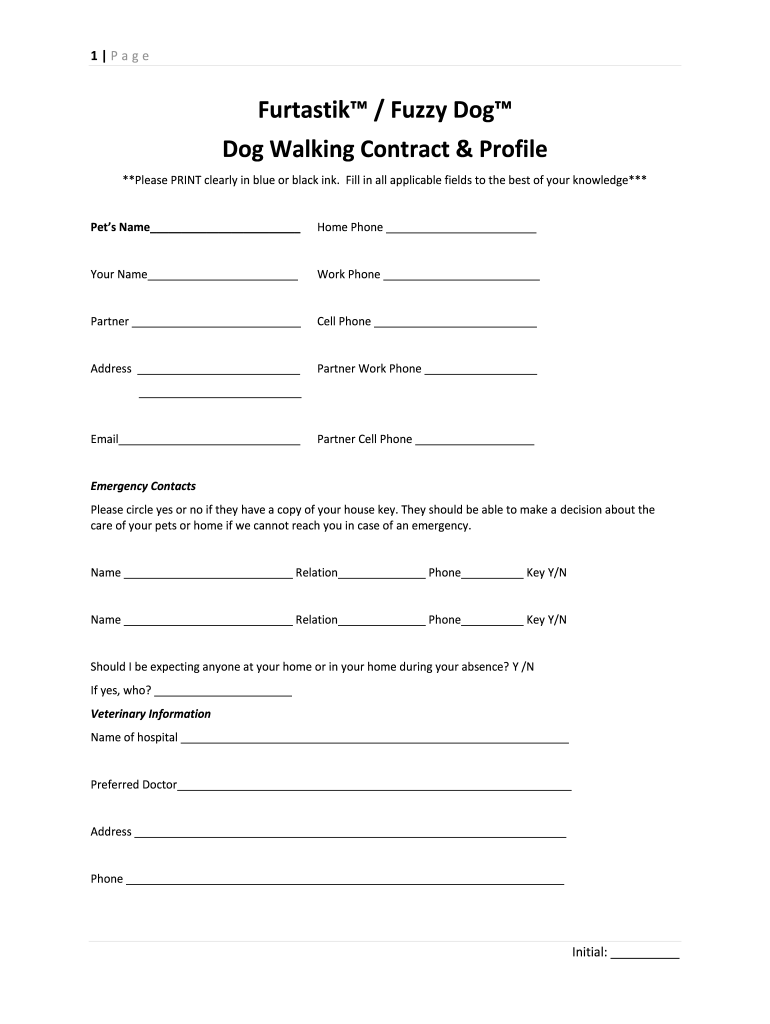
A dog walking contract outlines the agreement between a dog owner and a dog walker, detailing the services provided, the expectations of both parties, and important legal considerations. This document serves to protect both the walker and the client by setting clear terms regarding the care, safety, and responsibilities related to the dog. It typically includes sections regarding pet and owner information, emergency contacts, and specific duties of the dog walker.
Key Elements of a Dog Walking Contract
- Client and Pet Information: Names, addresses, and contact information for the dog owner, along with details about the dog, such as breed, age, and training status.
- Services Provided: A description of the dog walking services, including frequency, duration, location, and any additional services, like feeding or administering medication.
- Liability Waiver: A clause that limits the liability of the dog walker in case of accidents or injuries, protecting them from legal claims.
- Cancellation Policy: Guidelines on how cancellations are handled, including any fees associated with last-minute changes.
- Signature Section: Where both parties sign to confirm their agreement to the terms laid out in the contract.
Steps to Complete the Dog Walking Contract
To ensure that a dog walking contract is comprehensively completed, follow these steps:
-
Gather Essential Information: Collect necessary details about the dog and the owner. This includes names, addresses, emergency contacts, and health information about the dog.
-
Outline Services: Clearly define the services to be provided, specifying the frequency and type of walks, duration, and any other special requirements.
-
Determine Fees and Payment Terms: Decide on the charges for services and outline the payment method and schedule (e.g., per walk, weekly, monthly).
-
Include Legal Clauses: Add a liability waiver and any other legal protections necessary for both parties. Ensure both parties understand their rights and responsibilities.
-
Sign and Date the Agreement: Both the dog owner and the dog walker must sign and date the contract to make it legally binding. Retaining a copy for records is advisable.
Each of these steps ensures clarity between both parties and minimizes potential conflicts.
How to Obtain a Dog Walking Contract Template
Securing a dog walking contract template is straightforward. Individuals seeking a contract can explore several methods:
- Online Resources: Many websites offer free printable dog walking contract templates, which can be easily downloaded and customized to suit specific needs.
- Legal Services: Platforms that specialize in legal forms may provide professionally drafted contracts tailored for dog walking services.
- Local Pet Care Associations: These organizations often provide resources and templates for members, ensuring compliance with local regulations and standards.
- Customization: Utilizing document-editing services like DocHub allows users to import a template and make necessary modifications, ensuring the contract aligns with individual requirements.
This flexibility in obtaining a template ensures that both dog walkers and dog owners have access to professional agreements that suit their specific needs.
Important Terms Related to a Dog Walking Contract
Understanding specific terms in a dog walking contract is crucial for all parties involved. Here are some key terms:
- Dog Walker: The individual providing dog walking services, responsible for the care and safety of the dog.
- Client: The owner of the dog hiring the walker, responsible for providing accurate information regarding the dog.
- Incident: An unforeseen event occurring during a walk, such as the dog escaping or being injured.
- Injury Liability: The responsibility of the dog walker concerning injuries that may occur while the dog is in their care.
- Termination Clause: Provisions that outline how and when either party may terminate the contract.
By familiarizing themselves with these terms, both parties can better navigate their responsibilities and legal obligations.
State-Specific Rules for Dog Walking Contracts
When drafting or utilizing a dog walking contract, consider the state-specific regulations that may apply. These can include:
- Licensing Requirements: Some states mandate dog walkers to have specific licenses or certifications.
- Liability Insurance: Certain states may require dog walkers to carry liability insurance to cover any incidents.
- Disclosure Regulations: Laws may dictate what information must be disclosed to the client regarding the services provided.
Being aware of these local laws ensures that both the dog walker and the client are protected and compliant with their state’s regulations.
Examples of Using the Dog Walking Contract
In practice, a dog walking contract can cover various scenarios, ensuring that both the walker and the pet owner understand their obligations. Examples include:
- Regular Walks: A contract may detail a weekly schedule for walking services, outlining specific times and locations.
- Emergency Situations: In the event of an emergency, the contract could stipulate actions the walker should take, such as contacting a vet or the owner.
- Multiple Dogs: For walkers handling more than one client, contracts can outline provisions regarding the handling and care of multiple dogs during a single walk.
- Special Needs: Contracts can also be tailored to include provisions for dogs with specific behavioral issues or health concerns, ensuring that the walker is prepared to handle unique situations.
These examples illustrate the contract’s role in managing the care and safety of dogs while promoting clear communication between parties.
Legally Binding Nature of a Dog Walking Contract
A properly executed dog walking contract is legally binding, primarily due to its incorporation of essential legal elements:
- Offer and Acceptance: The contract represents an agreement where the dog walker provides services, and the owner accepts those services under specific terms.
- Consideration: There is an exchange of value; the dog walker is compensated for services rendered, while the owner receives care for their pet.
- Legal Capacity: Both parties must be of sound mind and legal age to enter into a contract.
Ensuring that these components are present in a dog walking contract solidifies its enforceability, providing legal recourse should either party fail to uphold their obligations.