
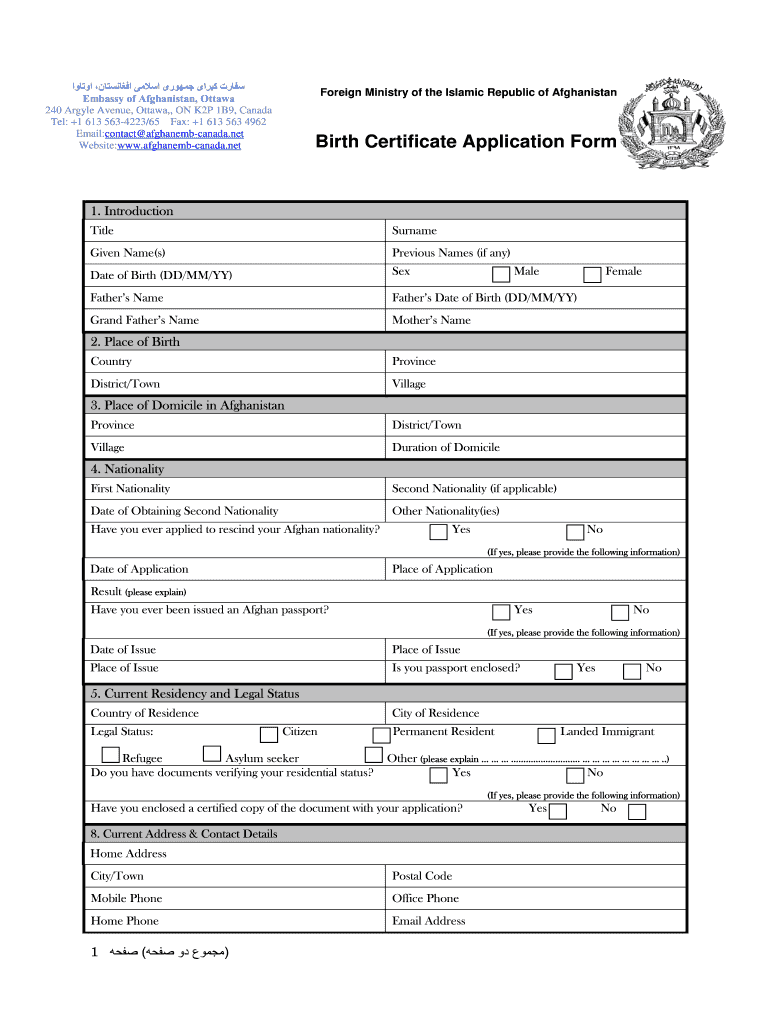







Definition and Meaning of Birth Certificate in Afghanistan
A birth certificate is an official document that records the birth of an individual. In Afghanistan, this document plays a crucial role in establishing one's identity, nationality, and vital statistics. It is essential for accessing various government services, including education, healthcare, and citizenship processes. The document serves as proof of identity and age, making it a fundamental record in the afghan legal and administrative framework.
The birth certificate typically includes critical information such as:
- Full name of the individual
- Date and place of birth
- Parents' names
- Nationality
- Registration details of the certificate
This official record not only verifies an individual's age but also confirms their familial connections, which are vital for legal documentation in Afghanistan.
How to Obtain a Birth Certificate in Afghanistan
Obtaining a birth certificate in Afghanistan involves a series of steps governed by specific regulations. Afghan citizens can apply for their birth certificate through the National Statistics and Information Authority (NSIA). The process requires submitting an application with appropriate documentation to establish the individual’s identity and familial connections.
Steps for Application:
- Gather Required Documents: Collect documents such as copies of national identity cards (Tazkira) for parents, hospital discharge or delivery notes, and proof of residency.
- Complete Application Form: Fill out the NSIA birth certificate application form. This form can be found at designated government offices or on the NSIA website.
- Submit Application: Submit the completed application along with necessary documents at your local NSIA office or designated registration center.
- Receive Confirmation: After processing, you will receive a confirmation receipt, which is essential for tracking your application.
- Collect Certificate: Upon approval, collect the birth certificate, ensuring that all details are accurate.
This structured process underscores the importance of official registration and compliance with national laws regarding vital records.
Key Elements of the Afghan Birth Certificate
The Afghan birth certificate encompasses several key elements that are critical for its validity and usage. Understanding these elements helps ensure that the certificate meets all legal requirements.
- Personal Information: The full name, date of birth, and place of birth of the individual.
- Parental Information: Names and identity verification of both parents, which establishes lineage.
- Registration Details: A unique registration number assigned by the NSIA, which is crucial for official verifications.
- Official Stamp and Signature: The document must include the official stamp of the NSIA and the signature of the registering authority, confirming its authenticity.
These components are vital for the acceptance of the document in legal and administrative procedures within Afghanistan and abroad.
Legal Use of the Birth Certificate in Afghanistan
In Afghanistan, the birth certificate serves various legal purposes, making it an essential document for citizens. Its legal status is recognized universally across different sectors, providing a foundation for multiple rights and privileges.
Key Legal Uses:
- Identity Verification: Required for passports, national identity cards, and other official documents.
- Education Enrollment: Necessary for school admissions as proof of age and identity.
- Healthcare Access: Used to establish eligibility for government healthcare services.
- Marriage and Civil Registration: Required when applying for marriage licenses and other civil registries.
- Citizenship Processes: Essential for obtaining citizenship documentation or for travel purposes.
The birth certificate represents more than just a record; it opens pathways for accessing civil rights and responsibilities in Afghanistan.
Required Documents for Birth Certificate Application
When applying for a birth certificate in Afghanistan, certain documents are mandatory to complete the process. These documents provide necessary proof of identity and familial connections, ensuring that the application is processed efficiently.
Essential Documents Include:
- National Identity Cards (Tazkira): Copies of both parents' Tazkira to confirm their identities and relationship to the child.
- Hospital Records: Birth notification or discharge summary from the medical facility where the birth occurred.
- Proof of Residency: Utility bills or government-issued documents demonstrating the family's current residence.
- Application Form: A duly filled application form specifically for birth registration, available at NSIA offices.
Submitting these documents accurately minimizes delays and ensures compliance with the registration process mandated by Afghan law.
Importance of Birth Certificate in Afghanistan
The significance of a birth certificate in Afghanistan extends beyond identification; it serves as a foundation for an individual’s legal existence and access to fundamental rights. Here are key points illustrating its importance:
- Civil Rights Establishment: It confirms an individual's legal status under Afghan law.
- Access to Services: Necessary for enrolling in educational institutions and accessing healthcare, thus contributing to social welfare.
- Employment Opportunities: Often required for job applications to verify age and education.
- Travel and Passport Application: A prerequisite for obtaining a passport, which facilitates international travel.
- Legal Transactions: Essential for signing contracts and engaging in legal agreements.
In summary, the birth certificate is indispensable for achieving various civil rights and responsibilities within Afghan society.




