
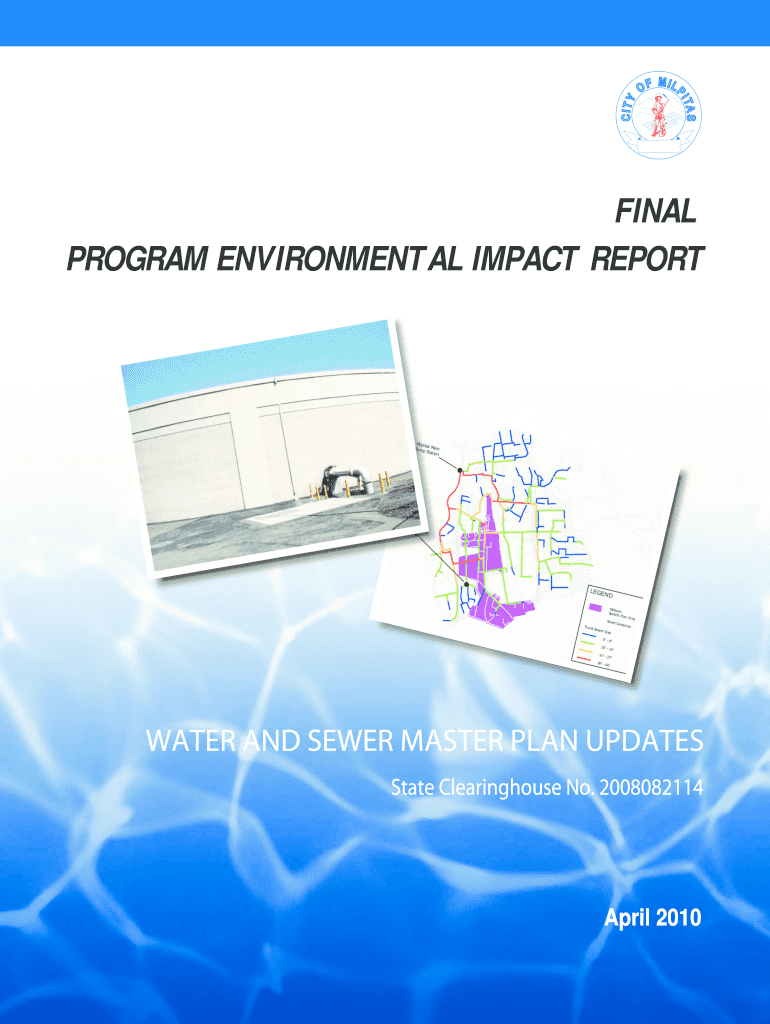







Key Elements of the Water and Sewer Master Plan Update, Final EIR - City of Milpitas
The Water and Sewer Master Plan Update, Final Environmental Impact Report (EIR) for the City of Milpitas is a comprehensive document that outlines potential environmental impacts associated with proposed improvements to the city's water and sewer systems. Key elements include:
- Construction Activities: Detailed analysis of proposed construction activities and their timelines.
- Environmental Impacts: Evaluation of impacts on air quality, noise, biological resources, cultural resources, and public health.
- Mitigation Measures: Strategies to mitigate significant environmental impacts to comply with the California Environmental Quality Act (CEQA) guidelines.
Construction Activities
The plan details specific construction activities that will be undertaken to improve the city's water and sewer infrastructure. Understanding these activities is critical for assessing potential disruptions and impacts.
- Types of Construction: Includes water pipeline replacements, sewer upgrades, and the development of new facilities.
- Timelines: Proposed schedules for each construction phase to minimize disruptions.
- Locations: Specific sites identified for construction work across the city.
Environmental Impacts
The report provides a thorough assessment of environmental impacts, essential for stakeholders and the public to understand potential changes in their environment.
- Air Quality: Assessment of emissions during construction and their projected impact.
- Noise Levels: Expected noise pollution and measures to minimize disturbance to residents.
- Biological Impact: Effects on local ecosystems and wildlife conservation efforts.
Mitigation Measures
Ensuring compliance with state laws involves implementing various mitigation measures to address anticipated environmental impacts.
- Air Quality Mitigations: Techniques like dust suppression and use of low-emission machinery.
- Noise Reduction: Installing noise barriers and scheduling work during less disruptive times.
- Habitat Preservation: Strategies for protecting local flora and fauna during construction.
Compliance with CEQA Guidelines
The Final EIR is developed in full compliance with the CEQA, ensuring that all environmental concerns are addressed and mitigated effectively.
Process Overview
Understanding the CEQA process is crucial for both planners and the public.
- Initial Study: Preliminary assessment identifying whether there are significant environmental effects.
- Draft EIR: Initial document release allowing public comment and review.
- Final EIR: Comprehensive document including responses to public feedback and adjustment of plans if required.
Public Participation
An essential part of the EIR process is public involvement, ensuring transparency and community engagement.
- Public Reviews: Scheduled periods for public to review and comment on the EIR drafts.
- Feedback Incorporation: How public feedback is integrated into the final document.
How to Use the Water and Sewer Master Plan Update, Final EIR - City of Milpitas
This section provides guidance on utilizing the EIR for different purposes, from planning to legal reference.
Planning and Development
For city planners and developers, the EIR acts as a blueprint for environmentally conscious construction.
- Project Planning: How to incorporate EIR recommendations into project designs.
- Compliance Checks: Ensures all projects align with identified mitigation measures.
Legal and Environmental Reference
Legal consultants and environmentalists use the EIR to verify compliance with environmental laws.
- Regulatory Compliance: Ensures all activities meet state and federal environmental standards.
- Policy Development: Guides the development of local policies to safeguard environmental health.
Who Typically Uses the Water and Sewer Master Plan Update, Final EIR - City of Milpitas
Understanding the primary users of the EIR helps in its effective implementation and review.


Government and Regulatory Bodies
Municipal entities utilize the EIR to ensure urban development plans align with environmental regulations.
- City Planners: Use the document for long-term infrastructure planning.
- Environmental Agencies: Review EIRs for regulatory enforcement and guidelines.
Community Stakeholders
Local residents and community organizations play a vital role in reviewing and responding to the EIR.
- Residents: Use the EIR to understand how projects might affect their quality of life.
- Community Groups: Engage in the public review process to advocate for local concerns.
State-Specific Rules for the Water and Sewer Master Plan Update, Final EIR - City of Milpitas
This section explains the state-specific legislative context under which the EIR operates.
California Environmental Quality Act
The CEQA is a pivotal framework for developing EIRs in California, ensuring public and environmental health protection.
- Guideline Requirements: Overview of CEQA requirements for EIR preparation.
- Enforcement: Role of state agencies in ensuring adherence to CEQA by localities like Milpitas.
Local Regulations
Milpitas-specific ordinances that must be considered in conjunction with state rules to ensure complete compliance.
- City Ordinances: Additional local regulations that may affect the implementation of the EIR.
Examples of Using the Water and Sewer Master Plan Update, Final EIR - City of Milpitas
Real-world examples illustrate the practical applications and benefits of the EIR.
Case Studies
Studying past instances where the EIR was critical in project planning and execution can highlight its importance.
- Successful Implementation: Examples of projects that mitigated environmental impacts effectively using EIR guidance.
- Community Engagement: Cases where public feedback resulted in significant improvements to project plans.
Legal Use of the Water and Sewer Master Plan Update, Final EIR - City of Milpitas
The legal context of the EIR ensures that all involved parties follow the same environmental accountability standards.
Legal Framework
The report also serves legal professionals in understanding and interpreting environmental impacts in case disputes arise.
- Dispute Resolution: How the EIR is used to resolve conflicts between developers and environmental groups.
- Court Cases: Reference in legal proceedings to establish compliance with CEQA standards.
Important Terms Related to Water and Sewer Master Plan Update, Final EIR - City of Milpitas
To effectively use and understand the EIR, familiarity with specific terminology is crucial.
Glossary of Terms
Key terms frequently used in the EIR documents that are essential for clear understanding.
- CEQA: California Environmental Quality Act definition and purpose.
- Mitigation Measures: Explanation of terms related to environmental impact reduction strategies.
- Biological Resources: Understanding terminology related to ecosystems and wildlife in the context of the EIR.
In crafting this content, the focus remains on delivering in-depth, actionable insights related to the Water and Sewer Master Plan Update, Final EIR for Milpitas, aligning with DocHub's structured, professional style.




