





Definition and Meaning of NMC Revalidation Forms
NMC revalidation forms are essential documents required for nurses and midwives registered with the Nursing and Midwifery Council (NMC) in the United Kingdom. They serve as part of the revalidation process, which ensures that healthcare professionals maintain their skills, knowledge, and competence throughout their careers. The revalidation process is essential to uphold public trust in the nursing and midwifery professions.
These forms are designed to collect comprehensive information on a professional's practice, including reflective discussions, practice hours, and evidence of continuous professional development (CPD). By completing these forms, practitioners demonstrate their commitment to lifelong learning and adherence to the NMC's standards for education, training, and conduct.
How to Obtain the NMC Revalidation Forms
Acquiring NMC revalidation forms is a straightforward process that can be completed through various channels:
- Official NMC Website: Nurses and midwives can download the latest versions of the forms directly from the NMC website, ensuring they have the most current and compliant forms.
- Professional Associations: Organizations such as the Royal College of Nursing (RCN) often provide additional resources and templates that members can use as guides.
- Direct Request: Health organizations or employers typically have copies of the required documents available for their staff. It's advisable to check with the human resources department or a designated workplace liaison.
Steps to Complete the NMC Revalidation Forms
-
Gather Required Information: Before starting, collect all necessary documentation, including proof of practice hours, CPD activities, and any relevant reflective accounts. This preparation will streamline the process.
-
Complete Personal Details: Fill in the required personal information, including your registration number, name, and contact details.
-
Document Practice Hours: Clearly outline your total practice hours for the revalidation period. This may include direct patient care and other relevant activities.
-
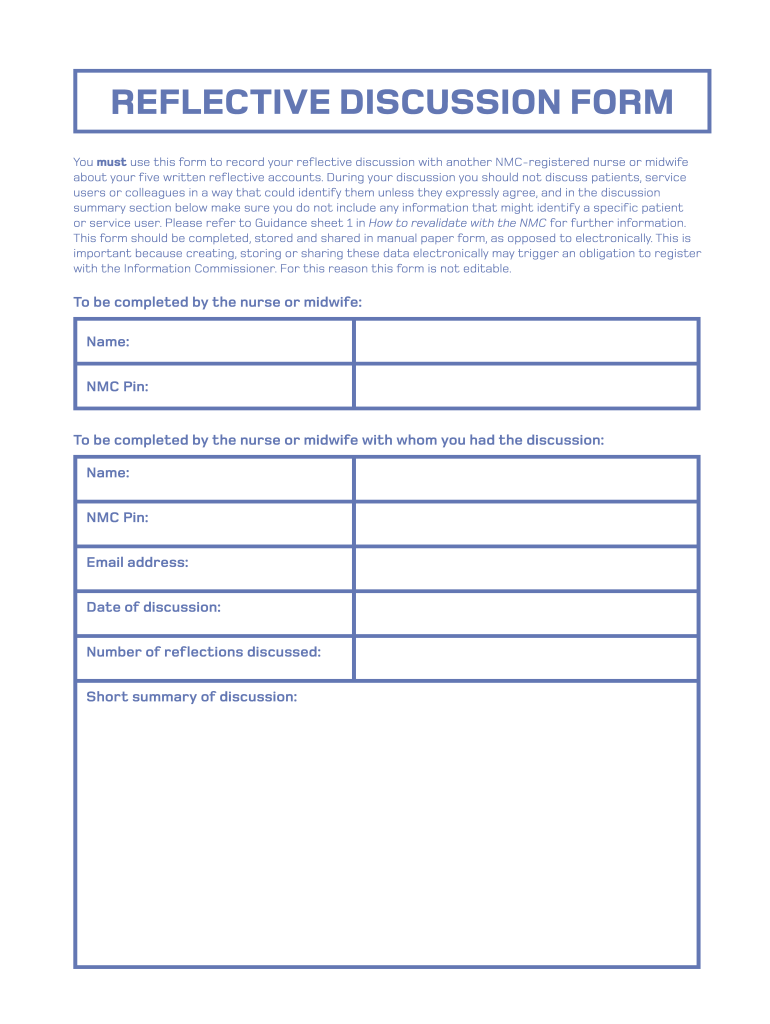
Detail Reflective Discussions: For this section, summarize discussions you've had regarding your reflective accounts. Ensure no patient or colleague information is disclosed to maintain confidentiality.
-
Attach Supporting Evidence: Include any relevant documents, such as certificates for completed CPD activities and any other pertinent materials that support your claims.
-
Review and Submit: Go through the forms to ensure all sections are accurately completed. By doing so, errors are minimized, and your submission process remains efficient.
Key Elements of the NMC Revalidation Forms
NMC revalidation forms contain several critical sections that ensure comprehensive compliance:
-
Personal Information Section: Provides the NMC with essential details about the practitioner, including their registration status.
-
Reflective Discussion Summary: A crucial component that documents conversations about three of the practitioner's reflective accounts, emphasizing learning and professional growth.
-
Practice Hours Documentation: A log of hours worked, indicating ongoing involvement in relevant practice areas.
-
Professional Development Evidence: This section lists CPD activities undertaken during the revalidation cycle, showcasing the professional’s commitment to staying current in their field.
-
Verification Signatures: This area is reserved for the signatures of supervisors or mentors who can verify the practitioner's claims on practice hours and discussions.
Who Typically Uses the NMC Revalidation Forms
The primary users of NMC revalidation forms are registered nurses and midwives in the UK. This includes:
-
Nurses in various specialties: Registered General Nurses (RGN), Mental Health Nurses, Children’s Nurses, and others who must periodically prove their competence.
-
Midwives: Registered midwives must also engage in the revalidation process to ensure they meet the professional standards established by the NMC.
-
Educational Institutions: Those involved in training or supporting nursing and midwifery students may also reference these forms as part of their assessment and evaluation processes.


Examples of Using the NMC Revalidation Forms
Practical examples of using NMC revalidation forms can enhance understanding:
-
A nurse who has worked in various care settings may document practice hours across different specialties, helping to diversify their experience.
-
A midwife might reflect on a challenging case during their reflective discussion, illustrating how this experience contributed to their professional growth and competency.
-
Nurses can use feedback from supervisors to strengthen their reflective accounts, ensuring a comprehensive view of their professional practice.
Important Terms Related to NMC Revalidation Forms
Understanding key terms is vital for navigating the NMC revalidation process effectively:
-
CPD (Continuing Professional Development): Activities undertaken to maintain and enhance knowledge, skills, and competencies within the profession.
-
Reflective Account: A written account reflecting on a particular aspect of professional practice, used to demonstrate learning and growth.
-
Verification: The process by which a supervisor or mentor confirms the accuracy of the information presented in the revalidation form.
-
NMC Standards: The guidelines established by the Nursing and Midwifery Council to govern nursing and midwifery practice in the UK.
Legal Use of the NMC Revalidation Forms
NMC revalidation forms must be completed and submitted per NMC regulations to ensure continued registration as a nurse or midwife. It is essential for practitioners to comply with this legal requirement to:
- Maintain their professional status in the healthcare field.
- Uphold the integrity and standards of nursing and midwifery practices.
- Avoid potential penalties or inquiries into their registration status, which may arise from failure to comply with the revalidation process.
Through compliance with the NMC revalidation forms, nurses and midwives contribute to the safety and quality of care delivered to patients.