







Definition & Meaning
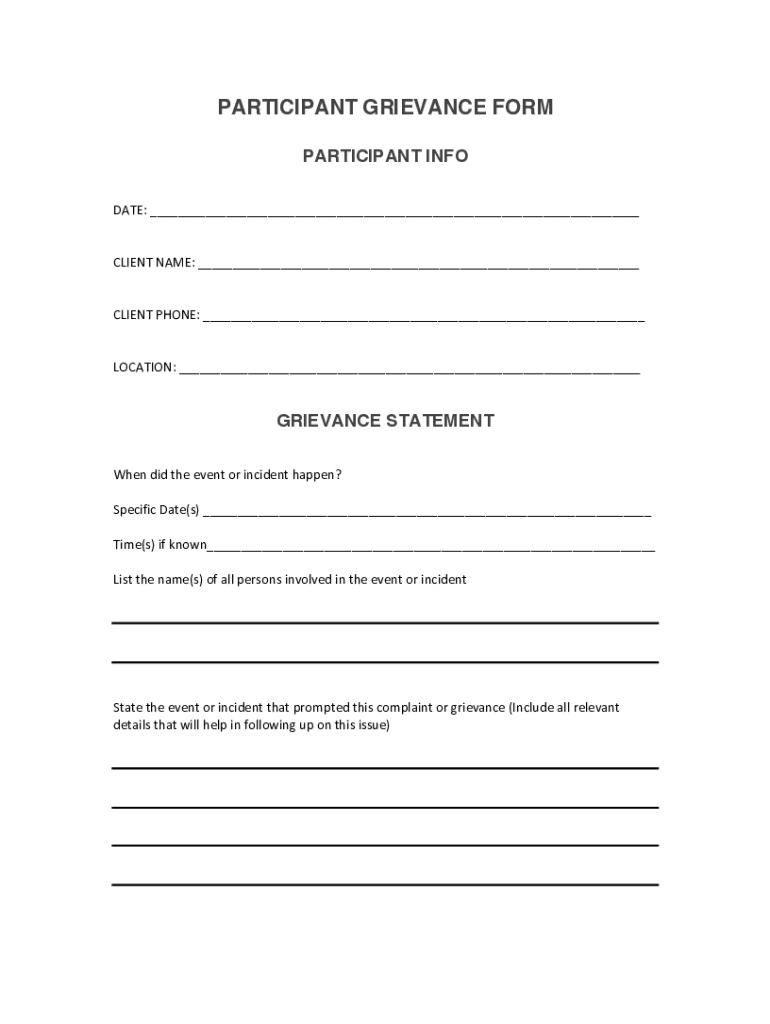
The Grievance Form is a critical document used by participants to express concerns or complaints about a service, product, or experience. This form typically includes sections for personal information, details of the incident, and a space for a written grievance statement. It is designed to collect specific details such as dates, times, and names of those involved, creating a clear record of the complaint. This form is essential for ensuring that participant grievances are handled in a structured and documented manner, supporting fair resolution processes.
How to Use the Grievance Form
Using the Grievance Form effectively requires careful attention to detail in filling out each section. The initial step is to provide accurate participant information, such as name, address, and contact details. The subsequent section is for detailing the incident, where you should thoroughly describe the nature of the grievance. Include all relevant facts, like the who, what, when, where, and why of the situation. The final section is for a formal grievance statement, which should articulate your specific concerns and desired outcomes.
Steps to Complete the Grievance Form
- Gather Information: Collect all necessary information, including incident specifics and supporting documents.
- Fill Out Participant Information: Provide your full name, address, phone number, and any relevant identification numbers.
- Describe the Incident: Clearly outline the details of the incident, providing dates, times, and involved parties.
- Write the Grievance Statement: Articulate your concerns clearly and concisely, focusing on facts and desired outcomes.
- Attach Supporting Documents: Include copies of any relevant documents that support your case, such as emails or receipts.
- Review and Submit: Carefully review your form for accuracy before submitting it via the preferred method indicated on the form.
Recording Legal Use of the Form
Ensuring the Grievance Form is used legally involves adhering to privacy and data protection laws. Participants must provide accurate and truthful information, as the form can be used in legal proceedings if necessary. Legal use also includes obtaining any required signatures and consent before submission. Organizations must handle the form in compliance with regulations, maintaining confidentiality and integrity of the grievance process.
Important Terms Related to the Grievance Form
- Grievance Statement: A written declaration of the complaint detailing the incident and expectations for resolution.
- Participant Information: Personal details required to identify and contact the individual filing the grievance.
- Documentation: Supporting materials that substantiate the grievance claim.
- Resolution Process: The organizational procedure for addressing and resolving the grievance.
State-Specific Rules for the Grievance Form
Grievance handling may differ across states due to varying regulations. For example, some states may have mandatory timeframes for filing grievances or specific requirements for documentation. It's important to consult state-specific guidelines to ensure compliance. Accessing resources from state agencies can provide clarity on additional rules governing grievance submissions and handling.
Key Elements of the Grievance Form
- Identification Section: Includes fields for the participant to provide personal and contact information.
- Incident Details: A thorough section capturing all aspects of the grievance incident.
- Grievance Explanation: Allows the filer to clearly state the issue and desired resolution or actions.
- Signatures: May require the participant's signature and, at times, a witness or representative signature when applicable.
Who Typically Uses the Grievance Form
Grievance Forms are utilized by various participants, including consumers, employees, or clients of a service, who have experienced issues that need formal addressing. They are suitable for anyone seeking an official avenue to express dissatisfaction and seek corrective action. Organizations in fields such as healthcare, education, and customer service often provide grievance forms to ensure transparent problem-solving mechanisms.


Form Submission Methods (Online / Mail / In-Person)
Different methods are available for submitting the Grievance Form, offering flexibility based on user preferences. Online submission allows for fast and convenient filing from any location. Mail submissions provide a traditional method, which may be preferable for individuals who require documentation of delivery. In-person submissions can ensure direct receipt and immediate acknowledgment from the organization. Each method has its benefits and should be chosen based on the filer's needs and resources available.




