






Definition and Meaning
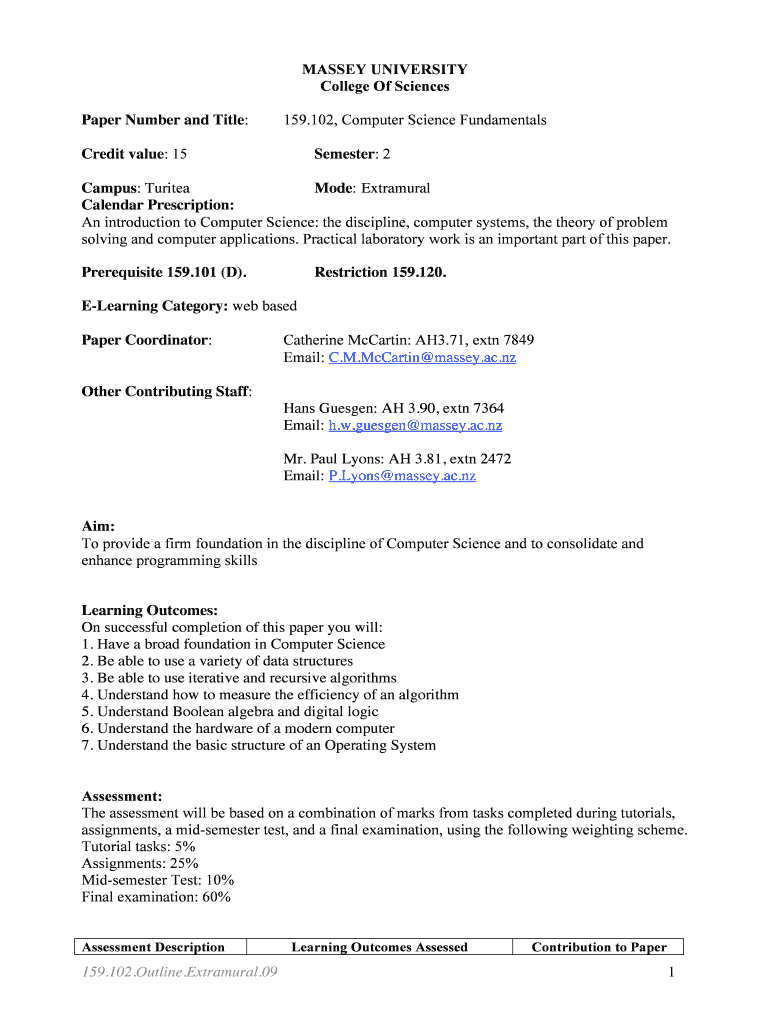
The "159.102 Outline Extramural 09 1 MASSEY UNIVERSITY College Of" document is integral to understanding computer science fundamentals at Massey University. It provides a comprehensive guide to the course, detailing credits, schedules, prerequisites, learning outcomes, assessments, and deadlines. This outline helps students navigate the curriculum and understand expectations and requirements.
Key Elements of the Document
- Credit Value: Specifies the credits earned upon course completion.
- Semester Schedule: Lists the timeframes during which the course is offered.
- Prerequisites: Details any prior learning required for enrollment.
- Learning Outcomes: Outlines the competencies students are expected to achieve.
- Assessment Methods: Describes various evaluation techniques, such as exams or projects.
- Deadlines: Includes important dates for assignments and assessments.
How to Use the 159.102 Outline
Understanding and utilizing the 159.102 outline involves several steps, ensuring students can maximize their learning experience.
Steps to Follow
- Familiarize: Read through the entire document to get an overview.
- Schedule: Note important dates and deadlines in a calendar.
- Prepare: Review prerequisites and ensure you meet them.
- Engage: Actively participate in labs and discussions outlined in the schedule.
- Assess: Understand the grading criteria and focus on areas with the highest weightings.
How to Obtain the Outline
Students enrolled in Massey University can access the outline through several methods, ensuring easy availability.
Methods to Access
- University Portal: Log in to the student portal to download the document.
- Email: Request a copy from the course coordinator via email.
- Library Resource: Access physical copies available in the university library.
Steps to Complete the Outline
Completing the 159.102 online form at Massey University requires adhering to specific guidelines to ensure all requirements are met.
Step-by-Step Completion
- Login: Access your student account on the university’s platform.
- Navigate: Find the course under your enrolled classes.
- Download: Obtain a digital version of the outline if not already provided.
- Review: Thoroughly read and understand each section of the document.
- Annotate: Highlight key points and make notes on areas needing attention.
Important Terms Related to the 159.102 Outline
Understanding specific terminology is crucial for correctly interpreting the document aspects.
Key Terms
- Extramural: Refers to a course format allowing students to study remotely.
- Credit: The measure of study load and time commitment.
- Assessment: Various methods used to evaluate student performance.
- Prerequisite: Required courses or knowledge needed before enrollment.
Who Typically Uses this Outline
The document is tailored for several student categories, each benefiting uniquely from its content.
Typical Users
- First-Year Students: Gain an understanding of fundamental concepts.
- Transfer Students: Align previous learning with current course requirements.
- Extramural Students: Plan and structure their remote study schedules.
Key Elements of the 159.102 Course
The course comprises several critical components designed to provide a rounded education in computer science.
Elements Breakdown
- Data Structures: Understanding and applying efficient data organization methods.
- Algorithms: Fundamental techniques for problem-solving in computer science.
- Digital Logic: Basics of electrical circuits and binary systems used in computing.
Examples of Using the Outline
Real-world scenarios where the outline proves useful demonstrate its practical applications.
Scenario Examples
- Academic Planning: Students use the outline to map out their coursework over the semester.
- Progress Tracking: As assessments approach, students refer back to the outline to ensure all content areas have been covered.
Legal Use of the Outline
The document is governed by certain rules and practices, ensuring it is used appropriately within academic settings.
Compliance Requirements
- Academic Honesty: Students must not manipulate outline details for dishonest advantage.
- Privacy: Respect confidentiality agreements by not sharing the document beyond authorized users.
By providing students with detailed insights into the course structure, the 159.102 Outline empowers them to effectively plan and engage with their studies, ensuring they achieve the desired educational outcomes.