






Definition and Meaning
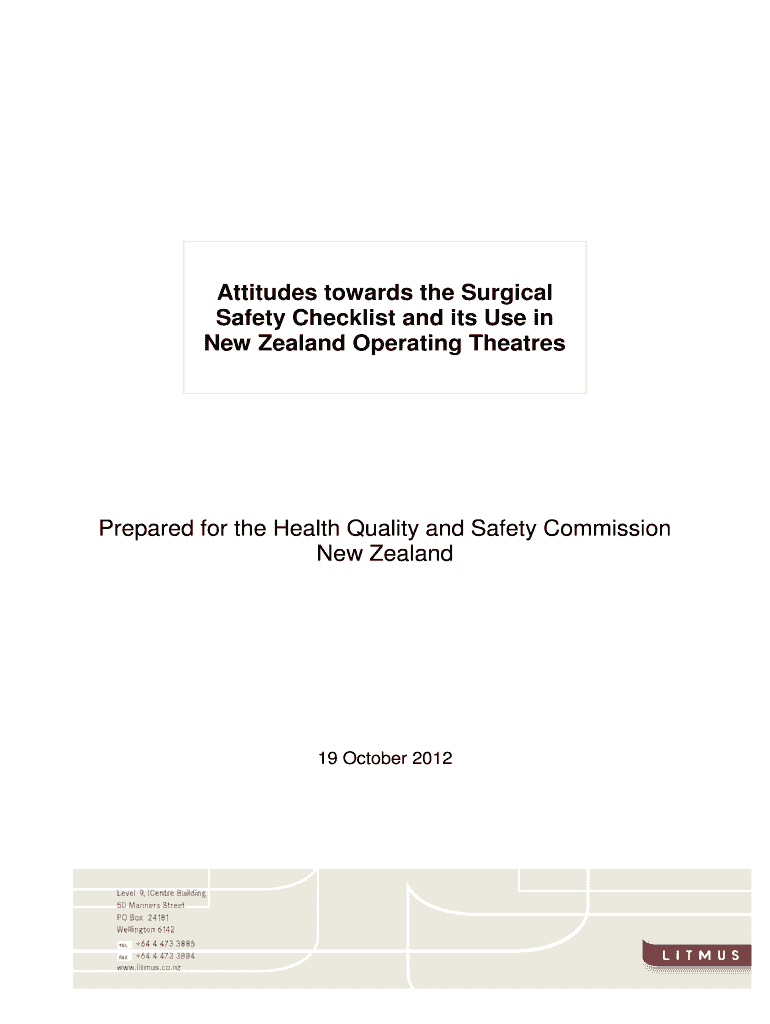
"Attitudes towards the Surgical" refers to a document or form that likely gathers and analyzes perceptions related to surgical practices, particularly focusing on aspects like safety, implementation tools, or protocols in surgical settings. This could include research findings, survey results, or standardized assessments used to understand how different stakeholders in the healthcare field perceive certain surgical procedures or policies. The goal is to identify trends and inform improvements in surgical environments based on collected data.
How to Use the "Attitudes towards the Surgical"
To effectively use the "Attitudes towards the Surgical" form, it's crucial first to understand its purpose and scope. Typically employed in healthcare settings, the form might require input from various stakeholders, such as medical personnel and patients. Users should carefully read each section, ensuring comprehension of required fields. Detailed instructions may accompany the form, guiding users on entering responses, selecting options, or providing additional narrative explanations. Overall, this form can be an essential tool for collecting comprehensive feedback about surgical procedures and safety protocols.
Steps for Accurate Completion
- Read each question carefully to understand the required input.
- Use specific examples when describing attitudes or perceptions.
- Complete all mandatory sections to avoid delays in data processing.
- Review entries for accuracy and completeness before submission.
- Consult additional guidelines if the form includes complex sections.
Key Elements of the "Attitudes towards the Surgical"
Understanding the key elements of this form ensures effective utilization and accurate data collection. Here are common components likely included:
- Surgical Procedure Overview: Details to provide context for feedback.
- Safety Protocol Sections: Areas to discuss current safety measures.
- Personal Experience Queries: Questions that solicit individuals’ direct experiences.
- Rating Scales: Tools to quantify attitudes or satisfaction levels.
- Open-ended Questions: Spaces to elaborate on specific points in more detail.
Who Typically Uses the "Attitudes towards the Surgical"
This form is primarily used by professionals in healthcare settings, including:
- Surgical Teams: To evaluate and improve intraoperative protocols.
- Administrative Staff: For assessing policy adherence and effectiveness.
- Healthcare Researchers: Gathering data to bolster studies on surgical safety and outcomes.
- Patients: Providing their perspective post-surgery or as part of clinical studies.


Key Examples of Using the "Attitudes towards the Surgical"
The form can be applied in various contexts to generate valuable insights:
- Assessing Safety Checklists: Evaluating effectiveness and adherence to surgical safety checklists.
- Improving Team Collaboration: Gauging team-centric approaches to surgery and identifying areas for improved communication.
- Patient Satisfaction Surveys: Collecting responses that reflect patient experiences with surgical care.
Legal Use of the "Attitudes towards the Surgical"
When using this form, adherence to legal guidelines ensures data integrity and confidentiality:
- Compliance with Privacy Laws: Especially regarding patient information, as prescribed by HIPAA and other applicable policies.
- Data Security Measures: Employ robust safeguards for handling sensitive information gathered through the form.
- Consent Requirements: Obtain explicit consent when collecting personal health information or survey data.
Steps to Complete the "Attitudes towards the Surgical"
Completing the form accurately involves following a structured approach:
- Gather Required Information: Collect all pertinent personal and procedural data before starting.
- Follow Provided Instructions: Adhere to guidelines for completing each section of the form.
- Insert Comprehensive Responses: Provide detailed answers, particularly in sections designed to capture qualitative feedback.
- Verify Accuracy: Double-check entries to minimize errors.
- Submit Through Designated Channels: Use specified submission methods, whether online, via mail, or in person.
Common Submission Methods
- Online Platforms: Easily accessible for efficient data entry and submission.
- Direct Mail: For physical document handling if required.
- In-House Departments: When submission is necessary through a specific organizational channel.
Important Terms Related to the "Attitudes towards the Surgical"
Familiarity with related terms can enhance understanding and ensure proper form usage:
- Surgical Safety Checklist: A guaranteed set of actions designed to ensure patient safety.
- Intraoperative Practices: Procedures and protocols implemented during surgery.
- Patient-Centric Care: Approach emphasizing the patient's perspective in healthcare delivery.
- Outcome Metrics: Data points used to measure the success of surgical interventions and patient satisfaction.