




01. Edit your pharmacy patient monitoring form online
Type text, add images, blackout confidential details, add comments, highlights and more.

Type text, add images, blackout confidential details, add comments, highlights and more.

Draw your signature, type it, upload its image, or use your mobile device as a signature pad.

Send patient workup template via email, link, or fax. You can also download it, export it or print it out.
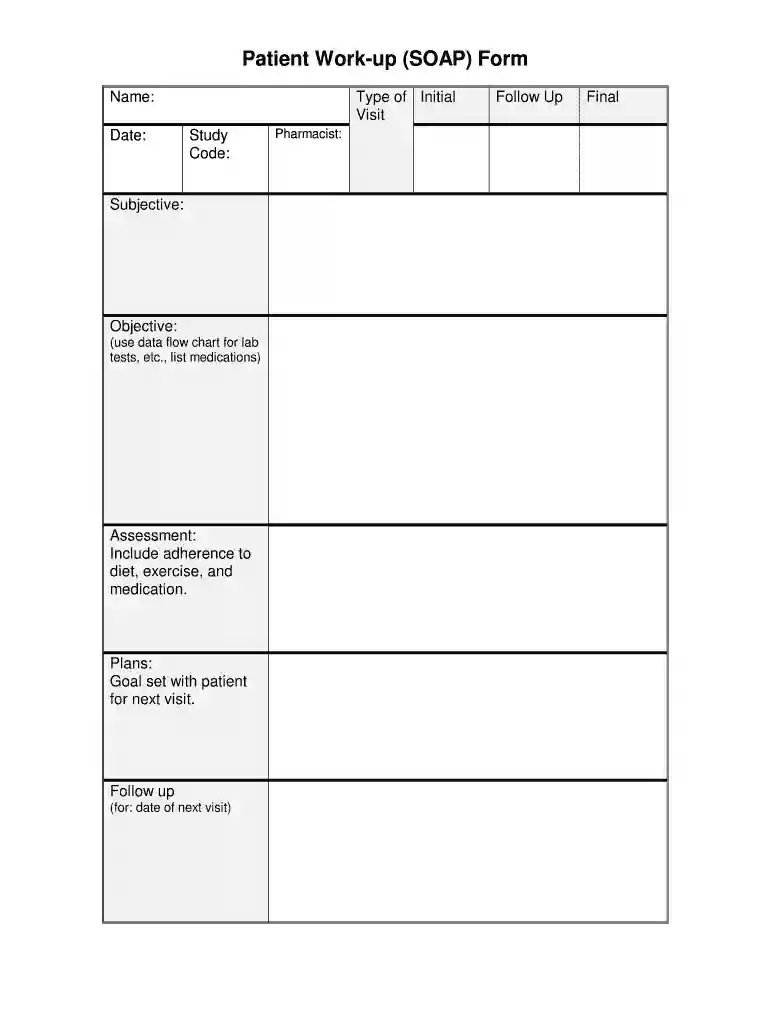
A printable pharmacy patient workup template serves as a structured tool to provide healthcare professionals with essential information regarding patient health, medication management, and treatment planning. This template aids pharmacies in collecting comprehensive data either during initial consultations or follow-up visits.
Patient Identification Information
This section captures vital information such as the patient's name, contact details, date of birth, and insurance information. Accurate identification ensures that all records are linked to the correct patient, which is crucial for managing their medication history and treatment plans.
Medication History
A thorough medication history is essential for understanding a patient's current health status and past treatment outcomes. This section includes:
Subjective Information (Chief Complaints)
The subjective section captures the patient's own account of their health and any concerns they have. Healthcare professionals should document:
Objective Data
This section includes measurable and observable information obtained through physical examinations and diagnostic tests. It might consist of:
Assessment Section
The assessment section synthesizes subjective and objective data, leading to a clinical impression of the patient's health status. It informs the healthcare provider of:
Plan of Care
The plan outlines the recommended course of action based on the assessment. This may include:
Follow-Up Visits Documentation
Recording follow-up appointments is crucial for tracking treatment adherence and effectiveness. The template should feature:
Patient Education and Counseling
Incorporating a section for patient education topics helps healthcare providers ensure that patients understand their conditions and treatment plans. Important elements:
Documentation Compliance
All entries in the printable pharmacy patient workup template must adhere to legal documentation standards and regulations. This includes:
Security Measures for Sensitive Information
Given the sensitive nature of patient data, healthcare facilities must implement appropriate security protocols to safeguard information. This may involve:
Case Studies in Various Pharmacy Settings
A printable pharmacy patient workup template can be employed in diverse settings, such as:
Integrating with Existing Workflow Tools
Depending on the pharmacy's workflow, the template can be customized or integrated with electronic health record (EHR) systems for real-time data entry and analysis. This may involve:
We've got more versions of the pharmacy patient monitoring form form. Select the right pharmacy patient monitoring form version from the list and start editing it straight away!
| Versions | Form popularity | Fillable & printable |
|---|---|---|
| 1995 | 4 Satisfied (49 Votes) |
Based on eSignature regulations, forms approved digitally have the same validity as those approved with pen and paper. You can electronically sign almost any business and personal documentation. Four types of paperwork still require wet signatures only - wills and testamentary trusts, court orders and other court forms, state statutes regulating divorce, adoption, or other family law, and notice of cancellation of utility services. If you adhere to the guidelines and utilize a trustworthy and compliant software solution, like DocHub, you can eSign your patient work up template without printing it.
Using a swift editing platform like DocHub, you do not require anything but a web browser and internet connection to edit your printable pharmacy patient workup template on the internet swiftly. Upload your document or get the relevant form in DocHub’s catalog, open our editor with one click, and finish it electronically. To revise your forms at any time, sign up a free account with DocHub.
At DocHub, your data security is our priority. We follow HIPAA, SOC2, GDPR, and other standards, so you can work on your documents with confidence.
There is space for up to seven (7) results, with type of test, dates given and read, agency, and provider signature. OTHER SAMPLE FORMS. Annual Statement forRead more
PATIENT INTERVIEW GUIDE. Obtain pertinent demographic information (sometimes you already have this information from the chart).Read more


