







Definition and Meaning of CCTV Footage Request Form Template
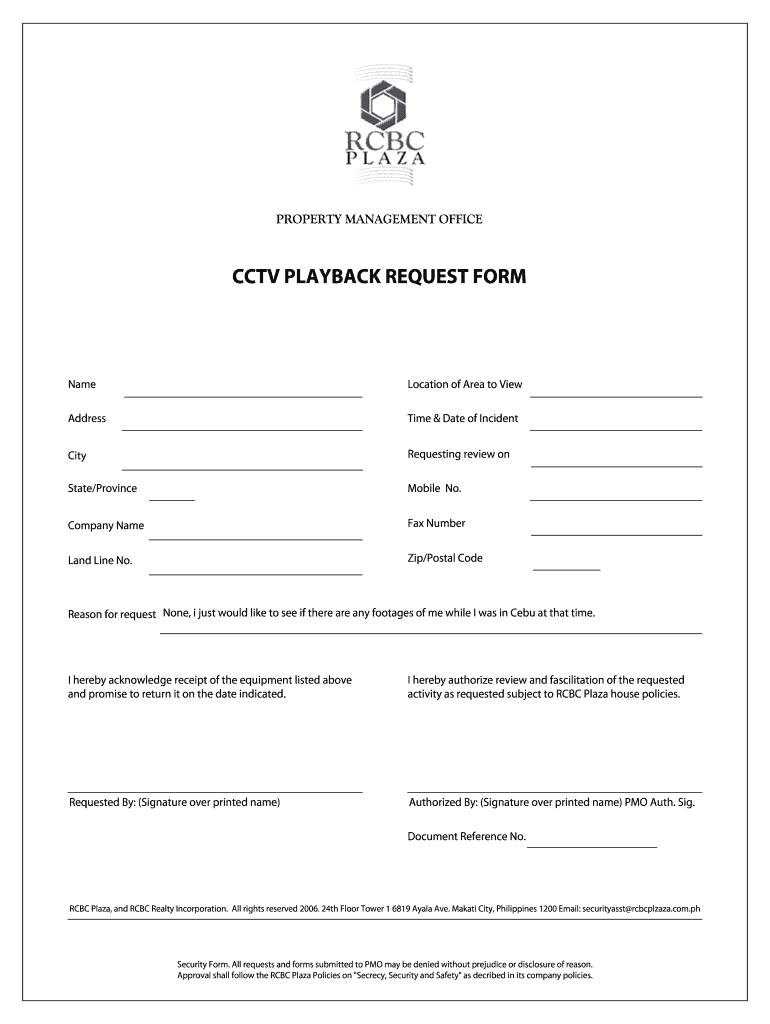
A CCTV footage request form template serves as a standardized document used by individuals or organizations to formally request access to surveillance video footage from CCTV systems. This template outlines the necessary information required for processing the request, ensuring that all pertinent details are included. The key purpose of this form is to streamline the process of requesting and reviewing recorded footage, which may be essential for various reasons, including security assessments, evidence collection in investigations, or personal inquiries. Employees, law enforcement agencies, and individuals may utilize these templates depending on the context of their request.
The critical components of a CCTV footage request form typically include:
- Requester Information: Fields to capture the name, contact details, and relationship to the incident.
- Details of the Incident: A section to describe the specific event or date and time range for which footage is being requested.
- Purpose of Request: An explanation of why the footage is needed, which may be required for auditing security, legal proceedings, or personal clarifications.
- Signature and Date: A space for the requester’s signature, affirming the validity of the request.
How to Use the CCTV Footage Request Form Template
Utilizing a CCTV footage request form template effectively requires careful attention to detail and a clear understanding of the request process. Here is a step-by-step guide on how to navigate this procedure:
-
Download or Access the Template: Obtain the CCTV footage request form template, which can usually be found on relevant organizational or government websites.
-
Fill in the Requester Information: Provide accurate personal details, including your full name, address, and contact information. It may be beneficial to specify your relationship to the requested footage, such as being a victim, a witness, or an employee.
-
Detail the Incident: Clearly describe the specific incident, including the date, time, and location. This information is crucial for retrieving the correct footage.
-
State the Purpose of the Request: Be specific about why the footage is required. This can help authorities or property managers determine the urgency and relevance of your request.
-
Sign and Date the Form: Ensure you sign the form to validate your request. Accurate dating is also important for record-keeping.
-
Submit the Form: Depending on the organization, you may need to submit the form in person, via email, or through a dedicated online portal.
By following these steps, the chances of a successful request are significantly increased, ensuring that all necessary information is provided for processing.
Steps to Complete the CCTV Footage Request Form Template
Properly completing a CCTV footage request form template involves gathering relevant information and carefully filling out each section to prevent delays in processing. A systematic approach can enhance efficiency:
-
Preparation:
- Gather personal identification information and any reference numbers associated with the incident or location in question.
-
Completing Request Information:
- Begin with personal information: Name, contact number, email address, and postal address.
- Specify your role related to the incident (e.g., victim, witness, legal representative).
-
Incident Description:
- Clearly outline the date and time of the incident.
- Include a detailed description of the event to assist personnel in identifying the exact footage needed.
-
Purpose Statement:
- Clearly state the purpose of your request. This might include mentioning legal inquiries, security audits, or other personal reasons.
-
Verification:
- After filling in all sections, review the form for completeness.
- Ensure that all details are accurate to minimize the risk of complications during processing.
-
Submission:
- Submit the form according to the specific instructions provided by the entity. This may involve printing the form, signing it, and delivering it in person or sending it over email.
Adhering to these steps guarantees thoroughness, which can facilitate quicker access to the requested CCTV footage.
Important Terms Related to CCTV Footage Request Form Template
Understanding key concepts related to the CCTV footage request form template is essential for effectively navigating the request process and avoiding common pitfalls. Here are several important terms:
- Requester: The individual or entity submitting the request for CCTV footage.
- Incident Report: A document that outlines the details of an incident that may necessitate the review of CCTV footage.
- Footage Retrieval: The process of locating and extracting specific video recordings from a CCTV system.
- Authorization: Legal permission established before the release of footage, which may involve the verification of the requester's identity and their relationship to the incident.
- Confidentiality: Legal obligations to maintain the privacy of individuals captured in CCTV footage, emphasizing the importance of handling such requests with care.
Familiarity with these terms can inform requesters about their rights and responsibilities while ensuring compliance with relevant laws and regulations.
Legal Use of the CCTV Footage Request Form Template
Understanding the legal parameters surrounding the use of a CCTV footage request form template is crucial for both requesters and organizations managing surveillance footage. Several legal considerations include:
-
Compliance with Privacy Laws: Requesters must ensure their application complies with federal and state privacy regulations. These laws often dictate who can request footage and under what circumstances.
-
Authorized Signatories: Only individuals with appropriate authority or a legal right to request footage may submit a request. This might include victims, witnesses, or legal representatives.
-
Purpose Restrictions: The intent of the request must comply with legal standards, particularly if the footage could be used in legal proceedings. Providing a clear purpose is critical to validate the request.
-
Retention Policies: Entities housing CCTV systems often have established policies regarding how long footage is retained. Understanding these policies can clarify whether the requested footage is still available.
Adherence to these legal considerations ensures that requests are valid and align with compliance regulations, reducing the risk of appeal or denial.
Key Elements of the CCTV Footage Request Form Template
Every CCTV footage request form template should include specific key elements to facilitate efficient processing and maintain transparency. Some fundamental components include:
-
Date of Request: This is important for tracking the timeline of requests and ensuring timely processing.
-
Requester’s Contact Information: Essential for follow-up communication, including notifications about the status of the request.
-
Detailed Incident Description: A comprehensive outline of the event that prompts the request for footage, including exact dates and times.
-
Purpose Statement: This section explains why the requester is seeking the footage, which informs how the request will be processed.
-
Signature Section: A designated area for the requester to sign, indicating that they acknowledge their rights and the terms associated with the request.
These elements provide a structured framework that guides the necessary information flow from the requester to the organization handling the CCTV system, ensuring clarity and compliance with protocols.




