






Definition & Meaning
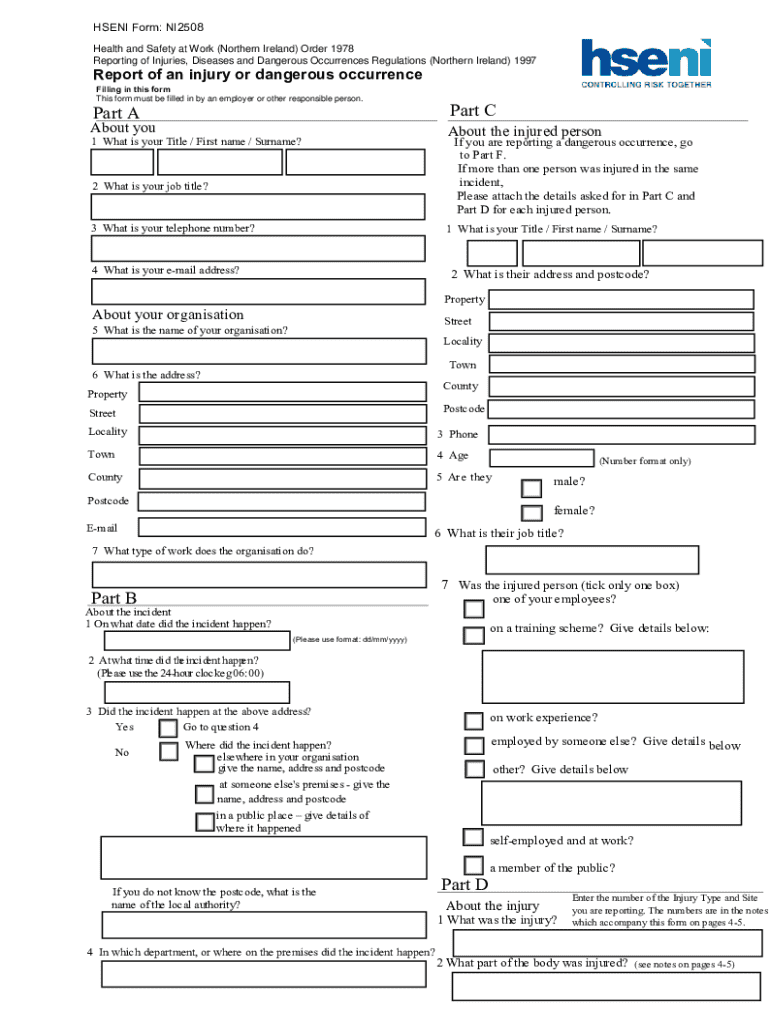
The Hseni Form: NI2508 is a critical document used by employers in Northern Ireland to report work-related incidents. This form is mandated by the Health and Safety at Work Order 1978 and the Reporting of Injuries, Diseases and Dangerous Occurrences Regulations 1997. It captures detailed information about the employer, the injured party, and specifics of the incident, including the type and severity of injury or dangerous occurrence. The goal is to ensure compliance with health and safety regulations and proper documentation of workplace incidents.
How to Use the Hseni Form: NI2508
Employers should follow a structured approach when using the Hseni Form: NI2508 to document incidents:
-
Gather Incident Details: Collect comprehensive information concerning the incident, including the date, time, and location, as well as a description of the event.
-
Identify the Parties Involved: Ensure that details of the employer and any injured parties are accurately recorded. This includes names, roles, and contact information.
-
Classify the Incident: Determine whether the incident involves an injury, disease, or a dangerous occurrence, and mark it accordingly on the form.
-
Document Type of Injury or Occurrence: Provide specific information about the nature of the injury or the dangerous event that took place.
-
Complete the Form Promptly: Timely submission is crucial to comply with regulations and ensure the incident is correctly addressed.
Steps to Complete the Hseni Form: NI2508
Completing the Hseni Form: NI2508 requires attention to detail. Follow these steps for accurate completion:
-
Fill Out Employer Information:
- Include employer name, address, and contact details.
-
Record Details of the Injured Person:
- Document the individual's full name, job title, and department.
-
Provide Incident Specifics:
- Describe the incident, location, and circumstances that led to the event.
-
Specify Injury or Disease:
- Note the type, extent, and impact of the injury or disease on the injured party.
-
Highlight Dangerous Occurrences:
- Identify any dangerous occurrences, both immediate and potential, linked to the event.
-
Review for Accuracy:
- Cross-check all sections for completeness and accuracy before submission.
Key Elements of the Hseni Form: NI2508
The form is organized into several sections to ensure comprehensive reporting:
-
Employer Details: Employer identification for verification and follow-up.
-
Injured Party Information: Personal and occupational data of affected personnel.
-
Incident Description: Thorough account of the incident to provide context and enable assessment.
-
Injury or Disease Specifications: Detailed analysis of the medical ramifications to direct appropriate response and prevention measures.
Who Typically Uses the Hseni Form: NI2508
The form is primarily used by employers in various sectors within Northern Ireland, particularly industries prone to occupational hazards, such as construction, manufacturing, and agriculture. Health and safety officers, HR personnel, and managerial staff are typically responsible for completing and submitting the form after an incident occurs.


Legal Use of the Hseni Form: NI2508
The legal obligation to report incidents using the Hseni Form: NI2508 stems from Northern Ireland-specific legislation aimed at ensuring workplace safety:
- Compliance with the Health and Safety at Work Order 1978.
- Adherence to the Reporting of Injuries, Diseases and Dangerous Occurrences Regulations 1997.
Non-compliance can result in legal penalties, increasing the importance of accurate and timely reporting.
Examples of Using the Hseni Form: NI2508
Real-world scenarios illustrate the form's usage:
-
Industrial Accident: A machinery malfunction leads to an employee's injury.
-
Healthcare Incident: A nurse contracts a disease through patient interaction.
-
Construction Site Danger: A structural collapse necessitates documentation as a dangerous occurrence.
Penalties for Non-Compliance
Failing to complete and submit the Hseni Form: NI2508 can lead to substantial penalties:
-
Fines: Violators may face significant financial penalties.
-
Legal Action: Persistent non-compliance could result in court proceedings.
-
Operational Disruptions: Regulatory breaches may lead to enforced operational alterations or shutdowns.
Understanding the legal implications and ensuring the form is correctly utilized helps maintain compliance and workplace safety in Northern Ireland.