






Definition and Meaning
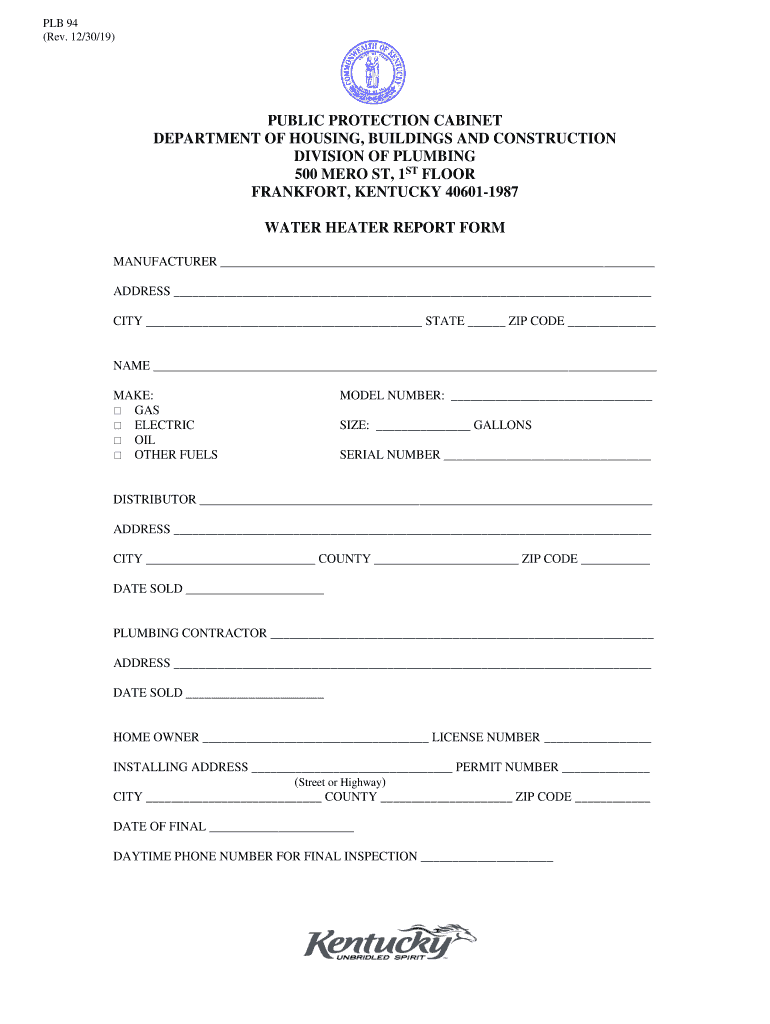
The Water Heater Report Form is a document typically issued by the Kentucky Department of Housing, Buildings, and Construction. Its primary purpose is to collect critical information about water heaters. This form is often used to record manufacturer details, model specifications, distributor information, and more. By gathering this data, the form ensures that water heaters meet safety and regulatory standards. It is an essential component in maintaining building compliance and safety.
Key Elements of the Form
- Manufacturer Details: The form requires specific information about the water heater's manufacturer, which includes the company name, address, and contact details. This helps track the origins of the unit if issues arise.
- Model Specifications: Accurate details about the model type, capacity, and unique identification numbers are essential for ensuring compatibility and performance expectations.
- Distributor Information: Details about the distributor or supplier are necessary to authenticate the supply chain of the water heater unit.
- Plumbing Contractor Details: Identifying who installed the water heater helps address installation-related issues efficiently.
- Inspection Dates: Recording inspection dates ensures that the water heater has been evaluated for compliance and performance at regular intervals.
How to Use the Water Heater Report Form
Using the Water Heater Report Form involves several steps that ensure thorough and accurate documentation of all required information.
Steps to Complete the Form
- Gather Required Information: Collect all necessary details about the water heater, including its manufacturer, model, and distributor.
- Fill Out Owner Information: Enter the homeowner's details, which helps in future communications regarding the installed unit.
- Include Contractor Information: The plumbing contractor's credentials are crucial to validate the installation process.
- Document Inspection Details: Ensure that all inspection dates and results are accurately recorded to verify compliance with safety standards.
- Review for Completeness: Double-check the form for any missing or incorrect information before submission.
Examples of Using the Form
- Routine Inspections: Homeowners or property managers can use the form during routine inspections to confirm that the water heater meets all safety standards.
- Resale Transactions: When selling a property, the form acts as proof of compliance, reassures buyers, and aids in legal transfers.
- Warranty Claims: The documented information helps when filing warranty claims with manufacturers or suppliers.
Who Typically Uses the Water Heater Report Form
This form is widely used by various individuals and entities involved in the installation, maintenance, and regulation of water heaters.


Typical Users
- Homeowners: To ensure their water heaters are compliant with local regulations.
- Plumbing Contractors: For documenting installations and maintenance procedures.
- Home Inspectors: To provide detailed reports during property inspections.
- Regulatory Agencies: For auditing and ensuring adherence to safety standards.
Business Types That Benefit
- Real Estate Agents: To facilitate smooth property transactions with complete documentation.
- Property Management Companies: To oversee compliance across multiple units.
- Home Insurance Providers: For assessing risk and verifying installations in insured properties.
State-Specific Rules for the Water Heater Report Form
While the form is primarily used in Kentucky, specific rules and requirements may vary or be applied differently in other states.
State-by-State Differences
- Regulatory Variance: Each state may have unique safety and installation standards that require adaptation of the form.
- Inspections and Approvals: States may have different procedures and authorities responsible for reviewing the completed form.
Legal Use of the Form
Understanding and complying with each state's regulations ensure the legally bound use of the Water Heater Report Form. Penalties for non-compliance often include fines or required corrective actions.
Obtaining the Water Heater Report Form
How to Obtain the Form
- Online Download: The form is generally available on the Kentucky Department of Housing, Buildings, and Construction website for download and print.
- In-Person Request: It can be obtained from local building regulation offices.
- Mail Request: Requesting a mailed copy is also possible, but processing times may vary.
Required Documents for Submission
- Proof of Installation: Includes contractor certificates or installation invoices.
- Inspection Reports: Detailed records of all completed inspections are necessary when submitting the form.
Form Submission Methods
Submitting the Water Heater Report Form can be done through various channels, providing flexibility suited to different preferences and requirements.
Online, Mail, and In-Person Submission
- Online: Emailing a scanned copy is quick and provides immediate confirmation of receipt.
- Mail: Sending the form via postal services may be necessary for official records but involves longer processing times.
- In-Person: Directly delivering the form ensures fast acknowledgment and possible on-site corrections.
Digital vs. Paper Version
The form can be maintained in digital format, allowing easy updates and submissions. However, printed versions provide a tangible backup required in specific legal contexts or audits.
Penalties for Non-Compliance
Failure to properly complete or submit the Water Heater Report Form can result in penalties.
Types of Penalties
- Fines: Monetary penalties for non-compliance with reporting requirements.
- Suspension of Approvals: Halting future project approvals until compliance is achieved.
- Mandatory Corrections: Requirement to rectify any discrepancies or incomplete submissions.
Understanding and adhering to the form's compliance requirements protects all parties from legal issues and ensures safety standards are maintained.