
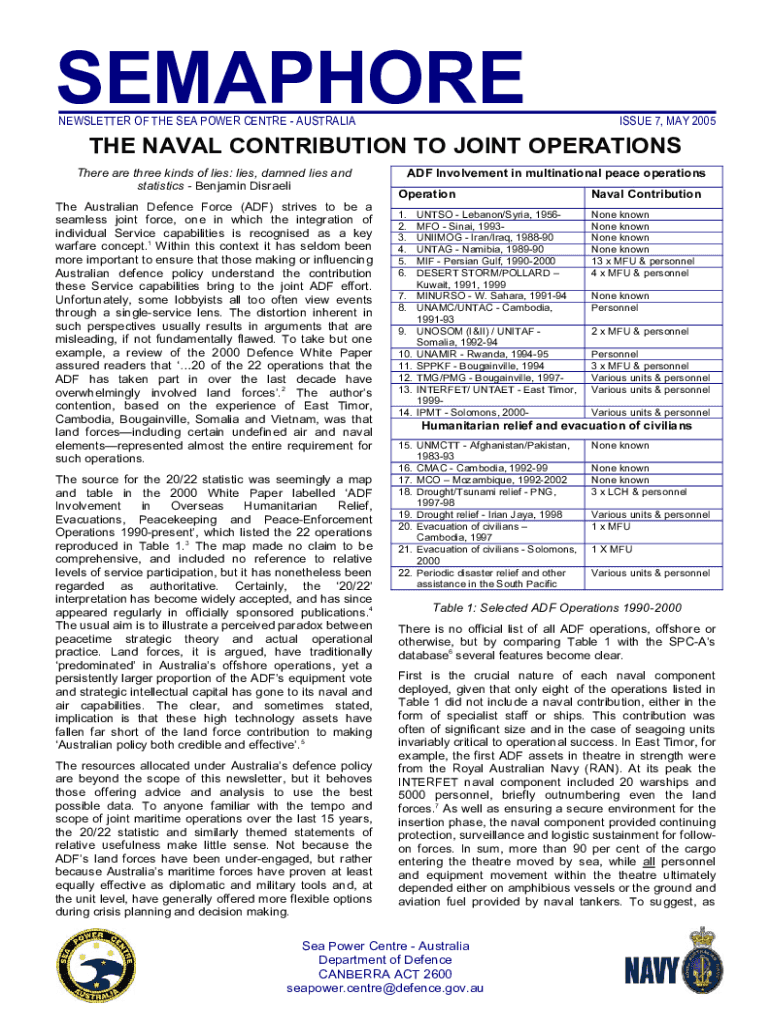







Definition and Purpose of "The Naval Strike Wing Returns to Its Roots"
The document titled "The Naval Strike Wing Returns to Its Roots" focuses on recognizing and acknowledging the pivotal role of naval forces within joint operations of the Australian Defence Force (ADF). It argues against the perception that land forces dominate ADF operations, highlighting the essential contributions of naval capabilities across various missions, including humanitarian aid and crisis response.
Historical Context and Importance
- The naval strike wing has been integral in various historical and modern military operations.
- It provides a flexible and powerful toolset within the ADF, capable of adapting quickly to evolving situations.
- The document emphasizes the need to understand the historical roots and contributions of naval forces to better integrate them into current and future defense strategies.
Common Misconceptions
- Many believe that ground forces are the primary component of the ADF, overshadowing naval contributions.
- The document dispels this myth by providing concrete examples and statistics demonstrating naval effectiveness across multiple mission types.
Key Elements of the Naval Strike Wing's Role
Strategic Importance
- Naval forces are essential for securing maritime borders and ensuring free navigation of sea lanes.
- They offer unique capabilities for rapid deployment and support in complex multilateral engagements.
Flexibility and Adaptability
- Naval assets can be quickly repositioned to respond to emerging threats or natural disasters.
- Their ability to project power from the sea provides a strategic advantage in maintaining peace and stability.
Technological Advancements
- Ongoing investments in technology enhance the capabilities and interoperability of naval forces within the ADF.
- Advanced systems enable precise targeting and improved coordination with other military branches.
Examples of Naval Contributions to ADF Operations
Humanitarian Missions
- Naval forces have played a critical role in delivering aid during natural disasters in the Asia-Pacific region.
- They offer logistical support and medical assistance in areas inaccessible to ground forces.
Peacekeeping Endeavors
- Naval vessels provide a platform for peacekeeping operations, contributing to international stabilization efforts.
- They serve as mobile command centers, facilitating communication and coordination with allied forces.
Steps to Complete "The Naval Strike Wing Returns to Its Roots"
Understanding the Document's Goals
- Identify the main themes and objectives highlighted in the document.
- Review historical operations where naval forces were pivotal.
- Analyze statistical data provided to understand the naval contribution.
Implementing Recommendations
- Evaluate current perceptions of ADF operations and develop strategies to highlight naval roles.
- Promote educational initiatives that focus on the diverse capacities of naval forces.
- Develop a framework for enhancing joint operations using lessons learned from past naval deployments.
Legal Aspects and Compliance
Defense Strategy Integration
- The document calls for the integration of naval capabilities into Australia's broader defense strategy.
- Ensure compliance with international maritime laws and treaties.
Documentation and Reporting
- Maintain accurate records of naval operations to support strategic analysis and accountability.
- Regularly update the document with new findings and developments in naval technology.
State-Specific Rules and Variations
Australian Context
- The document is set within the context of Australia's defense policies and strategic priorities.
- Focus areas may differ from state to state, often based on geographic and economic factors affecting naval deployment.
Important Terms Related to "The Naval Strike Wing Returns to Its Roots"
Key Vocabulary
- Joint Operations: Coordinated actions combining multiple military branches to achieve a common objective.
- Maritime Security: Protecting navigational freedoms and safeguarding territorial waters.
- Humanitarian Relief: Providing aid and assistance in the aftermath of natural or man-made disasters.
Understanding Naval Terminology
- Familiarize yourself with terms specific to naval operations, such as "strike wing," "maneuverability," and "interoperability."
Quick Facts and Figures
- Naval contributions constitute a significant portion of ADF's operational capacity.
- The flexibility and reach of naval forces provide a unique advantage in the Pacific theater.
- The document emphasizes the need for continuous investment in naval capabilities to maintain strategic parity.
By covering these aspects, the document "The Naval Strike Wing Returns to Its Roots" provides a comprehensive analysis of the implications and strategic importance of naval forces within Australia's defense framework.




